 Retro Replay Retro Replay gaming reviews, news, emulation, geek stuff and more!



Retro Replay Review
Gameplay
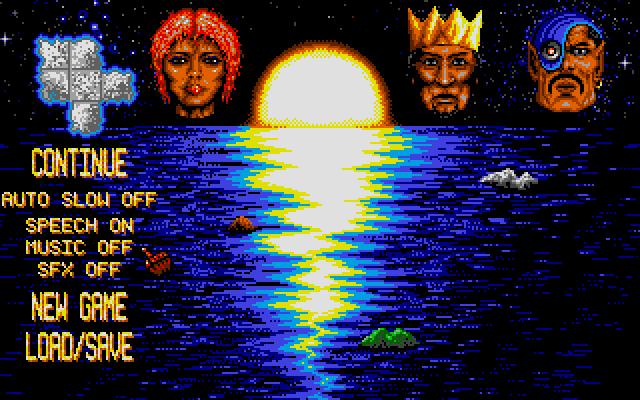
Mega lo Mania places you in command of one of four distinctive warlords—Scarlet, Oberon, Caesar, or Madcap—each representing a different colored army. This choice is cosmetic in terms of gameplay balance but adds personality as you embark on an intercontinental conquest. The campaign is divided into ten levels: nine groups of three islands that can be tackled in any order, and a climactic “Mother of All Battles” that brings unexpected twists once you’ve frozen or prepared your troops.
(HEY YOU!! We hope you enjoy! We try not to run ads. So basically, this is a very expensive hobby running this site. Please consider joining us for updates, forums, and more. Network w/ us to make some cash or friends while retro gaming, and you can win some free retro games for posting. Okay, carry on 👍)
The core loop revolves around managing a pool of 100 men per island. You deploy as many as you like to construct new bases; unarmed conscripts will automatically build fortifications on unoccupied squares, while surplus troops carry over into subsequent levels—unless you choose to freeze them in reserve for the final showdown. This mechanic forces you to decide between immediate territorial gain and long-term strategic advantage.
Research and production are equally vital pillars of success. After placing your headquarters, you invest in technological upgrades that unlock new defensive and offensive options. Archers and boiling-oil defenders give way to gunmen, and eventually you’ll erect futuristic laser turrets. Simultaneously, mining and factory buildings must be constructed to extract essential resources for advanced weaponry, and their placement depends on terrain richness—sand, grass, or ice all yield different materials.
Diplomacy offers another strategic layer. When multiple enemies are present on an island, you can forge temporary alliances of two against a common foe, only to betray your former partner once they’re weakened. Knowing that a defense level at 3-stars can easily repel a like-rated attack encourages you to mix alliances, misdirection, and brute force to outmaneuver rivals. Combat itself takes place in quadrant-based battlefields: send squads in to fight, but don’t linger too long or your idle bases will regress back to primitive status, forcing you to research everything from scratch.
Graphics
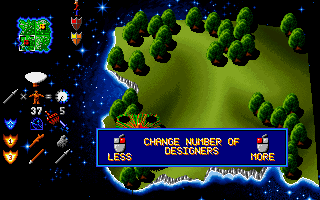
For its era, Mega lo Mania delivers crisp, colorful 2D graphics with a clear isometric perspective. Terrain types—sand, grass, ice—are immediately distinguishable and help you plan resource placement at a glance. Although the animation frames are relatively simple, troop movements, building construction, and environmental details remain smooth and readable even in the heat of battle.
The user interface is straightforward, featuring an overhead world map for island selection and a tactical view for individual engagements. Unit icons and building representations are large enough to minimize misclicks, yet they never feel obtrusive. When you upgrade defenses with archers or laser cannons, the visual change on the fortress roofs is satisfying, giving a tangible sense of progression.
Special effects are modest but effective. Explosions, gunfire, and laser beams are animated with brief flashes and color flares that draw attention to key combat moments. Even the “freezing” animation for reserving troops in the final battle is distinctive, marking a clear shift in your strategic reserves. Though dated by modern standards, the graphics maintain a nostalgic charm that enhances the game’s timeless appeal.
Level design leans into variety through color palettes rather than complex geometry. The icy fields of some territories feel frigid and stark, while grass islands look lush. This visual diversity keeps each campaign stage feeling fresh, and knowing how resource-rich an area appears helps you make strategic decisions before the first troop is deployed.
Story
Unlike narrative-driven strategy titles, Mega lo Mania’s story is minimalistic and focused squarely on conquest. Your primary motivation is simple: emerge as the sole ruler by crushing all opponents. The choice between Scarlet, Oberon, Caesar, or Madcap offers only a veneer of character background, leaving you to create your own epic tale through gameplay.
The campaign structure—nine interchangeable island groups leading to a final showdown—provides a loose framework rather than a linear plot. This design gives players agency over the order in which they face challenges, effectively letting you “write” your own story of ascendancy as you gather resources, build empires, and outwit adversaries.
Diplomatic alliances and betrayals serve as your primary narrative tools. When you team up with another faction to eliminate a stronger foe, the tension ratchets up as you decide when to turn on your ally. These dynamic power shifts generate emergent stories of backstabbing and revenge that feel far more memorable than any preset cinematic.
Ultimately, the lore resides in your strategic decisions: the timing of your research breakthroughs, the freezing of veteran troops for the final mission, and the decisive moment when you unleash your laser turrets on an unsuspecting garrison. While there’s no deep storyline cutscene, the unfolding drama emerges from the mechanics themselves, making every campaign a unique saga of conquest.
Overall Experience
Mega lo Mania excels at delivering a compact yet deeply tactical experience. Its core loop of exploration, research, and conquest remains engaging through all ten levels, with the final “Mother of All Battles” rewarding careful planning and resource preservation. The balance between immediate expansion and long-term troop management keeps the stakes high throughout.
The learning curve is moderate. Beginners may initially underestimate the importance of freezing troops or resource placement, but once you grasp the synergy between research, defenses, and alliances, the game reveals its strategic richness. Replayability is strong: choosing a different warlord, experimenting with alliance strategies, or tackling island groups in new orders can dramatically alter your campaign.
While the visuals and sound are a product of their time, they hold a nostalgic charm that enhances rather than detracts from the overall experience. The intuitive UI and readable graphics ensure that even newer players can dive in without frustration. Sound effects are functional, with satisfying blasts and building noises, though the music loop can feel repetitive on extended play sessions.
For fans of classic real-time strategy, Mega lo Mania remains a compelling package. Its blend of resource management, defensive fortification, alliance diplomacy, and territorial conquest forms a cohesive whole that stands up to modern retrospectives. Whether you’re revisiting a childhood favorite or discovering it for the first time, Mega lo Mania offers a uniquely addictive strategy challenge that’s well worth exploring.

Reviews
There are no reviews yet.