 Retro Replay Retro Replay gaming reviews, news, emulation, geek stuff and more!


Retro Replay Review
Gameplay
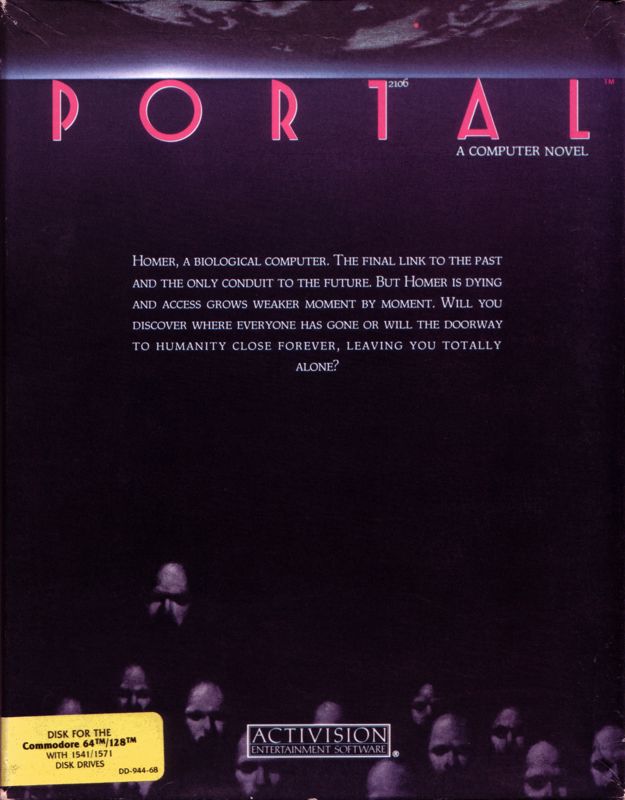
Portal unfolds as a richly layered computer novel rather than a traditional point-and-click adventure, offering a unique experience built around database navigation and narrative reconstruction. From the moment you awaken at the Worldnet terminal, your primary task is to sift through eleven distinct archives—ranging from historical logs to military dossiers—to piece together the journey of Peter Devore and the fate of humanity. This non-linear approach to story discovery encourages exploration and rewards careful attention to detail, as each fragment you unlock sheds new light on the overarching mystery.
(HEY YOU!! We hope you enjoy! We try not to run ads. So basically, this is a very expensive hobby running this site. Please consider joining us for updates, forums, and more. Network w/ us to make some cash or friends while retro gaming, and you can win some free retro games for posting. Okay, carry on 👍)
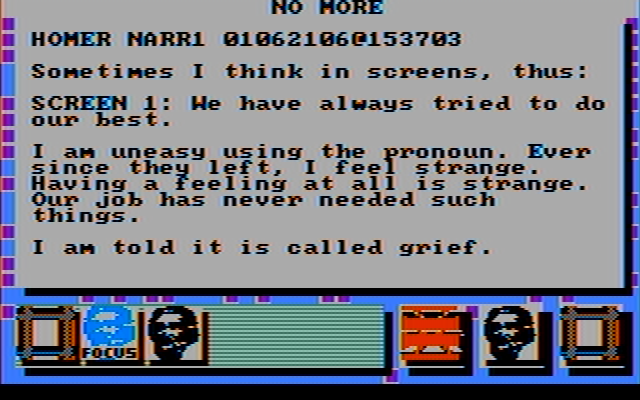
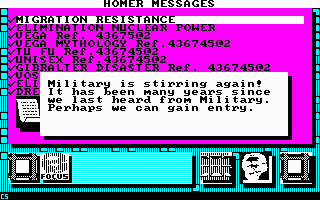
The interface is deceptively simple: a text-based menu system coupled with occasional graphical embellishments. You won’t find reflex-based challenges or complex inventory puzzles here; instead, success depends on your ability to cross-reference scattered clues and draw connections between disparate data sets. This cerebral form of gameplay makes Portal stand out, especially for players who enjoy detective work and narrative archaeology over traditional combat or platforming mechanics.
As you progress, the pacing remains steady, with each database transition feeling like turning the page of a layered science-fiction epic. The sense of discovery is amplified by Homer, the in-game AI narrator, whose occasional commentary guides you through cryptic passages and raises intriguing questions about memory, identity, and the nature of reality. For those seeking a deeply immersive storytelling experience, Portal’s gameplay loop strikes a satisfying balance between guided narrative and open-ended investigation.
Graphics
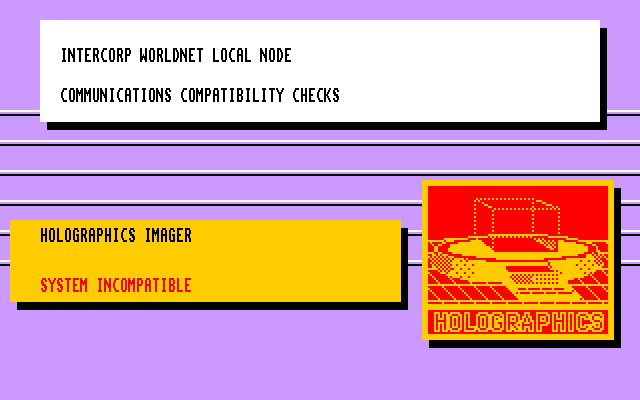
Given its 1990s origin, Portal’s visuals are minimalistic by modern standards, relying heavily on text windows complemented by sparse illustrations and schematic diagrams. These static images serve as atmospheric anchors rather than full-screen backdrops, evoking a sense of sterile isolation that perfectly suits the desolate, abandoned world you explore. While you won’t marvel at high-resolution textures or dynamic lighting effects, the art style conveys an unmistakable air of cold futuristic melancholy.
Where Portal truly shines is in its use of typography and layout to foster immersion. Different databases employ distinct color schemes and fonts—military briefs appear in utilitarian green text, social archives in warm sepia, and scientific journals in crisp blue. These subtle design choices help you keep track of your progress and maintain a clear mental map of the sprawling Worldnet network. For players who appreciate the artistry of interactive fiction, Portal’s graphic presentation offers a tasteful, unobtrusive backdrop.
Audio elements are equally minimalist, consisting mainly of soft ambient tones and occasional system beeps. Though the lack of a full soundtrack may feel stark at first, this restraint reinforces the feeling of exploring an empty Earth, with only your own curiosity and the AI narrator as companions. In this sense, the game’s pared-down audiovisual package becomes an asset, drawing you deeper into the narrative without unnecessary distraction.
Story
The narrative thrust of Portal centers on the enigma of Peter Devore, a young man who stumbles upon a mysterious spatial gateway after Earth’s inhabitants vanish. Told through the reconstructed voice of Homer, the AI archivist, this tale unfolds in fragments—each excerpt a piece of a grander puzzle linking Devore’s discovery to the planet-spanning catastrophe that erased humanity. This “computer novel” format allows the plot to evolve organically, revealing motivations, ethical quandaries, and startling revelations at a deliberative pace.
The interplay between databases adds a meta-textual dimension: military files hint at clandestine experiments, social records expose public reactions, and scientific journals delve into the theoretical underpinnings of the portal itself. Each archive enriches the core storyline, offering multiple perspectives on the same events. As you leap between data sources, you begin to sense the larger implications of Devore’s actions and the hidden agendas at play—crafting a narrative tapestry that feels both expansive and intricately woven.
What sets Portal’s story apart is its commitment to player agency in storytelling. You decide which database to explore next, determining the order and context in which you encounter revelations. This non-linear design fuels speculation and encourages multiple playthroughs, as different exploration paths yield subtly different emotional beats and insights. The result is a compelling, character-driven mystery that lingers long after you’ve logged off.
Overall Experience
Portal delivers a refreshingly cerebral journey that will resonate with fans of interactive fiction, science-fiction enthusiasts, and anyone intrigued by narrative experimentation. Its blend of text-driven exploration, sparse but evocative graphics, and layered storytelling creates an atmosphere of genuine intrigue. There are no high-octane boss fights or sprawling 3D worlds here—just you, an AI companion, and the ghostly echoes of a vanished human race.
While the game’s minimalist presentation and emphasis on reading may deter players seeking action-oriented thrills, those willing to invest in its world-building will find a richly rewarding experience. The sense of discovery is potent, and each newly accessed database brings with it fresh puzzles, moral dilemmas, and thematic depth. By the time you uncover the true nature of the portal and Peter Devore’s role in humanity’s fate, you’ll feel a genuine connection to the story’s triumphs and tragedies.
In a market crowded with visually impressive but narratively shallow titles, Portal stands out as a bold experiment in game-driven storytelling. It challenges players to think critically, piece together clues across disparate sources, and appreciate the craft of interactive fiction. For those seeking an engaging, story-first adventure that unfolds at your own pace, Portal is a hidden gem well worth discovering.


Reviews
There are no reviews yet.