 Retro Replay Retro Gaming History, Reviews & Emulation


Retro Replay Review
Gameplay
Crack-Up gets straight to the point. You move a bat along the bottom of the screen, keep the ball alive, and erase every brick to reach the next level. That first minute has the clean, compulsive pull every good Breakout clone needs: each return is a tiny test of positioning, and every hole punched through the bricks offers a new angle for the ball to cause havoc above you.
What gives the game a little more life than a bare-bones bat-and-ball routine is the stream of falling icons released by certain bricks. Some are immediate gifts. Catch ball lets you regain control, double balls speeds up the destruction, an extended bat gives you breathing room, and an extra life can rescue a shaky session. Laser bat is especially welcome when a few awkward bricks refuse to cooperate, letting you fire directly at them instead of waiting for the ball to find the right route.
Not every icon is friendly, and that is where Crack-Up can become frustrating in the proper arcade sense. A slow bat can leave you trying to adjust to an unwelcome change at exactly the wrong time, while the rush to catch a falling bonus may pull your attention away from the ball. You need to decide quickly whether the potential reward is worth the risk. That small judgment call keeps your hands busy even when the basic objective never changes.
The game does not stretch the formula far, so its staying power depends on whether you enjoy the basic rhythm of breaking bricks and salvaging bad bounces. If you do, the mix of power-ups, hindrances, and successive levels gives it enough variation to remain engaging. If you want carefully layered strategy or a major twist on Breakout, Crack-Up is more likely to feel like a competent time-filler than a revelation.
Graphics
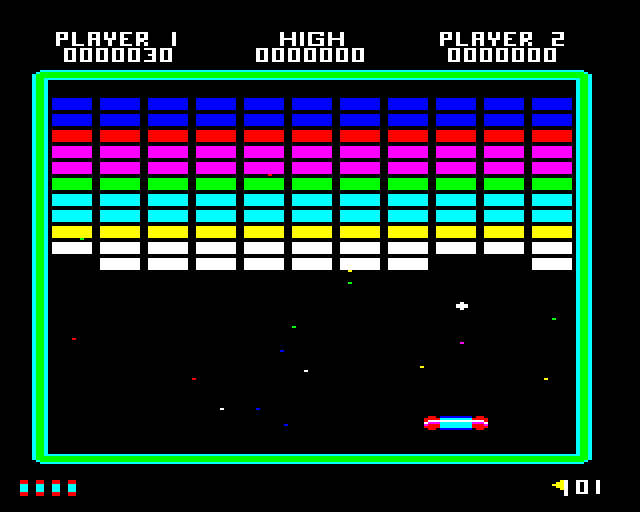
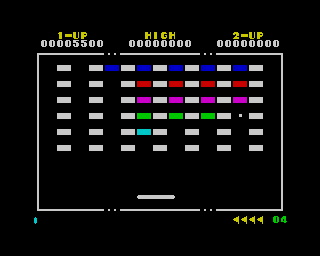
The view is the classic single-screen arcade setup: brick formations fill the upper area, your bat hugs the bottom edge, and the ball remains the centre of attention. Falling icons are the key visual cue, because you need to spot them quickly while still tracking the ball’s return path.

Story
There is no story pulling you from level to level. Crack-Up is built around score-chasing arcade momentum, where clearing the current brick layout is its own reward.
That lack of narrative suits the game’s directness. You are not waiting for a plot beat; you are trying to prevent a missed return, grab a useful icon, and finish the board before a bad break ends the run.
It also means the game lives or dies on how much you enjoy repetition with small shifts in pressure. The next level matters because it presents another set of bricks to dismantle, not because the game gives you a reason beyond the challenge itself.
Overall Experience
Crack-Up is a straightforward Breakout clone with enough power-up chaos to avoid feeling completely mechanical. Its strongest quality is how quickly it gets you playing: there is no barrier between starting a game and understanding what you need to do, yet the falling icons create enough split-second choices to make a clean rally feel earned.
The rougher edge is that the same icon system can undermine your sense of control. Helpful pickups feel great, especially when they turn a difficult board around, but harmful effects and the danger of chasing drops can make defeats feel abrupt. That is part of the old-school arcade bargain: you take the lucky break with the bad one and start another attempt.
At 6.8, Crack-Up lands as a decent version of a familiar idea rather than an essential one. Give it a chance if you enjoy classic paddle games and want a compact challenge with bonuses that can either save your run or complicate it. Its payoff is modest but real: a few tense saves, a satisfying burst of brick clearing, and the temptation to try just one more level.


Reviews
There are no reviews yet.