 Retro Replay Retro Gaming History, Reviews & Emulation

Retro Replay Review
Gameplay
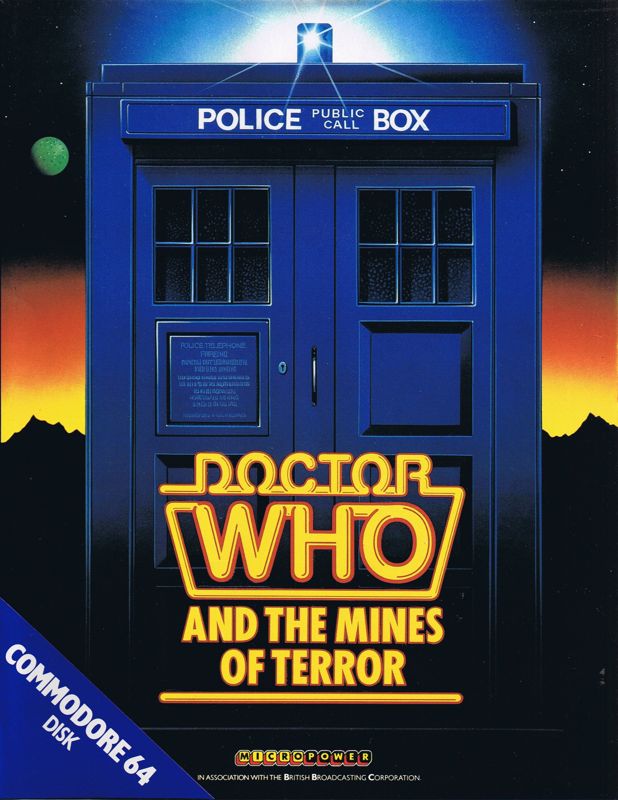
The first stretch of Doctor Who and the Mines of Terror can feel like an ordinary side-scroller: guide the Sixth Doctor through a hostile mining base, jump around danger, climb ladders, and press whatever button looks likely to open the way. Give it a little time, though, and its real concern becomes clear. This is an item-management puzzle game wearing platformer clothes, and the cramped four-item pocket limit is the pressure that keeps every pickup from becoming thoughtless clutter.
Splinx is the clever part. The robotic cat can haul extra cargo in her hyperspace load module, including large objects that would otherwise be a nuisance, while avoiding proximity sensors and creatures as she moves. You have to keep her energizer cells topped up at external power points, and the Doctor’s location markers let her navigate back to places you have already established. It is an unusually hands-on companion system for an 8-bit game: she is not just following along, but solving the inventory problem that defines the adventure.
That setup creates satisfying little plans. You decide what the Doctor needs immediately, what Splinx should carry, when to recharge her, and when a marker is worth placing. The mining base contains more than enemies to bypass; peaceful Rijans can be given simple jobs, while Cryostan plants matter because they can become super-coolant fluid. The result is less about fast reflexes than noticing what the next obstacle demands and arranging the right objects and helper in the right place.
Frustration is built into the same design. Limited carrying space and the need to send Splinx back and forth can turn progress into careful errands, especially when danger from Madrags, cyber guards, and sensors is nearby. If you want a platformer that keeps you moving forward at all times, this deliberate stop-start rhythm will wear thin. If you enjoy poking at adventure-game problems under real spatial pressure, it has more going on than its simple actions initially suggest.
Graphics
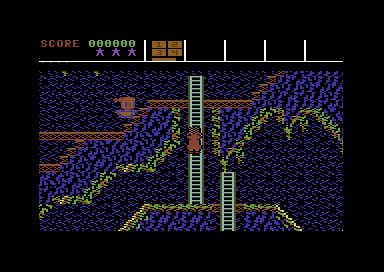
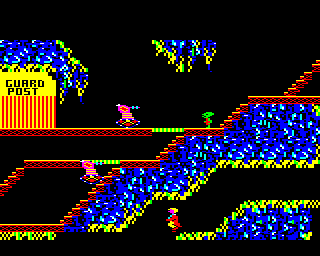
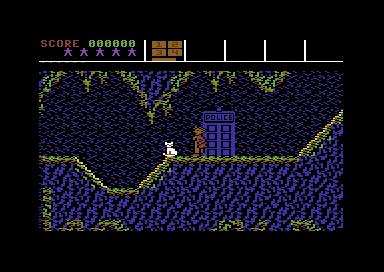
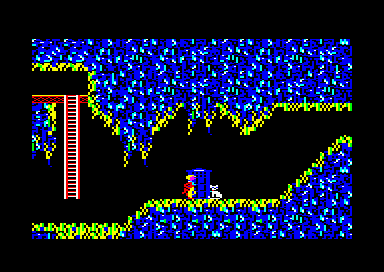
The game uses a side-view, 2D scrolling layout built around the Doctor’s movement through the Rijar mining base. Ladders, buttons, items, hostile creatures, and guards are central to what you need to read while playing, and Splinx gives the screen a distinctive companion alongside the Doctor.
Story
This is unapologetically Doctor Who in its stakes: the Time Lords send the Sixth Doctor to Rijar’s second moon because the Master has seized a heatonite mining base and is building a Time Instant Reply Unit. The immediate mission is to recover the memory capsule explaining how to build it before the Master can alter the device using the Doctor’s brain and gain control over past and future.
It is a wonderfully pulpy premise, and the game gets mileage from sending the Doctor through a practical sci-fi mess rather than reducing the job to a straight confrontation. Heatonite, Cryostan plants, super-coolant, local Rijans, and the strange Splinx all give the journey a suitably oddball collection of problems to solve. That texture fits the series better than a generic rescue mission would.
The Master remains the looming threat rather than a reason for extended character drama, so the story chiefly works as motivation for the exploration and puzzle-solving. Still, the threat is specific enough to give the object handling a purpose: you are not collecting things for points, but piecing together a route to stop a hostile time-machine scheme.
Overall Experience
Doctor Who and the Mines of Terror is a decent, inventive licensed game whose best idea is also the one that asks the most patience from you. The Doctor’s basic movement is only the entry point; Splinx, limited inventory, recharge points, location markers, and task-driven exploration make it a compact sci-fi puzzle adventure with platforming obstacles in the way.
The payoff is worth it if you enjoy old games that demand note-taking, planning, and a willingness to ferry the right equipment through a dangerous place. Its pace can feel fussy, particularly when inventory limits force another trip or Splinx needs attention, but that fussiness also makes a solved problem feel earned. This is not the Doctor’s most immediate game outing, yet it has a peculiar mechanical personality that suits an adventure about improvising inside an enemy mining installation.
Come for the Sixth Doctor and the Master, but stay only if the idea of directing a robot cat as an evasive, extra-dimensional pack mule sounds appealing. For the right kind of retro puzzle-platform fan, that is a much stronger hook than it has any right to be.


Reviews
There are no reviews yet.