 Retro Replay Retro Gaming History, Reviews & Emulation
Retro Replay Review
Gameplay
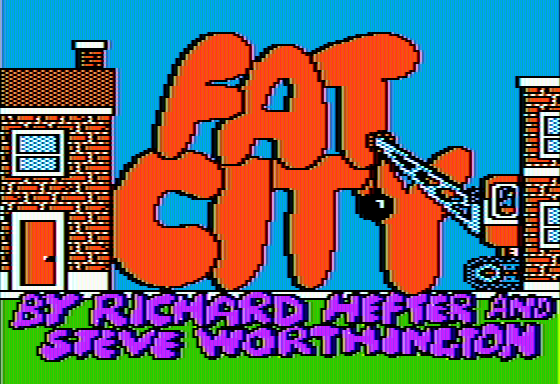
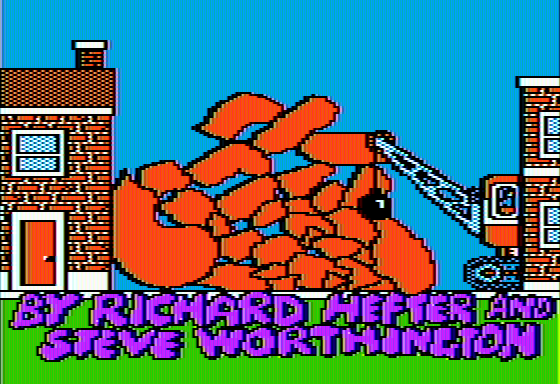
Fat City wastes no time dressing up its central pleasure. You roll into a block with a giant wrecking ball and start knocking down every structure you can reach. That is the hook, and it is a good one: the goal is so direct that you understand the assignment almost immediately, while the crunch of another building coming down supplies its own reward.
The four-direction scrolling playfield gives each block room to search. You are not merely parked in front of a single target; you need to move through the city and make sure nothing is left standing before you can advance. The fuel limit turns that cleanup job into a race, so careless wandering can become costly even when the demolition itself feels effortless.
What keeps the game from being pure sightseeing destruction is the resistance in the air. Flying objects come after your vehicle, and taking hits shortens your career. Swinging the wrecking ball at the right moment can deflect them, which asks you to treat the ball as protection as well as a tool for leveling buildings.
Fuel depots offer the crucial relief valve. Finding one lets you extend a run and continue the destruction, but they do not remove the need to stay purposeful. If you want a deep, sprawling action game, Fat City will feel spare; if a brisk arcade challenge built around route-finding, timing, and smashing everything in sight sounds right, its focus works in its favor.
Graphics
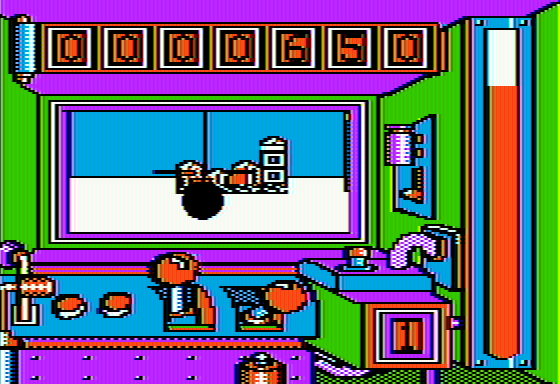
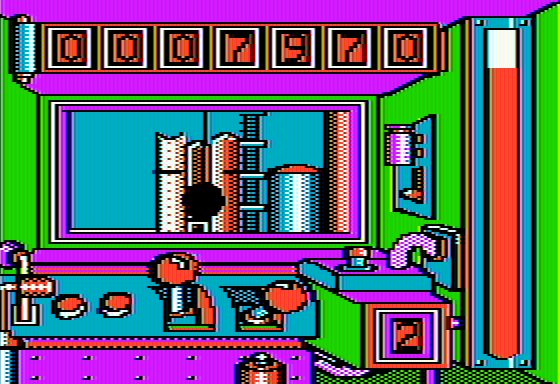
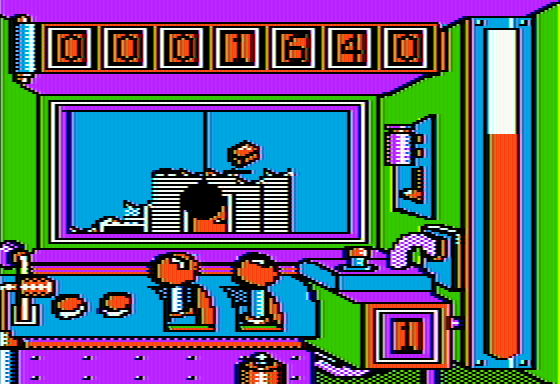
The first-person view puts the wrecking ball and the city block directly in front of you, making the act of lining up a swing feel immediate. Buildings, fuel depots, and incoming flying hazards have to do the visual heavy lifting, and the scrolling city layout gives the action more space than a fixed single-screen arena.
Story
Fat City has a mischievous demolition premise rather than a developed narrative. You are sent from city to city to clear every structure on the block, with the game happily treating widespread property destruction as the main attraction.
There is at least a hint of opposition: someone evidently objects to the demolition plan, and flying objects are sent toward your vehicle. That small bit of resistance gives the action a playful conflict without distracting from the wrecking-ball fantasy.
Do not come looking for characters or plot turns. The story is the excuse to get back in the cab, watch for trouble, refill the tank, and keep knocking down the next block.
Overall Experience
Fat City succeeds because it understands the immediate appeal of its idea. You do not need much explanation to enjoy steering a demolition vehicle, swinging a massive ball, and working through a block until the job is done. The fuel clock and aerial threats give that simple loop enough urgency to prevent it from becoming completely mindless.
The game is likely to be most rewarding in short bursts. A run has a clear purpose, a clear failure pressure, and a clear payoff when you have found and destroyed the final building. The same economy also means that its repetition will show quickly if the wrecking-ball premise does not grab you.
For an Apple II arcade game, it is a pleasantly odd piece of action design: part destruction fantasy, part resource race, part defensive timing test. Give Fat City a try if you enjoy old games that build an entire challenge around one strong, slightly silly idea and commit to it.


Reviews
There are no reviews yet.