 Retro Replay Retro Replay gaming reviews, news, emulation, geek stuff and more!




Retro Replay Review
Gameplay
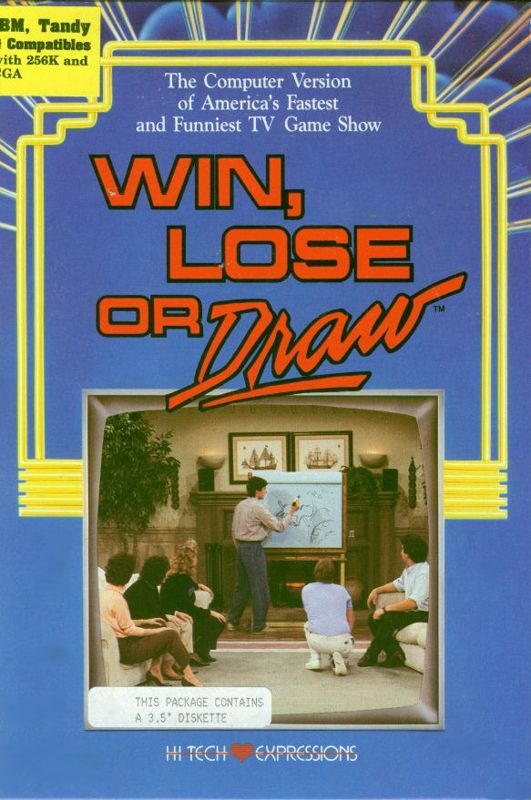
The core gameplay of Win, Lose or Draw captures the essence of the classic TV show by putting players in the driver’s seat of a virtual sketchboard. Rather than picking up a mouse or stylus to draw, you watch as the on-screen “artist” progressively reveals a pictorial clue. Your task is to think laterally and shout out your guesses before the time runs out. The clock starts at 60 seconds, creating a rapid-fire environment that keeps each round exciting and tense.
(HEY YOU!! We hope you enjoy! We try not to run ads. So basically, this is a very expensive hobby running this site. Please consider joining us for updates, forums, and more. Network w/ us to make some cash or friends while retro gaming, and you can win some free retro games for posting. Okay, carry on 👍)
What sets this adaptation apart is how it blends AI-driven drawing animations with human guessing. The pictures unfold in a series of strokes and shapes, and you can jump in with unlimited guesses while the image is still emerging. If you don’t crack the puzzle within your 60-second window, the opposing team has a final 15-second shot—albeit with only one guess—to steal the prize. This steal mechanic adds an extra layer of strategy, as you’ll weigh aggressive early guesses against holding back until the drawing is more complete.
Win, Lose or Draw offers both solo play against AI opponents and local multiplayer modes for up to four players. In single-player mode, the AI difficulty adapts to your success rate, dialing up the complexity of expressions if you breeze through early rounds. Local multiplayer transforms any living room or party into a drawing showdown, with teams taking turns at the board. The controls are simple—just a button to buzz in and a way to scroll through possible letter-based hints—so the emphasis remains squarely on ingenuity and quick thinking.
Another notable feature is the themed category selection. You can choose from options like “Everyday Sayings,” “Pop Culture,” or “Home & Garden,” which ensures a diverse range of puzzles and keeps the gameplay fresh. Category selection also lets players tailor the challenge to their group: casual friends might stick to “Everyday Sayings,” while a nerdier crowd might relish “Sci-Fi & Fantasy” twists on familiar expressions.
Graphics
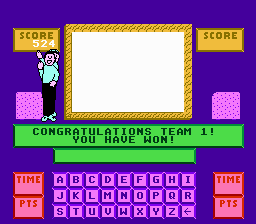
Visually, Win, Lose or Draw leans into the nostalgia of the original TV set, complete with a retro game show aesthetic. The color palette uses bold primary hues—red, yellow, and blue—to highlight team scores and category icons. While the underlying interface is uncomplicated, the clarity of the strokes and the smooth reveal animation make every picture easy to track as it appears on screen.
The on-screen drawing board features clean, vector-style lines that pop against a neutral backdrop. Each brushstroke is rendered with a slight “hand-drawn” flourish, mimicking the imperfections of real penmanship. These subtle details reinforce the studio-style experience, so you almost feel like you’ve stepped into a digitized TV soundstage.
Transitions between rounds are punctuated by quick, animated wipes and sound effects that echo the upbeat clacks and chimes of a live show. Although the presentation isn’t pushing the envelope of modern graphics capabilities, it strikes the perfect balance for a party title—vibrant enough to feel festive, but lightweight enough to run smoothly on a broad range of hardware.
On handheld or lower-end systems, you may notice minor frame hiccups during high-contrast brush animations, but these rarely interfere with the core experience. The game’s art style is inherently forgiving, ensuring that even if a line takes a beat longer to appear, players can still decipher the emerging image without frustration.
Story
Win, Lose or Draw doesn’t rely on a narrative in the traditional sense, but it does come with a built-in backstory rooted in its television heritage. When you launch the game, you’re greeted by a cheery host avatar who welcomes you to the studio and guides you through practice rounds. This host persona gives the game a sense of continuity and personality, elevating it from a mere puzzle collection to an interactive game-show simulation.
The episodic progression—round after round of drawing and guessing—creates its own kind of emergent drama. Each sketch is like a mini-story, teasing a common phrase through visual metaphor. You’ll find yourself eagerly tracing each new line, wondering whether that half-drawn bulb signals “bright idea” or something more obscure. The unpredictable variety of expressions delivers an organic narrative flow that keeps players invested.
Though there are no story cutscenes or character arcs, the camaraderie and friendly rivalry that the game fosters serve as its emotional throughline. Teams will cheer when a teammate nails a mental leap and groan when the opposition snatches a point in the final seconds. It’s this shared experience—rather than a scripted plot—that gives Win, Lose or Draw its lasting appeal.
For fans of quiz shows and party games, the lack of a conventional storyline is actually a strength. It reinforces the game’s focus on quick thinking, creativity, and social interaction. Each drawing presents a fresh puzzle and a fresh opportunity for laughter or triumph, so the “story” always feels new.
Overall Experience
Win, Lose or Draw delivers an accessible and endlessly entertaining package for players of all ages. Its pick-up-and-play nature makes it ideal for parties, family gatherings, or casual gaming sessions. Even those who’ve never seen the original TV show can dive in immediately—there’s no steep learning curve or complex controls to master.
The game’s strongest asset is its social component. Whether you’re huddled around a couch with friends or challenging AI teammates on the go, the rush of clock-driven guessing never grows old. The steal mechanic ensures that no lead is ever secure, maintaining tension right up until the final buzzer. It’s these moments of last-second triumph or heartbreak that give the game its infectious replay value.
On the downside, players seeking deep single-player campaigns or narrative arcs might find the experience a bit shallow. But as a party game, imaginative puzzle title, or time-killer, Win, Lose or Draw hits its mark perfectly. The variety of categories and the adaptive difficulty keep it from becoming repetitive, even after dozens of rounds.
In conclusion, Win, Lose or Draw is a polished tribute to a beloved TV concept, translated seamlessly into an interactive format. Its straightforward mechanics, vibrant graphics, and social energy combine to create a replayable, crowd-pleasing adventure. If you enjoy lateral-thinking puzzles and crave a multiplayer game that gets everyone involved, this computerized drawing challenge is well worth adding to your library.


Reviews
There are no reviews yet.