 Retro Replay Retro Replay gaming reviews, news, emulation, geek stuff and more!



Retro Replay Review
Gameplay
Trojan puts you in the sandals of Ryu, a formidable martial artist armed with a razor-sharp sword and a trusty shield. The core loop revolves around precise strikes, timing your parries, and judiciously managing your limited defensive resources. Enemies attack in waves, often requiring you to switch fluidly between offense and defense—one wrong move or a poorly timed block can mean instant defeat. This high-stakes system keeps every encounter tense and rewarding.
(HEY YOU!! We hope you enjoy! We try not to run ads. So basically, this is a very expensive hobby running this site. Please consider joining us for updates, forums, and more. Network w/ us to make some cash or friends while retro gaming, and you can win some free retro games for posting. Okay, carry on 👍)
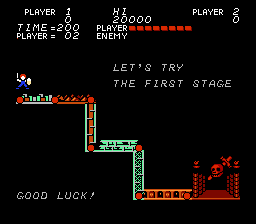
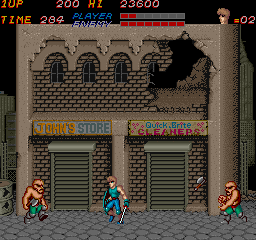
The game is structured into six distinct stages, beginning in a devastated cityscape and culminating in Achilles’s fortress. Each level throws a variety of foes at you: foot soldiers, armored brutes, and nimble archers that force you to adapt your tactics on the fly. Mid-boss and end-boss encounters break up the action, each demanding mastery of your sword’s range and the shield’s protective capabilities. Success hinges on observation and pattern recognition; learning boss attack sequences is key to survival.
Adding urgency to the action is a strict time limit for every stage. This race-against-the-clock element intensifies the pace, pushing you to move forward even when low on health or facing overwhelming odds. While it can be frustrating when a single hit ends your run, the design encourages repeated attempts and rewards those who balance caution with aggression. The blend of time pressure and one-hit kills elevates tension to near-constant levels.
Controls are tight and responsive, a necessity given how quickly situations can turn deadly. Button inputs for swinging the sword, raising the shield, and jumping are intuitive, and there’s no lag to speak of. Despite the rigid punishment for mistakes, the control scheme feels fair: you die because you failed to block or waited too long to strike, not because of any input shortcomings. This sense of fairness invites players to come back for “one more try” again and again.
Graphics
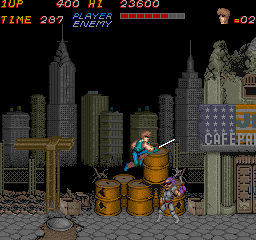
Trojan’s visuals stand out among its contemporaries, with richly detailed sprite work and varied environments that evoke a war-torn world. From crumbling city walls to shadowy temples, each backdrop feels distinct and atmospheric. Enemy designs range from hooded warriors to hulking brutes, and their animations—whether a swift sword slash or a grenade toss—are fluid and expressive.
The color palette leans toward muted earth tones, reinforcing the game’s gritty, post-apocalyptic aesthetic. Occasional bursts of bright red or gold—such as Achilles’s fiery armor or the flash of steel on steel—provide striking contrast. Background elements like flickering torches and collapsing columns showcase the hardware’s capability for parallax scrolling and dynamic detail, immersing you in each perilous setting.
Special effects are used sparingly but effectively. Sword clashes produce small spark animations, while successfully blocking a powerful strike results in a brief but satisfying flash. Boss encounters introduce larger sprites and more elaborate attack animations, making each duel feel grander. Despite the NES’s limitations, Trojan delivers a polished, nearly cinematic presentation that still holds up for retro enthusiasts.
Character portraits and title screens add an extra layer of polish. Ryu’s determined visage fills the screen before each major confrontation, and Achilles’s menacing glare sets the tone for the final showdown. These touches not only break up the gameplay but also reinforce the narrative stakes, reminding you who you’re fighting for—and against.
Story
The narrative of Trojan is straightforward but effective: a ruthless warlord named Achilles has plunged the realm into chaos, and only Ryu, a master swordsman, can restore order. While there’s little in the way of dialogue or cutscenes, the minimalist story beats are clearly communicated through level design and boss introductions. Each stage immerses you deeper into Achilles’s domain, heightening the sense of purpose behind your quest.
By keeping exposition to a minimum, Trojan focuses squarely on the hero’s journey through a perilous environment. You witness the devastation Achilles has wrought—burned villages, enslavement camps, and ominous temples—and your motivation to press forward grows organically. The mid-level bosses feel like Achilles’s personal lieutenants, each embodying a facet of his tyranny and offering a glimpse at the power you’ll have to overcome.
Although the story doesn’t evolve through elaborate cutscenes, it benefits from a strong thematic consistency. The claustrophobic ruins of Stage One give way to increasingly exotic locales—icy wastelands, volcanic caverns, and finally, Achilles’s towering citadel. The progression underscores your journey from humble avenger to legendary hero prepared to face the ultimate villain.
In the absence of text-heavy storytelling, Trojan relies on environmental cues and enemy variety to convey stakes and lore. Ancient ruins suggest a fallen civilization; chained prisoners hint at Achilles’s cruelty. This “show, don’t tell” approach allows your imagination to fill in the blanks, creating a surprisingly rich backdrop for a mid-’80s action title.
Overall Experience
Trojan delivers a challenging yet deeply satisfying action experience. Its tight controls, punishing one-hit kills, and relentless time limits can intimidate newcomers, but perseverance is rewarded with genuine mastery. Each victory—whether surviving a gauntlet of enemies or toppling a hulking boss—feels hard-earned, making every stage feel meaningful and consequential.
The blend of swordplay and shield mechanics sets Trojan apart from standard hack-and-slash games of its era. The necessity to block as often as you attack creates a dynamic push-and-pull, where recklessness is swiftly punished and methodical play is lauded. For players seeking a crisp, arcade-style challenge, Trojan’s gameplay loop remains as addictive today as it was on original hardware.
Musically, the soundtrack thumps with driving percussion and heroic melodies that complement the on-screen action. The compositions adapt to each stage’s environment, whether emphasizing suspense in shadowy temples or fueling adrenaline during boss battles. Coupled with sound effects that punctuate sword clashes and explosive traps, the audio design substantially enhances immersion.
While Trojan’s difficulty curve may deter casual gamers, those willing to invest time will find a tightly crafted, visually impressive title with enduring replay value. Speedrunners and completionists can chase faster times or flawless runs, ensuring that the quest against Achilles remains engaging long after the credits roll. For fans of retro action and challenging gameplay, Trojan is a standout entry that still packs a punch.


Reviews
There are no reviews yet.