 Retro Replay Retro Replay gaming reviews, news, emulation, geek stuff and more!

Retro Replay Review
Gameplay
The first hour of Kampania wrześniowa is about learning to stop thinking in terms of one glorious attack. Your real target is enemy headquarters, and that makes every unit movement feel like a decision about distance, protection, and timing. You can play either side, which is more than a token option here: it lets you look at the same battlefield problem from two different military positions.
The turn structure is rigid but purposeful. Poland and Germany each receive movement and attack phases, creating a predictable rhythm in which you set up a line, strike, then have to live with the shape of the board you left behind. That clarity is useful. You know when an attack is coming and can plan around it, but so can your opponent. A careless advance can turn into a very long retreat once the other side gets room to move.
Unit variety gives the game its tactical texture. Infantry, cavalry, tanks, armored cars, and artillery invite different jobs on the map rather than one all-purpose rush. Minefields make direct routes less comfortable, while bad weather slows movement and can ruin a plan built on reaching a key area in time. The frustration comes when you have correctly spotted an opportunity only for conditions or terrain hazards to make it impractical. That is also where the game begins to click: patience is not passive play; it is often the move that keeps your headquarters safe.
This is not a strategy game for someone who needs constant surprises or a long list of subsystems. Its focus is narrow, and the victory condition keeps pulling you back to the central question: how do you threaten command without leaving your own command exposed? If that stripped-down contest sounds satisfying, the four-phase structure has a stern, deliberate momentum.
Graphics
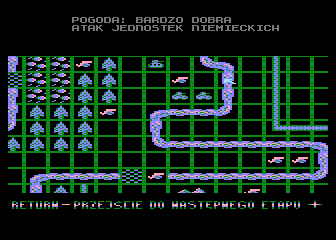
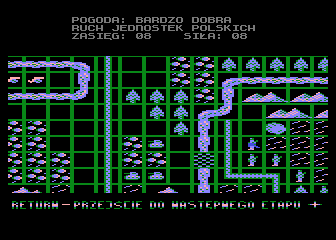
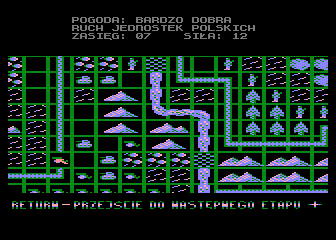
The game uses a top-down battlefield view, putting the emphasis on unit positions and the routes between them. That perspective suits a game built around movement, attacks, minefields, and reaching headquarters; you spend your time reading the board rather than wrestling with a dramatic camera.

Story
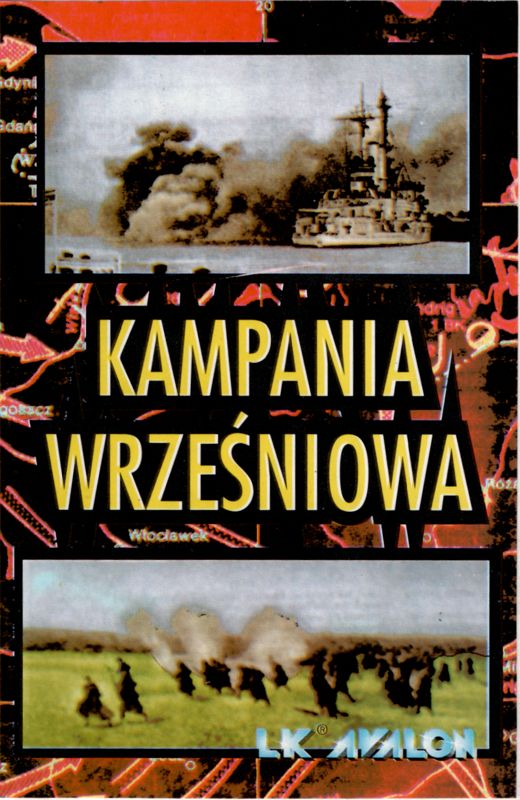
Kampania wrześniowa draws its subject from the 1939 invasion of Poland, the opening of World War II. It treats that history primarily as the frame for a military contest, not as a character-led narrative. You are placed in command of Polish or German forces and asked to pursue the same hard objective from either side.
That restrained approach has a benefit and a limitation. The historical premise gives the conflict weight immediately, especially when weather and unit types complicate movement, but the game’s storytelling lives in the positions you create on the map. A threatened headquarters, a blocked route, or an armored push arriving at the wrong moment becomes the drama.
Anyone hoping for a detailed account of the campaign will find the focus firmly on turns and tactical decisions. Anyone who appreciates history as a setting for a concise war-game problem may find that directness refreshing. The game does not ask you to admire a story from the sidelines; it asks you to make one through command choices.
Overall Experience
Kampania wrześniowa has the uncompromising feel of a compact early-1990s computer wargame. It gives you a historical battlefield, a limited but meaningful set of forces, and a clear win condition, then expects you to take responsibility for the outcome. The payoff is the satisfaction of seeing a multi-turn plan survive weather, hazards, and enemy pressure.
Its rougher edge is that the same discipline can feel unforgiving. Since headquarters are the objective, wasted movement and poorly timed attacks carry real consequences, and weather can make an aggressive plan stall. You need to enjoy reconsidering a route and preserving a position rather than simply pushing forward every turn.
Give it a chance if you want a focused, turn-based World War II contest where cavalry, artillery, armor, and minefields all feed into a single urgent objective. Skip it if you want a story-heavy campaign or a looser strategy game with room for casual experimentation. For the right kind of tactician, its severe simplicity is a virtue: the map stays understandable, while the decisions rarely do.


Reviews
There are no reviews yet.