 Retro Replay Retro Replay gaming reviews, news, emulation, geek stuff and more!
Retro Replay Review
Gameplay
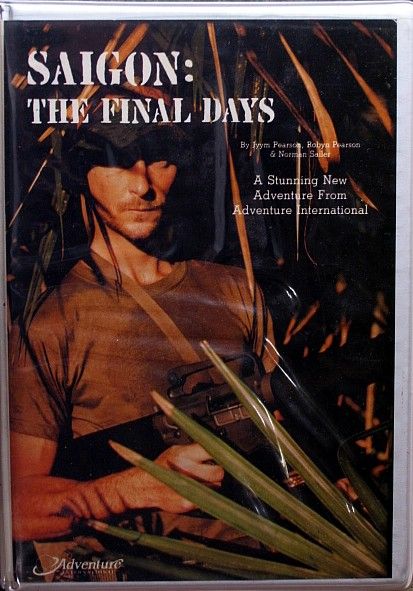
Saigon: The Final Days embraces the classic text-adventure format with a straightforward yet challenging two-word parser in the tradition of early Adventure International releases. Commands like “GO NORTH” or “TAKE GUN” drive the action, demanding precision from the player. While this simplicity can feel restrictive compared to modern point-and-click adventures, it reinforces immersion by forcing you to think like a soldier on the run, making every choice weigh heavily on your survival.
(HEY YOU!! We hope you enjoy! We try not to run ads. So basically, this is a very expensive hobby running this site. Please consider joining us for updates, forums, and more. Network w/ us to make some cash or friends while retro gaming, and you can win some free retro games for posting. Okay, carry on 👍)
Exploration is the heart of the gameplay loop. You navigate dense jungles, flooded rice paddies, and war-torn hamlets, using concise commands to scout for supplies or dodge enemy patrols. Progressive difficulty ramps up as you get closer to Saigon: Food and ammunition become scarce, and the persistent presence of the FNL (Front National de Libération) squad tracking you amplifies the tension. This scarcity model pushes you to plan your moves, creating real stakes with each misstep.
Encounters are presented as text vignettes that vividly describe gunfire ripping through foliage or the distant thud of mortars. Decisions often hinge on interpreting these cues—should you stay hidden under a banana tree or risk sprinting to the clearing where a rescue chopper might be waiting? There are no hand-holding tutorials; instead, you learn on the fly, and each survival choice becomes a small victory worth celebrating.
Puzzle elements are integrated into the setting rather than being arbitrary riddles. You might need to fashion makeshift bandages from jungle vines or barter with sympathetic villagers for a map fragment. Though the parser’s limitations occasionally lead to frustrating “I don’t understand” moments, most players familiar with early text adventures will find the challenge fair and rewarding.
Graphics
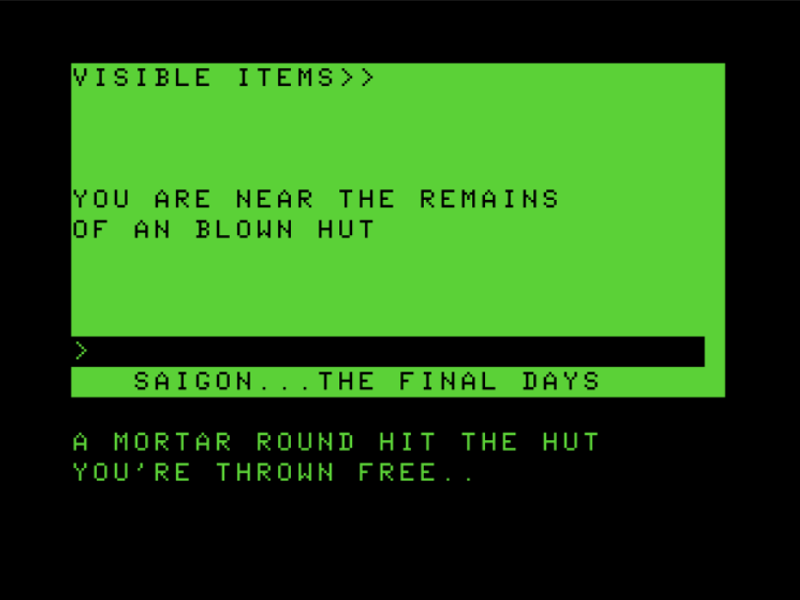
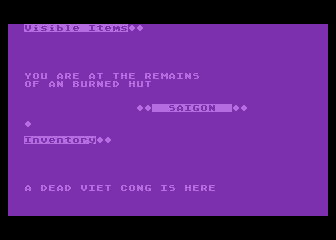
As a pure text adventure, Saigon: The Final Days foregoes visual graphics in favor of evocative prose. The game’s “graphics” consist of richly detailed descriptions that paint memorable scenes: the staccato echo of gunfire, the oppressive humidity clinging to your skin, and the fleeting silhouette of a Vietnamese water buffalo wading through floodwaters. These sensory cues conjure a vivid mental tapestry that few graphical games can match in atmosphere.
The absence of actual images means the writing itself becomes the art. Authors Jyym Pearson and Robin Pearson leverage their experience from the Other Venture series to craft environmental set-pieces that feel alive. Whether you’re crouched in a makeshift foxhole or stumbling through overgrown trails, the text-driven approach gives you agency over how you visualize each scene, making the world feel uniquely yours.
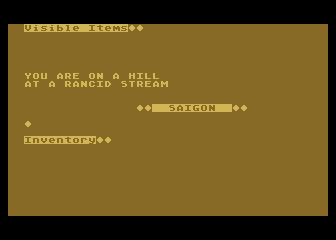
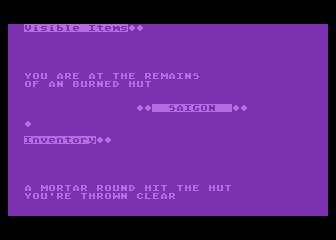
Technical presentation remains faithful to the vintage Adventure International aesthetic: monospaced fonts, simple screens, and minimal status displays. While modern audiences might find the look dated, it reinforces authenticity and nostalgia for seasoned adventurers. There’s a stark beauty in the game’s restraint—no intrusive HUDs or flashy special effects, just you, your wits, and the text on the screen.
Sound and music are absent, but the silence serves a purpose. In moments of narrative intensity, you’re left alone with the prose, amplifying the suspense. Every line break signals an opportunity for discovery or danger—there’s no audio to soften the impact of a sudden twist or an unexpected ambush, keeping you perpetually on edge.
Story
The narrative thrust of Saigon: The Final Days casts you as an escaped American POW navigating the chaos of Vietnam in 1975. From the opening sequence—splashing through tangled undergrowth with the FNL hot on your trail—to the climactic dash toward Saigon’s last defensible perimeter, the pacing is relentless. You feel the urgency of each moment, whether scavenging for food or eavesdropping on captured enemy radio chatter.
Despite its text-based format, the game strikes a fine balance between historical context and personal drama. Brief interludes convey the psychological toll of captivity: fleeting memories of fellow prisoners, the weight of isolation, and the sting of betrayal. These emotional beats elevate the core escape narrative, transforming what could be a simple “get out alive” goal into a deeper reflection on survival and sacrifice.
Encounters with non-player characters are concise but meaningful. A sympathetic villager might share cryptic advice about hidden caches; a downed pilot could offer a map piece in exchange for your help. These moments enrich the world, hinting at lives disrupted by war and underscoring the moral complexities of the conflict. The story never feels gratuitously violent—it’s raw, honest, and grounded in the era’s harsh realities.
The ending, a tense sequence around a waiting helicopter, ties back neatly to the opening image of guns blazing and rotor blades chopping through smoky air. It’s a fitting bookend that rewards your perseverance and respects the gravity of the setting. While there are no branching epilogues, the path you forge—marked by every risk taken and ally found—makes the inevitable conclusion feel earned.
Overall Experience
Saigon: The Final Days is a niche offering that caters to mature players with patience for text-based challenges and an appetite for historical drama. Its minimalist interface and two-word parser may feel archaic to newcomers, but for fans of early Adventure International titles, it’s a masterclass in economical storytelling and tension-building. Every text description, every parser quirk, and every tough decision coalesces into an experience that stands apart from modern adventure design.
The game’s strengths lie in its unflinching atmosphere and solid narrative framework. Jyym and Robin Pearson demonstrate seasoned design chops, using constraints to their advantage by focusing on what matters: creating a palpable sense of danger in a collapsing world. If you relish interpreting descriptive passages and savor the challenge of text-only puzzles, this title delivers a uniquely immersive wartime odyssey.
That said, casual gamers or those unaccustomed to vintage parsers might struggle with the limited command vocabulary and lack of in-game guidance. Patience pays off here—learning the ropes of the parser is part of the fun—and the payoff is a gripping journey from POW camp to the gates of Saigon. It’s a test of will and wit that rewards careful observation and bold decision-making in equal measure.
Ultimately, Saigon: The Final Days stands as a compelling example of how text adventures can still engage modern audiences when executed with authenticity and narrative flair. It’s far from a casual stroll through nostalgia; it’s a high-stakes trek through a pivotal moment in history. For those willing to dive into the dust and danger of 1975 Vietnam, this game offers an experience both challenging and unforgettable.


Reviews
There are no reviews yet.