 Retro Replay Retro Gaming History, Reviews & Emulation
Retro Replay Review
Gameplay
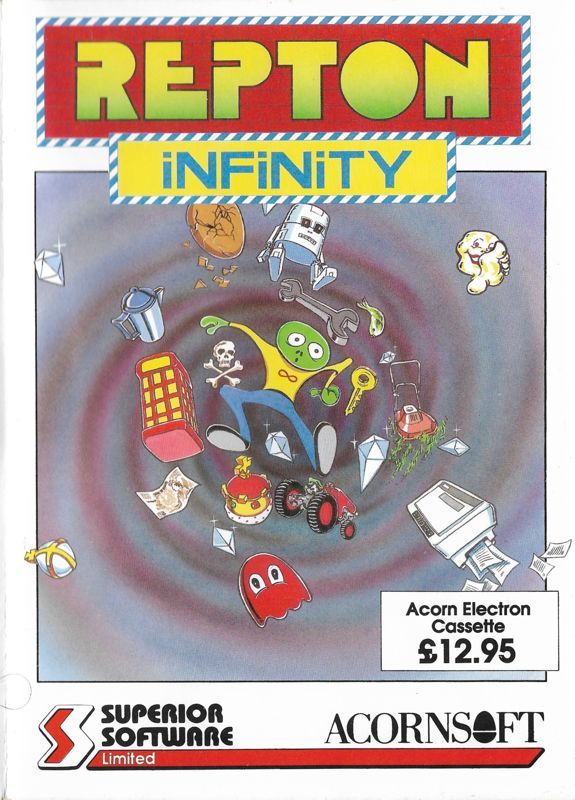
Repton Infinity earns its name by refusing to stop at a set of puzzle levels. The immediate hook is that there are four distinct games to play, each using the same broad direct-control, puzzle-led foundation but asking you to think about it differently. That variety matters: instead of one long run of similar rooms, you get several demonstrations of how far the underlying tools can be pushed.
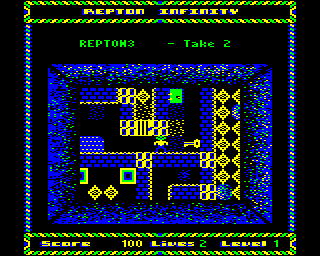
Repton 3: Take 2 is the most approachable place to begin if you know the older Repton formula. Removing the time limit lets you study a level rather than panic through it, but the minimum-score requirement keeps you from simply finding an exit and moving on. It is a smart trade: less pressure from the clock, more pressure to plan a thorough route and make each collectible count.
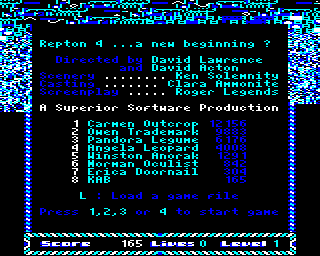
Repton 4 sounds busier, and it is. Collecting jewels and banknotes is only part of the job when cracked eggs can produce ghouls, spirits need guiding into cages, and unattended fungi keep growing. The magiblocks, which become treasure when pushed into a row of three, give you satisfying spatial puzzles, while photocopiers add another layer of object manipulation. This is the game most likely to reward patient experimentation—and most likely to punish you when you rush a setup.
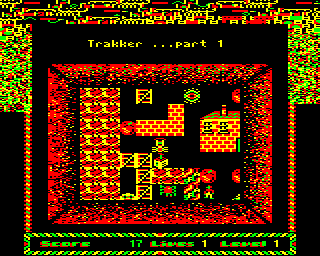
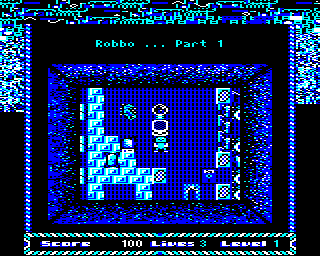
Robbo and Trakker keep the package from becoming Repton-only nostalgia. Robbo has you guide a robot toward flashing orbs while handling practical little problems such as repairing a computer or lighting a bulb. Trakker turns you loose in a bulldozer against Hideous Jaggas, with dynamite, tomatoes, and bananas all producing different results. The banana trick is especially mischievous: it does not simply solve the problem, but turns the creatures into spiders instead.
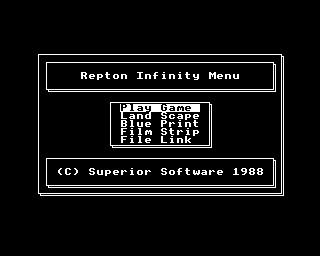
The lasting feature is Reptol, the scripting language that lets you alter the behaviour of characters and objects. A level editor is already a powerful reason to revisit a puzzle game; being able to change the rules behind a level is something else entirely. You can make more Repton stages, certainly, but the stated aim here is larger: build completely new games. That turns Infinity from a challenge to complete into a box of parts worth learning.
Graphics
The action is shown from the side, with the important puzzle pieces expressed through recognizable objects: jewels, eggs, cages, fungi, treasure, photocopiers, robots, bulldozers, dynamite, tomatoes, bananas, and spiders. That object-heavy approach suits games where a single square and its behaviour can decide whether a plan works.
Story
Story is not what carries Repton Infinity from one puzzle to the next. Its games use simple roles—a treasure hunter, a robot, a bulldozer—and immediately put the focus on the task in front of you.
That lack of narrative dressing is a strength for this kind of collection. You do not need an elaborate reason to guide spirits into cages or repair a computer; the interesting question is how the board’s objects will interact once you start moving them.
The closest thing to a larger arc is your own progress from playing the included games to understanding their construction. Reptol gives that progression real weight: curiosity about why a creature behaves a certain way can become an invitation to alter it yourself.
Overall Experience
Repton Infinity is an unusually generous idea packaged as a puzzle game. The four built-in games are not interchangeable extras: Repton 3: Take 2 revises a familiar challenge, Repton 4 expands the object set, and Robbo and Trakker show that the tools can support different themes and goals. Working through them makes the development side feel less like an intimidating separate application and more like the natural next step.
Its frustrations are the right kind for a puzzle-and-creation release: you will need patience for rules, consequences, and setups that do not reveal themselves instantly. Repton 4 in particular asks you to keep several hazards and transformations in your head at once. If you want quick, uncomplicated action, that density can feel like work rather than play.
Give it a chance if you enjoy old-school puzzle spaces where planning matters, especially if the thought of editing levels and changing object behaviour excites you. The payoff is bigger than clearing a final room. Repton Infinity invites you to understand its games well enough to make your own, and that remains a remarkably bold promise.


Reviews
There are no reviews yet.