 Retro Replay Retro Gaming History, Reviews & Emulation
Retro Replay Review
Gameplay
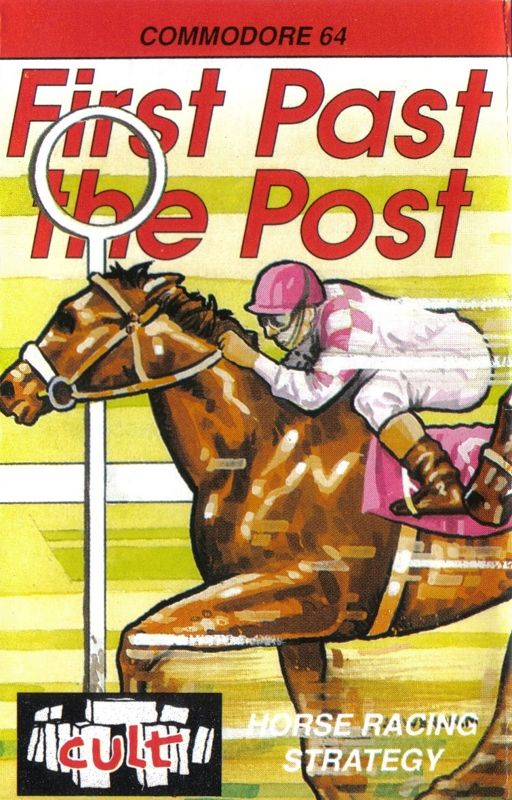
First Past the Post starts with a pleasingly practical question: which horses are worth backing, entering, or moving on from? You can keep up to sixteen horses, but a larger stable does not automatically mean better results. The game asks you to read the situation—race distance, going, weights, and the opposition—then live with the consequences of your choices.
Each meeting is compact, built around one-mile, two-mile, and three-mile races. You can enter one or two horses in a race, which makes stable management more interesting than simply fielding everything you own. The distance split also gives the meetings a rhythm: a horse that makes sense over one mile is not necessarily the right call for three, and changing conditions from soft through good to firm keep the same basic schedule from becoming completely automatic.
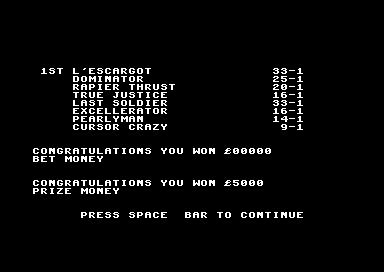
Betting is the sharpest touch. You are free to bet on any horse, not just your own, so race-day judgment matters even when your stable is not ideally placed. That creates a satisfying little tension between trainer and gambler: do you back your own investment, or admit a rival has the stronger prospect? The buy-and-sell option after meetings gives bad decisions a recovery path, while rival computer trainers ensure you are not managing in a vacuum.

Graphics
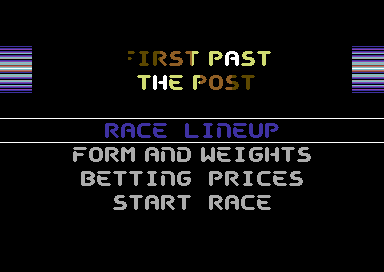
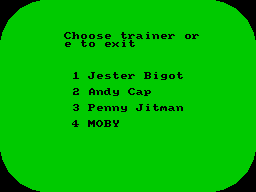
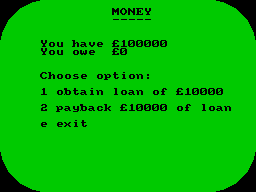
This is a side-view, fixed-screen game with a text and spreadsheet-heavy interface. The racing and management screens put the emphasis on following the horses and comparing the information that drives your next decision, rather than dressing the sport up with elaborate imagery.
Story
There is no need for a scripted tale here; the game’s drama comes from the changing fortunes of a stable. A promising horse, an ill-suited entry, or a timely sale can become the turning point you remember from a run of meetings.
The trainer statistics at the end of each meeting give that ongoing campaign a useful sense of accountability. You are not merely watching isolated races: results become a record of whether your judgment is improving against the other trainers.
That makes First Past the Post more personal than its plain format initially suggests. If you like creating your own sporting narrative from results, risk, and gradual stable changes, there is enough material to build one. If you need character-driven drama, its matter-of-fact approach will feel dry.
Overall Experience
First Past the Post is a focused horse-racing strategy game that understands where its interest lies: the decisions around the race, not spectacle during it. Its strongest moments come when the going, distance, weights, and betting odds pull you in different directions and you have to commit to a call.
Frustration can set in if you want rapid variety or hands-on racing action. The repeating three-race meeting format is deliberately narrow, and much of the satisfaction depends on whether you enjoy studying results and adjusting a stable over time. Saving your game matters because this is built for an ongoing campaign, not a single quick race.
For patient fans of old-school sports management, the payoff is real. It turns horse racing into a clean loop of selection, risk, money, and improvement, with just enough competitive pressure from other trainers to make success feel earned. Everyone else may find it austere, but it has a sturdy strategic core.


Reviews
There are no reviews yet.