 Retro Replay Retro Replay gaming reviews, news, emulation, geek stuff and more!




Retro Replay Review
Gameplay
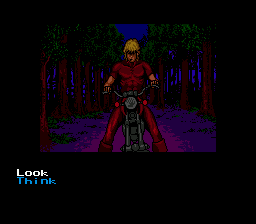
The Space Adventure offers a classic Japanese-style adventure interface where progression hinges on selecting the right command at the right moment. Players choose from actions such as “Look,” “Talk,” “Use,” and “Move,” exploring richly detailed locations while gathering clues that drive the story forward. This command-based system evokes the feel of vintage point-and-click adventures, demanding patience and attention to detail to uncover all the secrets hidden in each scene.
(HEY YOU!! We hope you enjoy! We try not to run ads. So basically, this is a very expensive hobby running this site. Please consider joining us for updates, forums, and more. Network w/ us to make some cash or friends while retro gaming, and you can win some free retro games for posting. Okay, carry on 👍)
One of the game’s unique challenges lies in its branching decision points, some of which can lead to Cobra’s untimely demise if approached carelessly. These potential death scenes add tension and replay value, encouraging players to save frequently and experiment with different dialogue choices. While this design can sometimes feel unforgiving, it also deepens immersion by reminding you that every choice has real consequences in Cobra’s high-stakes universe.
The climax introduces turn-based combat sequences that break from the game’s exploration focus. Battles are straightforward but strategic, requiring proper use of Cobra’s abilities and items gathered during the adventure. Though brief, these encounters inject a fresh rhythm into the gameplay loop, offering a satisfying payoff after hours of puzzle-solving and investigation.
Graphics
Visually, The Space Adventure leans heavily into its anime roots, boasting a generous number of animated cutscenes that faithfully recreate moments from Buichi Terasawa’s original manga and TV series. These sequences shine in their fluidity and color vibrancy, showcasing Cobra’s swagger and Crystal Boy’s menace with cinematic flair. For players who appreciate 1980s anime aesthetics, these cutscenes are a major highlight.
In-game environments are rendered with pixel-perfect detail, from the dimly lit tables of the Galaxy Patrol bar to the neon-lit corridors of Pirate Guild outposts. Backgrounds are richly textured, and character sprites are expressive, even on the hardware’s modest screen resolution. Although some static screens can appear dated by modern standards, the strong art direction keeps the visual presentation consistently engaging.
Voice-over implementation further elevates the audiovisual experience. Key dialogues feature sampled speech that, while compressed, adds personality to the cast and reinforces the feeling of stepping into an interactive anime episode. Sound effects and a synth-driven soundtrack round out the production, immersing players in a retro-futuristic space opera atmosphere.
Story
At its core, The Space Adventure adapts the high-octane storyline of Cobra’s battle against Crystal Boy and his quest for Jane’s father’s hidden treasure. The narrative kicks off with a classic pulp-style setup: Cobra waiting in a bar, a mysterious bounty hunter seeking his head, and an unexpected partnership that sparks a galaxy-spanning quest. This premise captures the spirit of Terasawa’s work, blending swashbuckling action with pulpy intrigue.
As Cobra and Jane search for her triplet sisters, the plot unfurls through a series of investigative sequences and character interactions. Each sister holds a piece of the tattooed map leading to an ancient fortune, and tracking them down requires dialogues rich in wit and double-crosses. The writing balances humor and suspense, ensuring that players remain invested in both the relationship between Cobra and Jane and the larger conflict with the Pirate Guild.
The villainous Crystal Boy looms large throughout the game, his robotic grin and relentless schemes providing a constant sense of danger. Cutscenes punctuate the storytelling at key junctures, revealing new twists and heightening dramatic stakes. By weaving together exploration, character banter, and battle sequences, the narrative maintains a brisk pace that never feels stagnant.
Overall Experience
The Space Adventure succeeds in delivering an authentic anime-inspired adventure that will appeal to fans of classic space operas and retro point-and-click titles. Its blend of investigative gameplay, cinematic cutscenes, and turn-based encounters creates a varied experience that holds attention across several hours of play. The occasional trial-and-error segments may frustrate newcomers, but they also contribute to the sense of high risk in Cobra’s universe.
Modern players may find some interface elements clunky compared to contemporary adventure games, but the title’s commitment to faithfully representing Terasawa’s aesthetic more than compensates. The strong voice-over moments, detailed sprite work, and atmospheric soundtrack all combine to transport you into a world where danger and treasure lurk behind every corner.
Ultimately, The Space Adventure is a must-try for collectors of vintage Japanese adventures and fans of the Cobra franchise. Its blend of storytelling, challenging puzzles, and episodic flair offers a memorable journey through space piracy and betrayal. While it may not cater to players seeking fast-paced action, those drawn to narrative depth and stylized presentation will find plenty to savor in Cobra’s second console outing.


Reviews
There are no reviews yet.