 Retro Replay Retro Replay gaming reviews, news, emulation, geek stuff and more!



Retro Replay Review
Gameplay
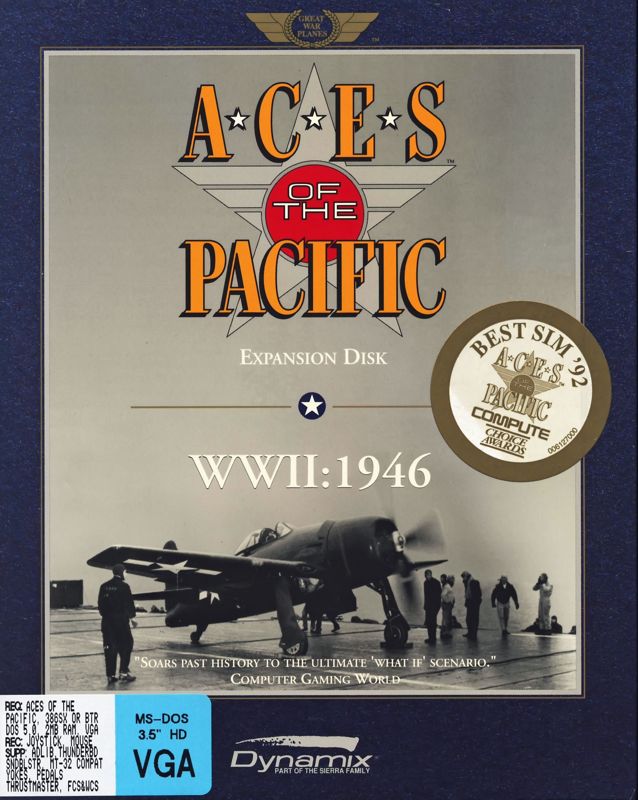
The core gameplay of Aces of the Pacific: Expansion Disk – WWII: 1946 builds on the solid flight-sim foundation of the original title, adding a rich layer of hypothetical “what-if” scenarios. Players find themselves piloting prototype aircraft that never saw combat in WWII’s Pacific theater, from the twin-engine Grumman F7F Tigercat to the jet-powered Lockheed P-80 Shooting Star. Each plane handles distinctly, offering a fresh challenge for veterans and newcomers alike: the Bearcat’s blistering climb rate contrasts sharply with the heavier, twin-engine Tigercat, while the Shinden’s canard design rewards careful pitch control.
(HEY YOU!! We hope you enjoy! We try not to run ads. So basically, this is a very expensive hobby running this site. Please consider joining us for updates, forums, and more. Network w/ us to make some cash or friends while retro gaming, and you can win some free retro games for posting. Okay, carry on 👍)
Campaign progression is driven by meticulously researched allied war plans and declassified documents. Missions range from long-range escort runs over Japan’s home islands to low-level strafing attacks on fortified airfields. The branching nature of the campaign tree means that success or failure in one operation can shift the strategic situation, opening new mission types—such as carrier-based operations or night interceptions—later in the game.
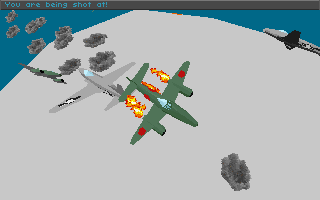
Dogfights remain intense and tactically driven. Enemy AI adopts historical tactics—Japanese fighters may attempt to “Yo-Yo” or “Thach Weave,” while American pilots lay down heavy suppression fire. The expansion’s improved flight model emphasizes energy management and realistic stall characteristics. New players appreciate the built-in flight school, while experienced simmers can disable aids for a purist experience. The learning curve is significant, but the feeling of pulling a successful high-speed deflection shot in a jet fighter is immensely gratifying.
Multiplayer engagements, though basic by modern standards, still shine as a feature. Up to four pilots can battle head-to-head over LAN or modem connections, turning prototype planes into dueling testbeds. Custom mission creation, carried over from the base game, lets groups stage everything from small dogfights to large-scale bombing raids, extending replay value well beyond the initial campaign.
Graphics
Graphically, this 1996 expansion pushes the limits of VGA hardware, offering more detailed terrain textures and enhanced lighting effects compared to the original Aces of the Pacific. Islands, ocean swells, and carrier decks all receive a fidelity boost, and smoke plumes from anti-aircraft flak are both visually distinct and tactically important. While not comparable to later 3D accelerator titles, the expanded color palette and smoother frame rates make for an engrossing aerial battlefield.
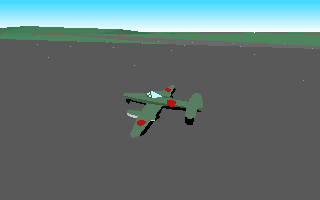
Aircraft models have been overhauled with more polygons and refined texture maps. Close-up views of the F8F Bearcat reveal intricate wing root fairings, and inspecting the J7W Shinden’s unique canard arrangement is a treat for aviation buffs. Cockpit gauges are crisp, legible, and fully instrumented, providing a sense of immersion unmatched by many contemporaries. The P-80’s bubble canopy rendering truly shines in dawn or dusk lighting, highlighting subtle reflections that enhance realism.
Weather effects, previously limited to simple overcast layers, get a notable upgrade here. Mission briefings often warn of rain squalls or mild turbulence, and once airborne you’ll see cumulonimbus buildups on the horizon. Flying into a rainburst reduces visibility and can toss your aircraft unexpectedly—an atmospheric touch that elevates tension without compromising playability.
Occasional pop-in of terrain textures remains a minor gripe, especially during low-altitude strafing runs, but these hiccups are rare on a well-tuned PC of the era. Overall, the graphics offer a fine balance between performance and visual punch, letting pilots focus on flying rather than frame rate dips.
Story
Rather than presenting a linear narrative, WWII: 1946 adopts a speculative-history framework that lets players immerse themselves in “Operation Downfall”-style campaigns. Briefing documents, mission maps, and archival photographs ground each sortie in plausible Allied and Japanese strategic planning. The absence of a single protagonist allows you to join multiple squadrons, giving a panoramic view of the late-Pacific air war.
Each mission is prefaced by concise historical notes explaining the rationale behind new operations. For instance, early missions might involve intercepting Japanese kamikaze formations with the F2G-2 Corsair, emphasizing the air superiority struggle, while later assignments task you with high-altitude reconnaissance using the Mitsubishi Ki-83. These narrative snippets lend weight to every flight, ensuring that dogfights and bombing runs feel like part of a broader, tension-filled conflict.
Though the expansion deliberately eschews cinematic cutscenes, in-game debriefs serve a similar purpose. After completing critical objectives, players receive intelligence updates—such as potential shifts in Japanese naval dispositions or reports on fuel shortages—that influence subsequent missions. This method of storytelling keeps the focus squarely on aerial combat, while still giving a sense of dynamic, unfolding events.
The speculative nature of the story is its greatest strength. It invites players to ponder alternative outcomes and fosters appreciation for the real-world technological leaps that came too late for WWII. By letting you fly early jets like the Nakajima Kikka alongside propeller-driven classics, the expansion weaves a “last stand” narrative that feels both authentic and thrilling.
Overall Experience
Aces of the Pacific: Expansion Disk – WWII: 1946 stands out as a labor of love for flight-sim enthusiasts. It marries rigorous research with engaging gameplay loops, letting you pilot aircraft that history almost forgot. The combination of new prototypes, thoughtful mission design, and improved technical polish makes this expansion a must-have for fans of the original and a compelling entry point for newcomers interested in alternate-history simulations.
Replayability is high thanks to branching campaigns and the inclusion of both Allied and Japanese perspective missions. Experimenting with different aircraft loadouts—such as swapping drop tanks for extra machine-gun belts on the Bearcat—yields markedly different tactical experiences. For players who crave continual improvement, the built-in mission editor and community-created scenarios extend longevity indefinitely.
Sound design further enriches the experience. Engine roars, machine-gun chatter, and static-laced radio transmissions combine to recreate the cacophony of aerial warfare. Period-appropriate background tracks underscore mission briefings, and the occasional Morse code transmission during night sorties adds a layer of period authenticity.
While some modern players may find the interface dated, those willing to delve into the manual and adjust settings will discover a deeply rewarding simulation. WWII: 1946 achieves a delicate balance: it remains accessible enough for novices, yet detailed enough for hardcore sim pilots. Ultimately, this expansion delivers an evocative glimpse of an alternate Pacific war, making every dogfight and bombing run feel like a pivotal moment in a nearly forgotten chapter of aviation history.


Reviews
There are no reviews yet.