 Retro Replay Retro Gaming History, Reviews & Emulation
Retro Replay Review
Gameplay
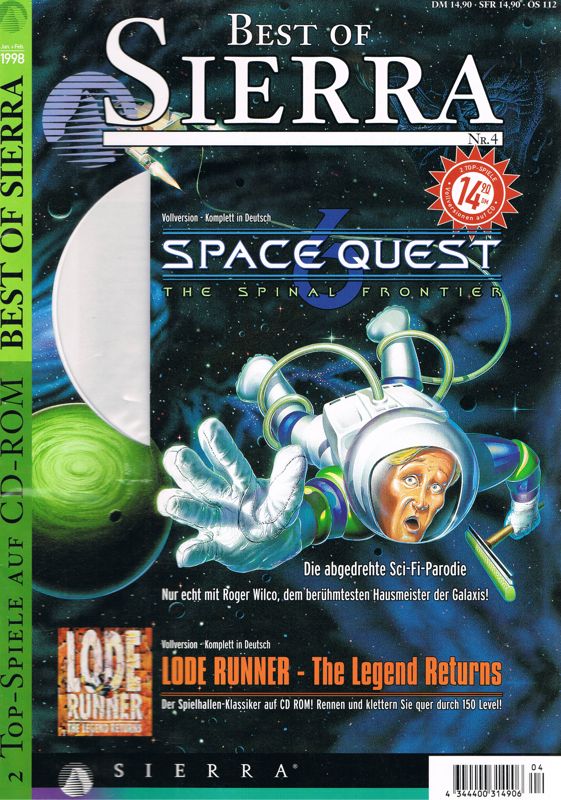
Best of Sierra Nr. 4 delivers a diverse gameplay experience by bundling two full title games—Space Quest VI: Roger Wilco in the Spinal Frontier and Lode Runner: The Legend Returns—alongside compelling demos of 3-D Ultra Pinball: The Lost Continent and Print Artist 3. Space Quest VI retains the series’ signature point-and-click mechanics, blending environmental puzzles with inventory challenges that balance humor and logic. Each room demands careful observation, and the witty dialogue ensures the joke-to-puzzle ratio remains just right for both fans and newcomers.
Lode Runner: The Legend Returns ramps up the challenge with responsive controls and a robust level editor. This installment refines movement physics while introducing new enemy types and hazards. The demo levels tease the full offering’s complexity—each puzzle mandates split-second timing and strategic planning, making it a standout in classic platform-puzzle hybrids.
Beyond the two flagship games, the included demos expand the issue’s replay value. The Lost Continent pinball tables showcase Sierra’s knack for high-contrast visuals and unexpected ball tricks, and Print Artist 3’s creative suite offers a taste of multimedia tools popular in the late ’90s. The magazine’s extensive walkthroughs for Space Quest VI (8 pages) and Lode Runner (11 pages) further bolster play sessions, guiding players past potential roadblocks without robbing them of discovery.
Graphics
Visually, Space Quest VI pushes Sierra’s point-and-click engine to new heights with richly detailed backdrops and fluid character animations. The space station environments brim with vibrant color palettes, dynamic lighting effects, and cleverly crafted set pieces that draw you into Roger Wilco’s absurd adventures. Cutscenes and dialogue portraits maintain a polished, hand-painted look that complements the game’s tongue-in-cheek style.
Lode Runner: The Legend Returns employs crisp pixel art combined with subtle parallax scrolling to deepen immersion. Each level’s thematic tileset—ranging from subterranean caves to high-tech complexes—feels distinct, and enemy sprites animate smoothly as they patrol and pursue. Though simple by modern standards, the clarity of design and contrasting color schemes make navigation intuitive and hazards easily identifiable.
The magazine’s demo of 3-D Ultra Pinball adds a glossy sheen with realistic ball physics and environment reflections that teeter between arcade flair and simulation. Print Artist 3, while not a game per se, uses vector graphics and clip art that demonstrate the era’s emphasis on creative computing. Together, these visual offerings reinforce Sierra’s reputation for technical competence and artistic ambition.
Story
Space Quest VI: Roger Wilco in the Spinal Frontier delivers a comedic sci-fi narrative that both newcomers and veteran fans can appreciate. The main plot involves a biological mishap threatening the crew’s sanity, leading Roger on a series of absurd missions across alien biomes. Sierra supplements this with a concise résumé of Space Quest I–V, ensuring that players unfamiliar with earlier entries can follow character relationships and running gags without feeling lost.
Lode Runner: The Legend Returns takes a more minimalist approach to story, focusing on the pure thrill of evasion and collection. The narrative is mostly implied through level themes and unlockable era-based challenges, creating a loose framework that keeps the emphasis squarely on puzzle mastery rather than plot depth. This design choice appeals to players who prefer gameplay loops over lengthy cutscenes.
The issue’s special features extend beyond pure gameplay by including in-depth articles on five of Sierra’s newest releases—Diablo: Hellfire, Lords of Magic, Red Baron II, Birthright: The Gorgon’s Alliance, and Betrayal in Antara. These previews offer plot synopses, worldbuilding details, and developer insights that enrich the Sierra universe and whet appetites for upcoming adventures. For readers keen on narrative context, this magazine strikes an ideal balance between recap, critique, and anticipation.
Overall Experience
Best of Sierra Nr. 4 stands out as a time capsule of late-1990s PC gaming, offering remarkable value in a single package. The combination of two full games, high-quality demos, extensive walkthroughs, and feature articles makes this issue a multifaceted entertainment and reference tool. Whether you’re seeking a complete adventure in Space Quest VI or looking to sharpen your puzzle skills in Lode Runner, there’s ample content to justify the purchase.
The balance between gameplay depth and editorial insight sets this issue apart from typical demo discs of the era. Sierra’s editorial team elevates the package with behind-the-scenes commentary, story recaps, and strategy guides that cater to both casual players and hardcore completionists. The inclusion of previews for upcoming titles ensures that readers stay connected to the latest developments in Sierra’s catalog.
In conclusion, Best of Sierra Nr. 4 is an engaging anthology that captures the spirit of its time. Its thoughtful curation of games, demos, and special features provides a comprehensive snapshot of Sierra’s creative output. For collectors, adventure aficionados, and puzzle enthusiasts alike, this issue offers a well-rounded experience that stands up as both a historical artifact and an enjoyable gaming bundle.


Reviews
There are no reviews yet.