 Retro Replay Retro Gaming History, Reviews & Emulation

Retro Replay Review
Gameplay
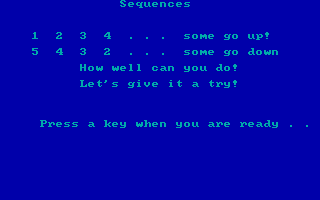
The first thing that works in Brandon’s Big Lunchbox is its variety. Young children have limited patience for repetition, and this collection can pivot between reading, memory, letter matching, keyboard letter-finding, counting, number recognition, and basic problem solving. That gives you a practical way to keep a session moving when one kind of exercise stops holding their attention.
The reading side is more thoughtful than a simple drill package. Some activities are checked by the computer, but others deliberately involve a parent confirming whether a child pronounced and understood a word. That is a sensible division of labor: the computer can handle repetition, while you can catch the difference between a lucky guess and genuine comprehension.
Customizable reading words are the feature that gives the collection lasting usefulness. You can tailor exercises to a child’s current vocabulary instead of making them work through a fixed list that may be too easy or too difficult. The math activities are straightforward—solving simple problems, counting pictured objects, recognizing numbers, and working through easy word problems—but that simplicity fits the stated age range.
Not every activity has to carry the lesson alone. A matching game, an alien dance activity, and an animated fishing display give children a breather between more directed exercises. They are small rewards rather than a substitute for the educational material, and that balance makes sense. Expect to sit nearby for the reading exercises that call for your input; this is at its best as shared learning time, not as a babysitter program.
Graphics
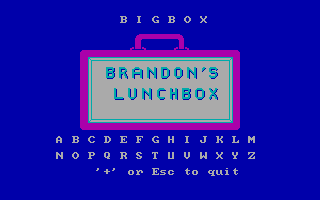
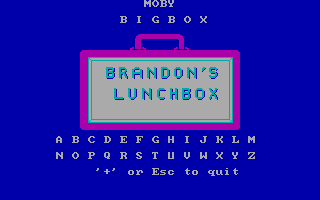
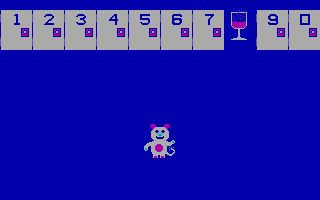
The game uses on-screen objects for counting and includes animated touches such as the fishing display and the alien dance activity. Those concrete little scenes should be more inviting to a young child than a page of bare questions, even if the educational exercises remain the main focus.
Story
There is no story carrying Brandon’s Big Lunchbox from one activity to the next. It is a set of learning games, and it does not pretend otherwise.
That absence is not a major problem for its audience. At this age, a clear task and a quick change of activity can hold more value than a long narrative wrapper. The alien and fishing diversions add a touch of playfulness without asking children to follow a plot.
If you want an educational game that teaches through an unfolding adventure, this will feel slight. If you want a flexible box of short reading and math exercises, the lack of narrative keeps the focus where it belongs.
Overall Experience
Brandon’s Big Lunchbox is a useful early-learning collection because it understands that reading and math practice need different kinds of attention. It mixes independent computer-checked tasks with parent-guided word work, and the editable vocabulary makes that partnership genuinely valuable rather than a token feature.
Its limitations are tied to its strengths. The exercises are intentionally basic, so an older or more advanced child will outgrow them quickly, and the parent-supported reading activities ask for real involvement. Still, for a three-to-seven-year-old working on letters, words, counting, and simple sums, the directness is a benefit.
Give it a chance if you want bite-size practice that you can adapt to a child’s needs and share with them. The payoff is not a grand game-world or a dramatic finale; it is seeing a child get more comfortable with a letter, a word, or a number because the next activity is waiting before boredom takes over.


Reviews
There are no reviews yet.