 Retro Replay Retro Replay gaming reviews, news, emulation, geek stuff and more!


Retro Replay Review
Gameplay
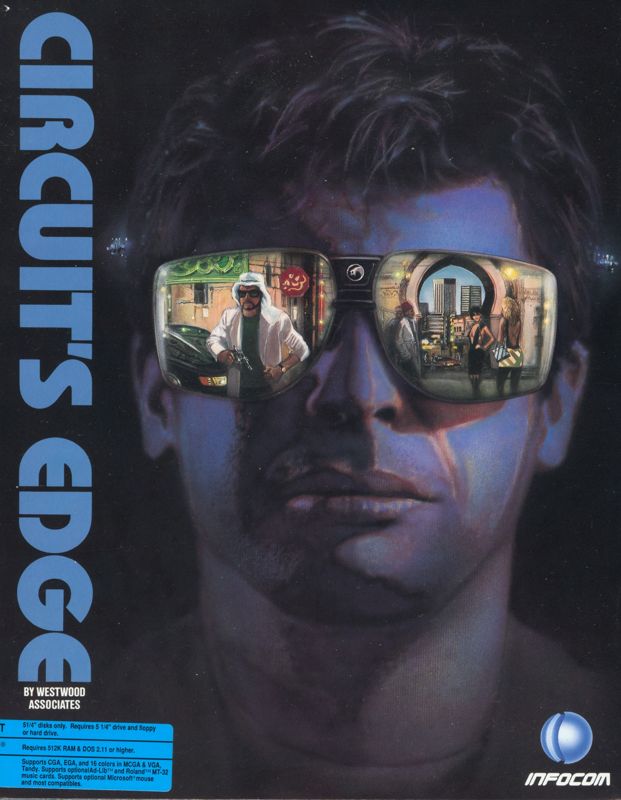
Circuit’s Edge delivers a distinctive blend of role-playing and adventure elements that keeps players on their toes from start to finish. You step into the shoes of Marid Audran, a hard-boiled private investigator navigating the neon-lit alleys of the Budayeen. Exploration feels alive thanks to the pseudo-3D, first-person perspective: winding corridors open onto crowded bazaars, shadowy bars or grimy backstreets, each area demanding cautious investigation and resource management.
(HEY YOU!! We hope you enjoy! We try not to run ads. So basically, this is a very expensive hobby running this site. Please consider joining us for updates, forums, and more. Network w/ us to make some cash or friends while retro gaming, and you can win some free retro games for posting. Okay, carry on 👍)
The game’s RPG mechanics emphasize survival just as much as combat. Marid must eat and rest at intervals, or risk penalties to his stats, creating an ever-present tension between pushing forward and retreating to safe havens. Money—earned through turn-based battles, gambling or odd jobs—becomes the lifeblood of your journey, funding both basic necessities and high-end cybernetic upgrades. Balancing your credits between food, rest and enhancements leads to memorable choices that impact Marid’s abilities and the narrative’s outcome.
Combat itself is straightforward yet strategic. Encounters with street thugs, corporate security and rival hackers play out in a classic, menu-driven, turn-based system reminiscent of early console RPGs. Even minor fights can be punishing without the right cyberware or sufficient health, so preparation is key. Hacking sequences add a layer of depth: you must navigate rudimentary interfaces to unlock doors, disable alarms or siphon data, reinforcing the sense that the city’s underbelly is as much digital as it is physical.
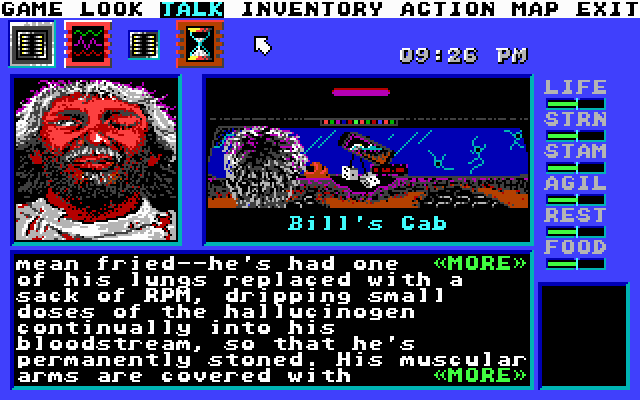
The user interface takes inspiration from titles like Mars Saga, with clear panels for stats, inventory and dialogue choices, albeit with a dated feel by modern standards. Still, its simplicity allows you to focus on the world’s grim ambiance rather than fiddling with overly complex menus. For seasoned RPG veterans, Circuit’s Edge offers a rewarding challenge; newcomers might need patience to learn pacing, but will be gratified by the sense of accomplishment that comes with unraveling the city’s secrets.
Graphics
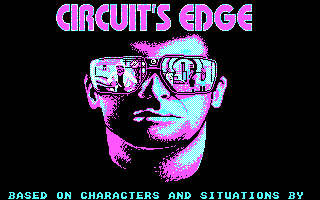
Graphically, Circuit’s Edge embraces the technological constraints of its time to craft a moody, atmospheric vision of a cybernetic future. The pseudo-3D cityscapes—rendered in chunky pixel blocks—evoke a claustrophobic labyrinth of towering walls, flickering neon signs and narrow alleyways. The limited color palette leans heavily on dusk-like purples, blues and sickly greens, reinforcing the Budayeen’s nocturnal, opium-fueled reputation.
Character portraits and NPC sprites are small but expressive, capturing Marid’s weary gaze or the sly smirk of a gambling den proprietor. While animations are minimal, the occasional flicker of a neon holo-sign or the flash of a weapon discharge injects fleeting moments of dynamism into otherwise static screens. The result is a world that feels simultaneously dilapidated and teeming with hidden life.
Environmental detail shines in close-quarters spaces: chipped tiles, stained walls and steam vents all hint at a city built on decay and desperation. Iconic landmarks—the mafia boss’s opulent office, seedier nightclubs, corporate strongholds—are distinguished through subtle shifts in lighting and texture, guiding the player’s eye without explicit map markers. For a late-’80s PC title, these visuals still convey a strong sense of place and mood.
Admittedly, modern gamers accustomed to high-definition, fully 3D realms may find the graphics primitive. Yet, the minimalist approach underscores the gritty narrative: you’re not exploring a polished utopia but a fractured metropolis where nothing—and no one—is what it seems. For those willing to embrace retro aesthetics, Circuit’s Edge remains a striking example of artful limitation.
Story
At its core, Circuit’s Edge is a cyber-noir detective tale adapted from George Alec Effinger’s novel When Gravity Fails. Marid Audran, a once-successful PI brought low by debts and bad luck, finds himself accused of murder after discovering a client’s body mid-delivery. Cleared by a powerful mafia lord in exchange for his investigative services, Marid is thrust into a conspiratorial web of crime, politics and cybernetic intrigue.
The narrative unfolds gradually, with each lead prompting visits to shady establishments, clandestine meetings and moral quandaries. Dialogue choices—though limited compared to modern RPGs—carry weight, influencing relationships with allies and adversaries alike. Moments of betrayal or revelation are heightened by the game’s pacing: you never feel rushed to key plot points, allowing the darkly colored world of the Budayeen to sink in as the mystery deepens.
Mature themes permeate every chapter: violence is blunt and unforgiving, drug usage and body modifications are depicted matter-of-factly, and sexual content is suggested rather than explicit. This unflinching tone captures the novel’s spirit, portraying a society where flesh and machine merge and human life hangs by a thread of credit or influence. Fans of gritty science fiction will appreciate how the story balances personal stakes with broader questions of power and identity.
Although the game occasionally leans on tropes—corrupt officials, double-crossing informants—the well-crafted setting and nuanced characters make these familiar beats feel fresh. Marid himself is a compelling protagonist: equal parts cynic and survivor, his wry commentary lightens the mood even as danger lurks around every corner. By the finale, players will have unraveled enough of the Budayeen’s secrets to feel a genuine sense of closure, even as hints of larger conspiracies linger.
Overall Experience
Circuit’s Edge stands as a testament to what imaginative design can achieve within technical limits. Its fusion of RPG mechanics, investigative gameplay and cyber-noir storytelling offers a coherent, immersive journey through a world both alien and unsettlingly familiar. While certain systems—like turn-based combat and resource management—reflect their era’s sensibilities, they still deliver satisfying depth and challenge.
The game’s replay value emerges from branching dialogue, optional side-quests and alternative approaches to character development. Whether you choose to invest heavily in combat-oriented cyberware, sharpen your hacking prowess or hedge your bets at the local casino, each playthrough reveals new facets of Marid’s environment and the forces that shape it. Exploration is rewarded with hidden encounters and lore that enrich the overarching narrative.
That said, newcomers should anticipate a learning curve. The interface and navigation, though clear, feel archaic compared to modern standards. Patience is required to parse text-heavy dialogues and memorize city layouts. Yet, for players willing to engage with its retro charm, Circuit’s Edge offers an experience that’s both thought-provoking and emotionally resonant.
Ultimately, Circuit’s Edge is more than a historical curiosity: it’s a bold world-building exercise that still resonates with themes of corporate excess, body modification and cultural fusion. If you’re drawn to narrative-driven RPGs and can embrace a moody, text-rich presentation, this journey into the Budayeen is well worth your time—and your credits.


Reviews
There are no reviews yet.