 Retro Replay Retro Replay gaming reviews, news, emulation, geek stuff and more!
Retro Replay Review
Gameplay
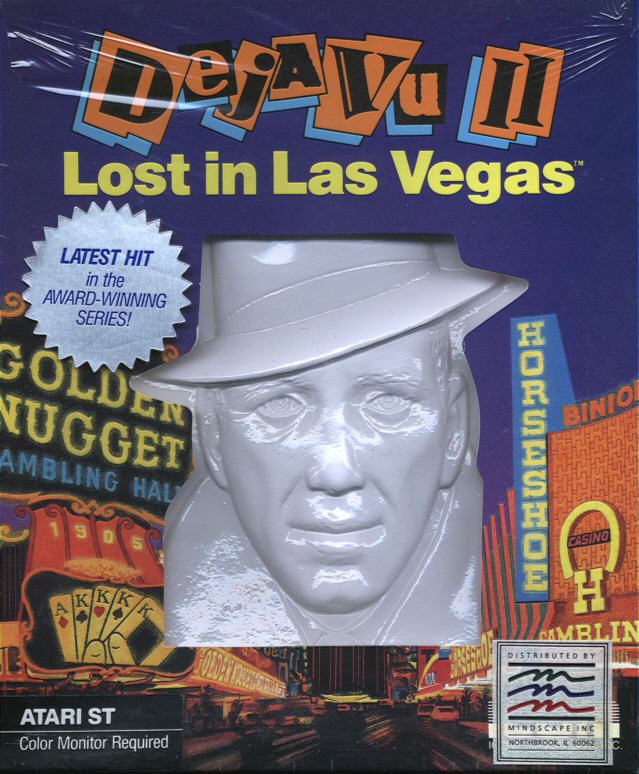
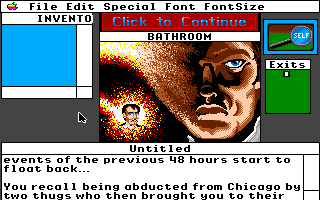
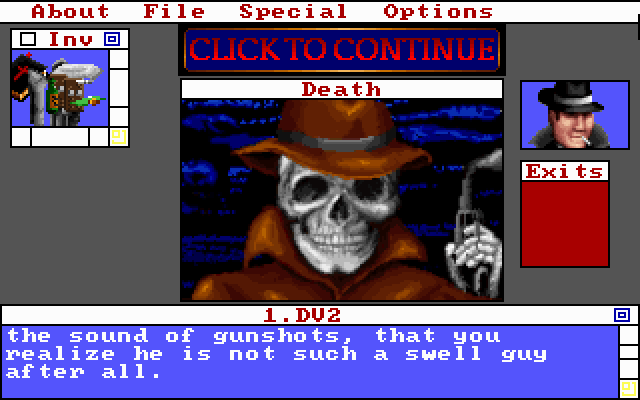
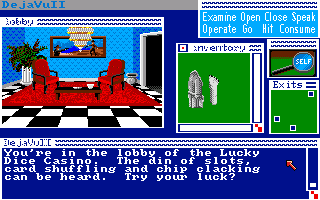
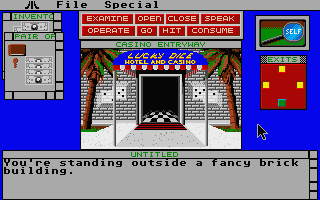
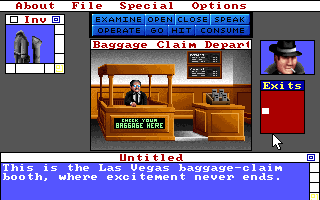
Déjà Vu II: Lost in Las Vegas shifts the adventure firmly into the neon-lit world of 1940s Sin City, offering a point-and-click experience that blends investigation, inventory puzzles, and branching dialogue. You quickly learn to navigate multiple resizable windows—map, text, commands, and inventory—tailoring the interface to your preference. This multi-window design allows you to track clues and interact with objects more efficiently, though it can feel cluttered until you develop a workflow that suits your playstyle.
(HEY YOU!! We hope you enjoy! We try not to run ads. So basically, this is a very expensive hobby running this site. Please consider joining us for updates, forums, and more. Network w/ us to make some cash or friends while retro gaming, and you can win some free retro games for posting. Okay, carry on 👍)
The core gameplay loop revolves around examining every scene, collecting useful items, and piecing together clues to figure out where Joey Siegel’s missing $112,000 could be hidden. Conversations with shady characters and honest bystanders alike often hinge on your choice of questions and responses, which can open new leads or dead ends. Time management also plays a subtle role: Ace Harding has only one week to deliver the cash or face dire consequences, adding a light pressure to balance thorough investigation with efficient progress.
While many puzzles follow traditional inventory-use patterns—combining items, using keys on doors, or presenting the right evidence to the right character—some challenges require careful note-taking and cross-referencing clues from earlier scenes. This rewards patience and attention to detail but may frustrate players who prefer more hand-holding. The game also throws in a few logic-based mini-games, such as safe combinations and slot machine mechanics, to break up the conversation-heavy exploration.
Graphics
For a late-1980s adventure, Lost in Las Vegas sports crisp, hand-drawn backgrounds rendered in a limited palette that captures the era’s monochrome charm or EGA color schemes, depending on your system. The casino floors, dimly lit back alleys, and opulent hotel lobbies are all depicted with a noir sensibility, using shadow and contrast to emphasize the story’s darker undercurrents. While there’s little in the way of smooth animation, each scene is richly detailed enough to reward close inspection.
The user interface windows themselves are cleanly designed, with clear iconography and legible text. You can resize and reposition the inventory, command, and description panels to focus on the scene you’re most interested in. Although this flexibility was groundbreaking at the time, modern players might find the static screens and occasional flicker more charming than practical. Still, the attention to environmental detail—scattered playing cards, half-smoked cigarettes, neon signs flickering in the distance—helps ground the game in its period setting.
Sound-wise, the game uses simple MIDI tunes and sparse sound effects—slot machine clinks, door creaks, distant chatter—to set the mood without overwhelming the senses. Graphics and audio work in tandem to evoke that classic detective atmosphere, though you’ll soon notice the limitations of the hardware. For enthusiasts of retro gaming, these constraints add to the nostalgic appeal; for newcomers, they may underscore how far adventure titles have evolved.
Story
Picking up where Déjà Vu: A Nightmare Comes True left off, Lost in Las Vegas throws you into a high-stakes underworld plot with immediate tension. You’re Ace Harding, a private eye saddled with a migraine and a ticking clock: find $112,000 belonging to murdered racketeer Joey Siegel or face the wrath of Vegas mob boss Tony Malone. This premise sets a brisk narrative pace, with each discovery or misstep carrying tangible risk.
The game’s noir writing excels at building an atmosphere of paranoia and betrayal. NPCs range from slippery lounge singers to overzealous pit bosses, each with their own motives and information to share—if you can coax it out of them. Dialogue options allow you to bluff, intimidate, or charm, though some conversation branches lead to dead ends that force you to backtrack. Despite a relatively linear main plot, the game offers enough red herrings and side explorations to keep the mystery engaging.
Recurring characters, such as the ever-watchful thug Stogie Martin, add color and stakes to the investigation. He shadows you through key locations, ready to intervene if you stray too far off Malone’s radar. Compared to its predecessor, Lost in Las Vegas feels more focused: the Vegas setting naturally introduces glitz and danger in equal measure, while the one-week deadline heightens the urgency without making the game feel like a pure race against time.
Overall Experience
Déjà Vu II: Lost in Las Vegas remains a standout example of classic interactive fiction in a graphical shell. Its combination of noir storytelling, intricate puzzles, and the signature multi-window interface creates an engaging detective adventure that still holds appeal for retro gamers. The sense of being up against both time and mob enforcers keeps the stakes high, encouraging careful note-taking and exploration.
However, modern players should be prepared for dated mechanics: minimal hand-holding, pixel-perfect object placements, and occasional save-scumming when a key interaction is missed. The visuals and sound design, while atmospheric, lack the polish of later point-and-click titles. Those accustomed to streamlined interfaces and voice acting may find the learning curve steep at first.
Ultimately, Lost in Las Vegas offers a rich, rewarding experience for fans of old-school adventures and noir mysteries. Its blend of challenging puzzles, evocative atmosphere, and morally ambiguous storytelling provides a nostalgic trip down the casino’s back corridors. If you appreciate classics that demand patience and deductive thinking, Ace Harding’s latest case is well worth the gamble.


Reviews
There are no reviews yet.