 Retro Replay Retro Replay gaming reviews, news, emulation, geek stuff and more!
Retro Replay Review
Gameplay
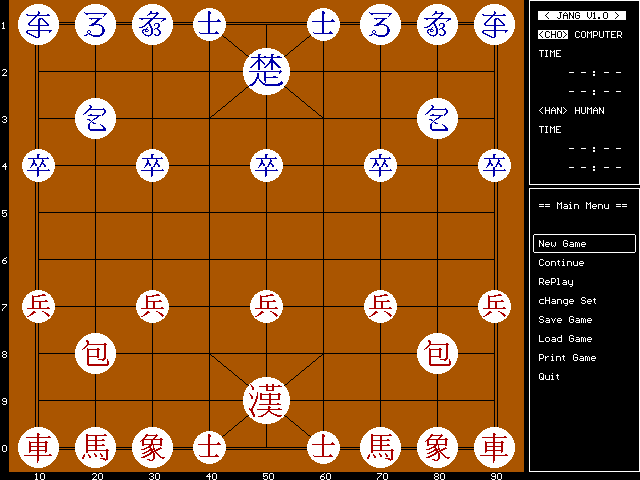
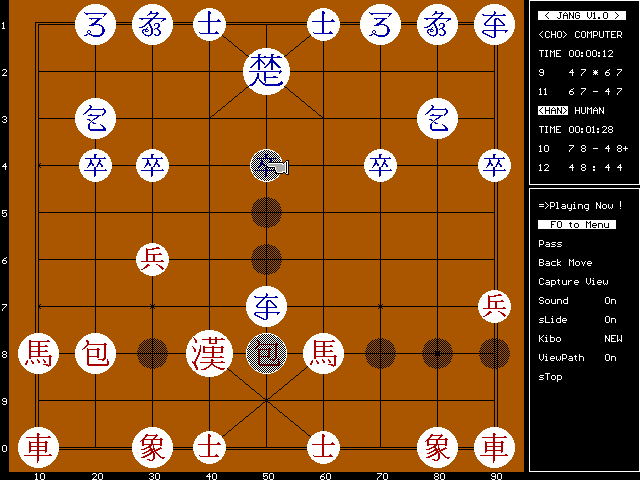
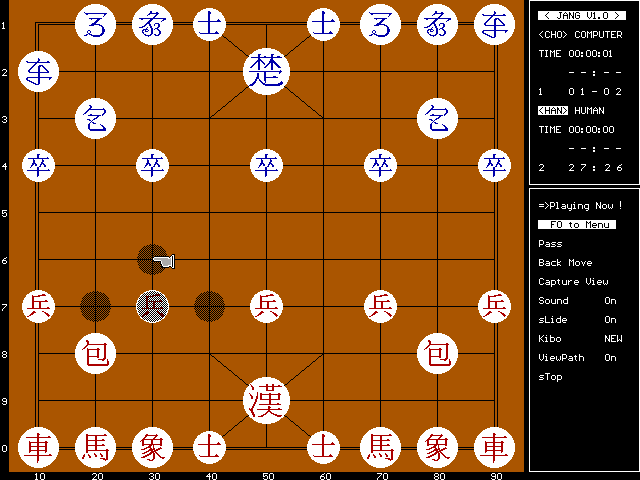
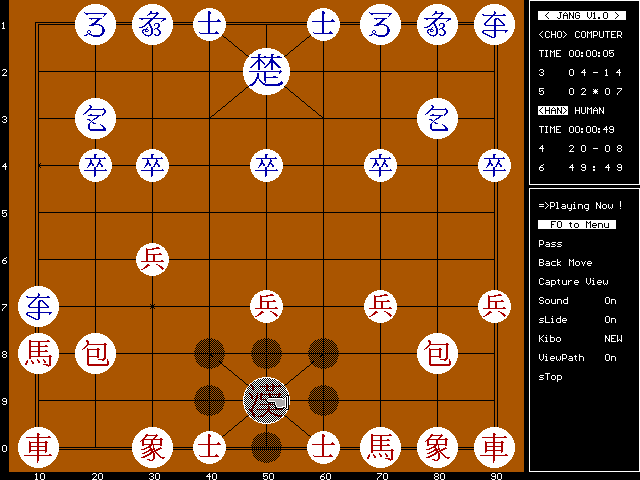
The core of Jang-gi lies in its faithful simulation of traditional Korean Chess, giving players full control over piece selection, move visualization, and capturing mechanics. Each turn, you click or drag a unit to see legal moves highlighted on the 9×10 grid, then execute your strategy by positioning your soldiers, cannons, or generals to pressure your opponent. The absence of the “river” found in Xiangqi simplifies some tactical considerations while preserving deep strategic layers inherent to Jang-gi’s unique palace and fortress rules.
(HEY YOU!! We hope you enjoy! We try not to run ads. So basically, this is a very expensive hobby running this site. Please consider joining us for updates, forums, and more. Network w/ us to make some cash or friends while retro gaming, and you can win some free retro games for posting. Okay, carry on 👍)
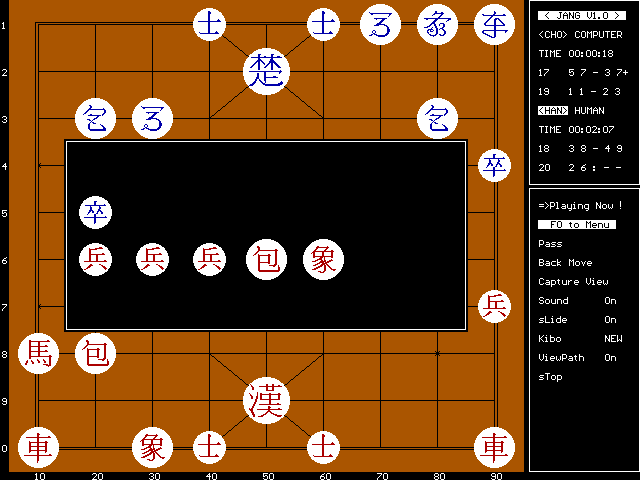
Beyond mere movement, Jang-gi offers a suite of quality-of-life features: you can review your captured pieces in a persistent sidebar, replay any sequence of moves with step-by-step navigation, and even annotate critical positions. The built-in save and load functionality allows you to pause long matches in mid-game and return without losing momentum. For study purposes, you can print boards in PDF format or export move lists to share with fellow enthusiasts.
Single-player mode pits you against multiple AI difficulty levels, ranging from beginner puzzles that teach you opening patterns to relentless grandmaster-style tactics that will test even seasoned players. For head-to-head competition, the local two-player option supports pass-and-play on the same device, making Jang-gi ideal for casual gatherings or classroom demonstrations. While online matchmaking is absent, the robust local play and AI challenges more than compensate.
Novices will appreciate the interactive tutorials that cover basic piece movements, the “check” condition when targeting the opponent’s general, and simple endgame studies. Advanced players, by contrast, can tweak game options such as move timers, notation style (Western algebraic or traditional Korean), and board color themes to customize their competitive environment. The result is a gameplay suite that welcomes beginners while satisfying strategic purists.
Graphics
Jang-gi’s visual presentation strikes a balance between elegance and clarity. The board’s wooden grain texture evokes traditional Korean craftsmanship, and each piece is rendered with crisp calligraphic symbols in contrasting colors for immediate readability. Whether you play on a high-resolution monitor or a smaller tablet screen, the clean iconography ensures you never misidentify a chariot or horse.
Animations are kept understated yet effective: pieces glide smoothly to their destination, highlighting legal squares in soft hues, and captures are signaled by a subtle fade-out effect. This minimalist approach keeps the focus on strategy rather than flashy distractions. If you prefer a monochrome aesthetic or high-contrast palette for accessibility reasons, the options menu provides several alternative themes.
The user interface surrounding the board is equally well-organized. A side panel lists captured pieces in neat stacks, buttons for replay, save/load, and print are clearly labeled, and contextual tooltips explain any ambiguous icons. Even first-time users will find the menus intuitive, making it easy to dive into a match without wading through dense configuration screens.
While there’s no cinematic cutscene or animated storyline, the static galleries of historical Jang-gi sets and annotated diagrams add a touch of cultural flair. These panels double as a mini-encyclopedia, offering background on each piece’s origin and strategic role. It’s a small but welcome nod to the game’s rich heritage.
Story
As a pure board-game simulation, Jang-gi does not weave a fictional narrative or campaign. Instead, it lets the heritage of Korean strategy speak for itself, placing you in the role of a general commanding an ancient army. The absence of a scripted storyline keeps the focus laser-sharp on tactical mastery and competitive dueling.
Despite the lack of cutscenes or character arcs, the game does incorporate educational sidebars detailing the evolution of Jang-gi from early Joseon Dynasty court play to its modern recreational form. These notes provide context for newcomers and enrich the experience for history buffs, offering insight into why certain pieces move as they do and how historic battles influenced the game’s development.
For players craving narrative flavor, the challenge puzzles are presented as “scenarios” inspired by famous clashes from Korean lore. Each puzzle sets up a predefined board state—sometimes drawn from centuries-old manuals—and asks you to recreate the decisive tactical strike. In that sense, you do get vignettes of story through gameplay itself, without diverting into lengthy exposition.
Overall Experience
Jang-gi delivers a polished, feature-rich rendition of Korean Chess that accommodates both newcomers and veteran strategists. The seamless integration of move replay, annotation tools, and multiple theme options speaks to the developer’s attention to detail and commitment to enhancing the user experience. While it forgoes online multiplayer, its AI challenges and pass-and-play mode ensure that you can always find a worthy opponent.
Performance is rock-solid on a wide range of devices: you’ll encounter no lag when dragging pieces or toggling through long move histories. The modest system requirements and thoughtful UI design make it an excellent choice for schools, casual gaming sessions, or deep solo study. The printing and export features further extend its utility for teaching or club play.
In the niche of digital board-game simulations, Jang-gi stands out for its authenticity, accessibility, and respect for tradition. By faithfully recreating the nuances of Korean Chess and supplementing them with modern conveniences, it offers a compelling package for anyone curious about Eastern strategy games. Whether you’re looking to learn a new pastime or sharpen existing skills, Jang-gi earns high marks for reliability, depth, and cultural enrichment.


Reviews
There are no reviews yet.