 Retro Replay Retro Replay gaming reviews, news, emulation, geek stuff and more!

Retro Replay Review
Gameplay
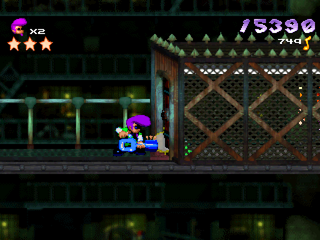
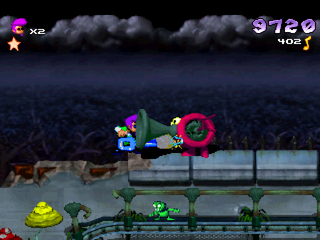
Johnny Bazookatone delivers a fast-paced 3D side-scrolling experience that blends classic platforming with over-the-top rock ’n’ roll flair. Players guide Johnny through a series of hellish levels, each filled with traps, enemies, and hidden passages. The core platforming mechanics—run, jump, and attack—are intuitive, but the real fun comes from Johnny’s signature moves like the 360-degree spin jump and the graceful hover jump. These abilities not only add verticality to the gameplay but also encourage players to experiment with mid-air maneuvers to reach secret areas.
(HEY YOU!! We hope you enjoy! We try not to run ads. So basically, this is a very expensive hobby running this site. Please consider joining us for updates, forums, and more. Network w/ us to make some cash or friends while retro gaming, and you can win some free retro games for posting. Okay, carry on 👍)
The bazooka guitar, Anita, serves as both a weapon and a movement enhancer. Basic strums dispatch standard foes, but once powered up, Anita unleashes a sonic blast that can clear crowds in a satisfying visual and auditory spectacle. Weapon pickups and power-ups are scattered throughout each stage, rewarding exploration and encouraging replayability. Discovering a new riff upgrade or an ammo belt for Anita can dramatically shift your approach to combat and platforming challenges.
Levels such as Hotel Demonique, Hell’s Kitchen, and Mr. Diablo’s Penthouse introduce unique layouts and hazards, from shifting floors and flamethrower traps to demonic henchmen and mini-boss encounters. Secret passages, often hidden behind breakable walls or concealed doorways, lead to bonus stages where players can earn extra lives, special power-ups, or collectible posters of rock legends. Though the difficulty can spike in later stages, the generous checkpoint system strikes a fair balance between challenge and progression.
Graphics
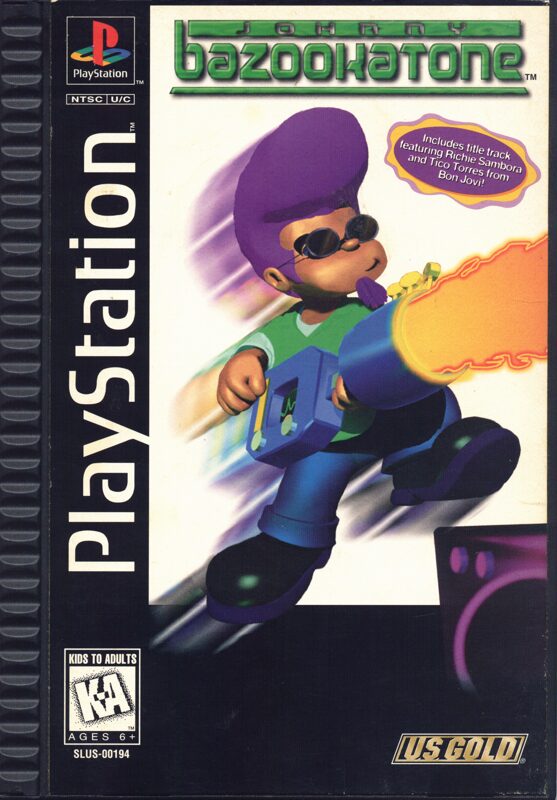
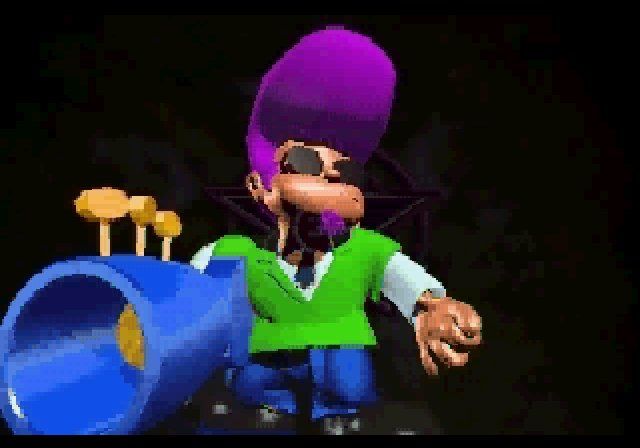
Visually, Johnny Bazookatone stands out with its bold color palette and stylized character designs. Johnny himself—complete with purple hair pompadour and Elvis-inspired leather jacket—pops against the fiery reds and inky blacks of the underworld settings. Enemy designs range from mischievous imps to towering demon lords, each animated with a cartoonish energy that keeps the mood light despite the infernal backdrop.
The 3D environments feel surprisingly dynamic for a platformer of its era. Background elements such as dripping lava, swirling portals, and flickering neon signs in Hotel Demonique give each level a distinct atmosphere. Parallax scrolling layers add depth, making the world feel more expansive than a typical side-scroller. Occasional graphical glitches can appear, especially on older hardware, but they rarely detract from the overall aesthetic.
Special effects—like the sonic blast from Anita or the brief slow-motion during a well-timed spin jump—are executed with flair. Particle effects and screen shakes emphasize the impact of powerful attacks, delivering satisfying feedback. While textures can look dated by modern standards, the game’s commitment to a rock ’n’ roll theme ensures that every visual detail, from neon guitar-shaped signs to demonic skull motifs, reinforces the game’s unique identity.
Story
Johnny Bazookatone opens with a tongue-in-cheek premise: it’s the year 2050, and the world’s musical legends have been imprisoned in the dreaded Sin Sin Prison by El Diablo, the jealous Lord of the Underworld. Among them is Johnny, the “original guitar hero,” whose righteous riffs threaten the devilish regime. When Anita, his beloved guitar, is seized, Johnny embarks on a perilous rescue mission to free his instrument and his fellow rock icons.
The narrative is light on cutscenes but rich in rock ’n’ roll attitude. Johnny’s quips and animated gestures lend personality to the campaign, making even routine objectives—like collecting keys or activating lifts—feel like part of a grand, guitar-fueled rebellion. Villainous bosses, from skeletal roadies to the final showdown with El Diablo himself, are introduced with brief dialogues that lean into campy humor and over-the-top theatrics.
While the story won’t win any literary awards, it perfectly complements the game’s arcade-style thrills. The sense of progression—from escaping the prison’s depths to storming the fiery penthouse—drives players forward. Occasional cameo appearances by other kidnapped legends (in the form of hidden statues or bonus-level hosts) add a fun collectible element and hint at the broader rock universe Johnny fights to liberate.
Overall Experience
Johnny Bazookatone offers an energetic blend of platforming action and rock-inspired combat that sets it apart from standard side-scrollers. Its tight controls, varied moveset, and rewarding exploration make for an engaging playthrough, while the devilish level designs and boss encounters keep the stakes high. Although the difficulty curve can feel punishing in later stages, the game’s checkpoint placements and generous lives system help balance the challenge.
The soundtrack, featuring the title track by Richie Sambora and Tico Torres, provides an authentic rock atmosphere that elevates every level. Background music pulses with driving guitar riffs and pounding drums, ensuring that the sense of momentum never wanes. Even after completing the main campaign, players will find plenty of reasons to revisit stages in search of missed secrets or to perfect their speed runs.
For fans of classic platformers and rock ’n’ roll aesthetics, Johnny Bazookatone remains a memorable and replayable adventure. Its combination of exaggerated visuals, memorable soundtrack, and playful narrative create an experience that’s as much a tribute to guitar heroes as it is a solid action-platformer. Whether you’re blasting demons with sonic booms or hunting down hidden corridors for bonus loot, Johnny’s journey through the underworld is one that any gaming rocker won’t want to miss.


Reviews
There are no reviews yet.