 Retro Replay Retro Gaming History, Reviews & Emulation
Retro Replay Review
Gameplay
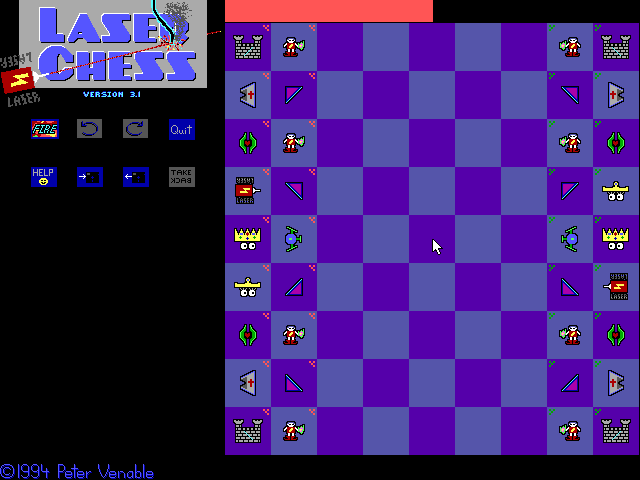
Laser Chess retains the turn-based, square-by-square foundation associated with chess, but replaces part of the familiar piece set with laser cannons and deflectors. The result is a tactical contest in which positioning is inseparable from line-of-fire management.
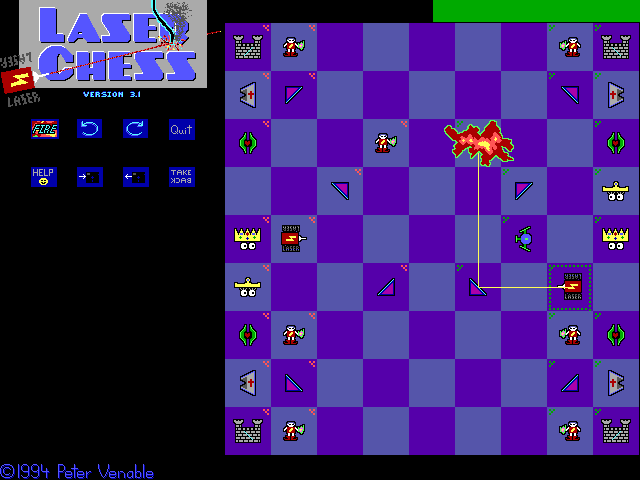
A turn can be spent moving a piece, rotating a piece, or firing the laser. That structure creates meaningful trade-offs: taking time to improve a deflector’s angle may create a future attack, while firing immediately may expose an overlooked path across the board.
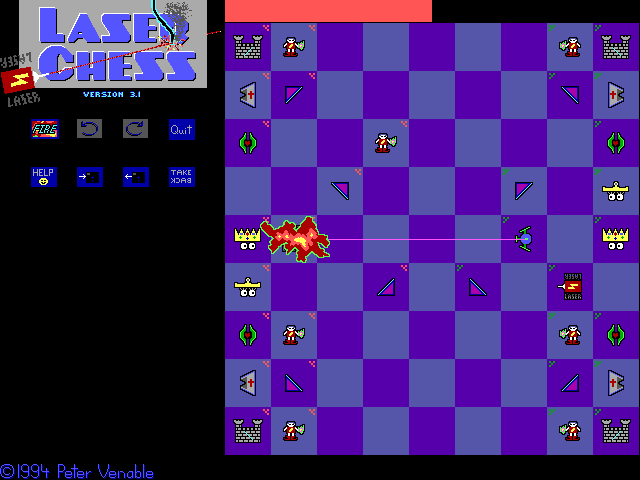
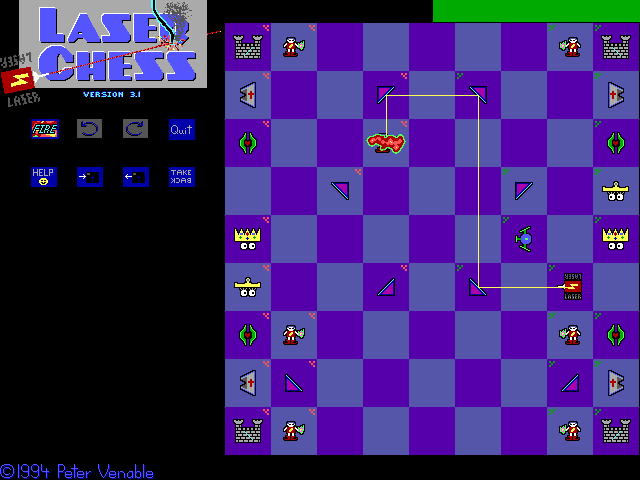
The central appeal lies in anticipating beam behavior. Deflectors can redirect lasers, but incorrect orientation can bounce a beam in an unwanted direction, split it, or send it back into the player’s own laser cannon. Winning comes when the opposing side is eliminated.
Graphics
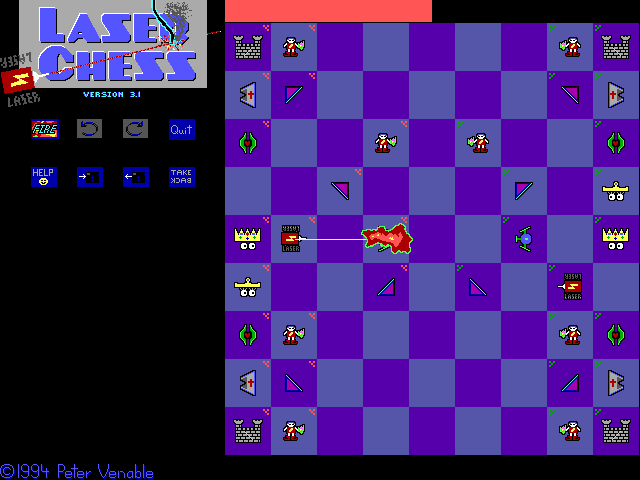
The available description identifies Laser Chess as a DOS game viewed from a top-down perspective, placing the action on a board where piece placement and orientation carry the key tactical information.
Its visual role is fundamentally functional: players need to read the arrangement of chess-like pieces, deflectors, and laser cannons in order to judge possible beam routes. The strategic premise depends on the board remaining understandable from turn to turn.
Rather than supporting a claim about specific artwork, animation, or interface presentation, the documented visual identity is best defined by its top-down board-game format and science-fictional laser theme.
Story
Laser Chess is presented as a strategy game rather than a narrative-led experience. The supplied material centers on competitive board play, destructive laser beams, and the tactical use of deflectors.
No named characters, setting details, campaign, or plot events are established in the available information. Its conflict is conveyed through the match itself: two sides maneuver pieces and attempt to destroy the other player’s laser cannon.
That absence of stated story detail keeps attention on the abstract contest. The science-fiction element comes through the laser-cannon concept rather than through a documented fictional narrative.
Overall Experience
Laser Chess offers a distinctive fusion of traditional board positioning and beam-routing tactics. Its chess connection provides an immediately recognizable frame, while rotation and laser fire add consequences that ordinary chess does not have.
The game’s tension comes from the possibility that a carefully arranged board can become dangerous to its owner. A deflector intended for attack or defense can create an accidental ricochet, making each adjustment a potentially consequential decision.
Released for DOS in 1994, Laser Chess is most clearly defined by its focused strategic premise: maneuver, orient, fire, and avoid being caught in the path of one’s own weapon. For broader historical context, see Laser Chess history and gameplay. For a related chess strategy game, see Cyberchess.


Reviews
There are no reviews yet.