 Retro Replay Retro Replay gaming reviews, news, emulation, geek stuff and more!

Retro Replay Review
Gameplay
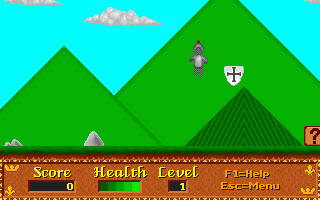
Last Knight in Camelot offers a classic side-scrolling platform experience that emphasizes exploration and precise timing. The controls are simple yet responsive: the four arrow keys handle movement, looking, climbing, interacting with switches, and entering doorways, while the Shift key triggers the knight’s jump. This intuitive setup allows players to focus on mastering the varied level designs, which range from dense forests and dark caverns to Merlin’s enchanted towers.
(HEY YOU!! We hope you enjoy! We try not to run ads. So basically, this is a very expensive hobby running this site. Please consider joining us for updates, forums, and more. Network w/ us to make some cash or friends while retro gaming, and you can win some free retro games for posting. Okay, carry on 👍)
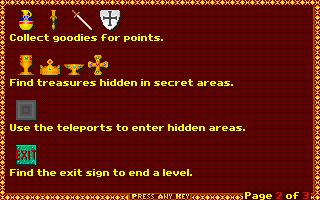
Without traditional weapons, combat is streamlined to jumping on enemies or skillfully avoiding them altogether. This design choice places a premium on observation and patience, especially when navigating areas teeming with Dwarf minions or patrolling Black Knights. Hidden treasure troves and special items are tucked away behind secret walls or accessed through teleports, rewarding players who thoroughly explore each level and encouraging multiple playthroughs to uncover every secret.
Puzzle elements are woven seamlessly into the platforming challenges. Players must activate switches in the correct sequence to open new paths, time jumps over disappearing platforms, and use teleports wisely to reach otherwise inaccessible areas. While some sections can feel unforgiving—requiring pixel-perfect leaps—the satisfaction of discovering a hidden cache of health potions or stumbling upon a shortcut more than compensates for the occasional setback.
Graphics
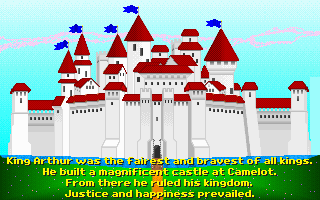
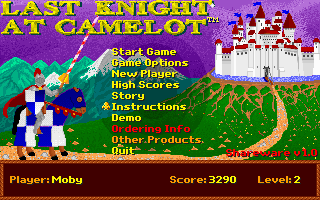
The visual presentation in Last Knight in Camelot captures the spirit of early ’90s platformers with rich, hand-drawn backgrounds and vibrant sprite work. Each environment—from misty woodlands to stone battlements—boasts detailed textures and layered parallax scrolling that create a sense of depth. The medieval theme shines through in the architecture of Camelot, the mossy stones of hidden caves, and the glowing portals of Merlin’s teleportation circles.
Character animations are fluid, particularly the knight’s running and jumping cycles, which convey a satisfying weight and momentum. Enemy sprites, such as the stout Dwarf minions and the imposing Black Knight, are distinct and easy to recognize, ensuring players can react quickly to approaching threats. Subtle visual cues—like the flicker of a hidden door’s outline or the glint of treasure—guide attentive players toward secrets without breaking immersion.
While the color palette occasionally leans on darker, more muted tones in the deeper caverns, the occasional flare of magic effects—sparkling teleportation portals, shimmering Excalibur beams—adds visual variety and excitement. Cutscene stills that bookend certain levels feel hand-crafted, with parchment-style borders and ornate lettering that reinforce the Arthurian legend motif.
Story
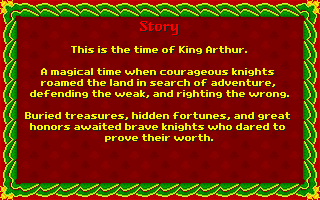
Set in the legendary age of King Arthur’s Round Table, Last Knight in Camelot weaves a straightforward yet engaging narrative. Merlin and Arthur send out a challenge to find a new knight worthy of Camelot’s honor, drawing the player into a quest for Excalibur itself. The story unfolds through brief text interludes and atmospheric level introductions, establishing motive and setting without lengthy exposition.
As players traverse the kingdom, the looming threat of the Black Knight and his Dwarf minions drives the urgency of the mission. While dialogue is sparse, each environment suggests a chapter in the tale—merlin’s tower resonates with arcane energy, dense forests whisper of ancient secrets, and the final battleground radiates the weight of destiny. The minimalist storytelling approach keeps the focus on gameplay, yet still provides enough context to care about the journey.
The gradual revelations—discovering hidden tomes that hint at the Black Knight’s true intentions, uncovering Merlin’s lost artifacts, and, ultimately, laying claim to Excalibur—create a sense of progression and reward. Though the narrative never ventures into complex moral choices or branching paths, it remains satisfying for players seeking a clear heroic arc set against the backdrop of Arthurian myth.
Overall Experience
Last Knight in Camelot excels at delivering a nostalgic platforming adventure with a medieval twist. Its blend of exploration, puzzle-solving, and precise jumping challenges offers a well-rounded experience that appeals to both veteran platformer fans and newcomers drawn to Arthurian legends. The balance of difficulty feels fair overall, though a handful of particularly tricky jumps may test player patience.
The game’s length—spanning multiple diverse levels filled with secrets—ensures good value for those who enjoy uncovering every hidden area. Teleports and secret switches keep progression dynamic, while the absence of conventional weapons encourages creative problem-solving. Players who appreciate retro-style graphics, atmospheric music, and a straightforward quest will find themselves thoroughly engaged from start to finish.
Ultimately, Last Knight in Camelot stands out as a charming homage to classic platformers, enriched by its medieval setting and clever level design. Whether you’re drawn by the promise of finding Excalibur or simply seeking a solid side-scroller with plenty of exploration, this title delivers an experience that feels both familiar and refreshingly distinct within its genre.


Reviews
There are no reviews yet.