 Retro Replay Retro Replay gaming reviews, news, emulation, geek stuff and more!


Retro Replay Review
Gameplay
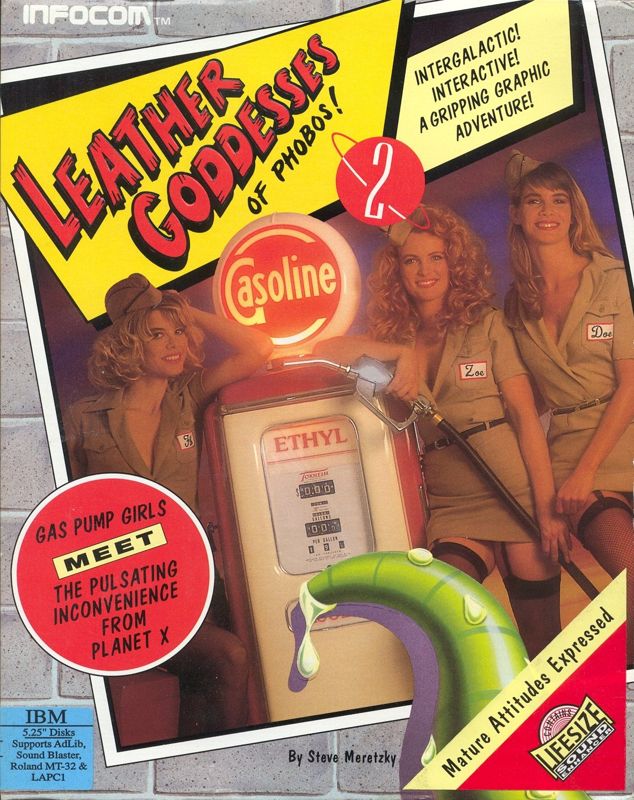
Leather Goddesses of Phobos! 2: Gas Pump Girls Meet the Pulsating Inconvenience from Planet X shifts from its text-parser roots into a full-fledged graphical adventure, delivering a classic point-and-click experience. Players navigate Atom City, Nevada by clicking on hotspots, with a “smart cursor” that adapts its icon to the current context—whether you’re talking, examining, or using an inventory item. This streamlined interface makes exploration intuitive, letting you focus on solving puzzles rather than wrestling with commands.
(HEY YOU!! We hope you enjoy! We try not to run ads. So basically, this is a very expensive hobby running this site. Please consider joining us for updates, forums, and more. Network w/ us to make some cash or friends while retro gaming, and you can win some free retro games for posting. Okay, carry on 👍)
The choice of protagonist—Barth the alien “Pulsating Inconvenience,” Zeke the gas station owner, or Lydia the astronomer’s daughter—adds replay value. Barth’s quest revolves around restoring freedom to the enslaved denizens of Planet X, requiring you to perform bizarre extraterrestrial tasks. The human scenarios are structurally similar but feature distinct dialogue trees that reflect each character’s personality. These branching conversations provide enough variation to warrant multiple playthroughs, even if the core puzzles remain largely the same.
Puzzle design leans on inventory combinations, dialogue options, and environmental interactions. Some puzzles feel delightfully offbeat, such as rigging gasoline pumps for an impromptu distraction, while others can be a tad obtuse, relying on obscure item uses. Fortunately, the game’s generous save system and optional hints mitigate frustration. Casual players can breeze through the main objectives, while veterans of 1990s adventures will appreciate the occasional brain-teasers that harken back to the genre’s golden age.
Graphics
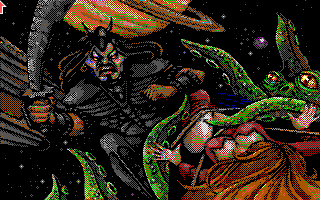
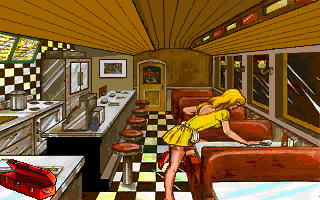
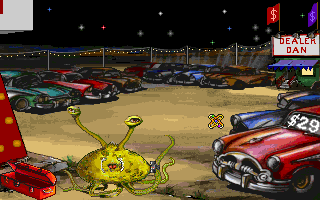
Graphically, Gas Pump Girls embraces the late-’80s/early-’90s adventure art style with colorful pixel environments and character portraits. The backgrounds are richly detailed—from the atomic signage of Atom City’s highways to the sterile corridors of its military base. While not cutting-edge by today’s standards, the visuals hold a nostalgic charm that complements the game’s tongue-in-cheek tone.
Character animations are modest but expressive: Barth pulses ominously when angered, Zeke sports cartoonish blinks when surprised, and Lydia’s gestures suit her inquisitive nature. Dialogue exchanges are peppered with humorous reaction frames, breathing life into the conversations. Transitions between scenes are smooth, though the lack of full-motion cutscenes makes the experience feel more static compared to later graphic adventures.
The user interface integrates seamlessly with the visual design. Inventory items appear at the bottom of the screen as small icons, and the smart cursor changes shape to indicate actions like “talk,” “use,” or “look.” Some players might find the text overlays on scenery a bit small by modern widescreen standards, but overall the graphics effectively serve both function and style.
Story
The narrative picks up nearly two decades after the first Leather Goddesses of Phobos, setting the stage in 1958 amid the excitement of Planet X’s discovery. A spaceship carrying Barth crashes in Atom City, dragging Earth into a cosmic conflict. When Barth reveals the Leather Goddesses have enslaved Planet X’s inhabitants, the stakes are equal parts humorous and dire, establishing a playful sci-fi backdrop.
Each protagonist’s storyline adds a unique flavor. Barth’s arc is pure alien perspective—his dialogue oozes self-importance as he struggles to rally help from uncomprehending humans. Zeke’s gas station life collides with interplanetary intrigue in amusing ways, from juggling customers to covertly arming himself for battle. Lydia’s scenario leans more on her scientific curiosity, giving players a grounded entry point into the bizarre events unfolding.
Humor is the game’s lifeblood. Witty quips, double entendres, and absurd situations—like negotiating with scantily clad Phobosian envoys—keep the tone light. Optional side dialogues deepen the world, allowing you to eavesdrop on quirky townsfolk or uncover hidden lore about nuclear mishaps and alien biology. While the story follows a fairly linear progression, its playful writing and character banter make every step engaging.
Overall Experience
Leather Goddesses of Phobos! 2: Gas Pump Girls Meet the Pulsating Inconvenience from Planet X delivers a solid retro adventure that balances humor, intriguing puzzles, and nostalgic graphics. The point-and-click interface is accessible, and the multiple protagonists encourage replayability without forcing unnecessary backtracking. Occasional puzzle obscurity may slow the pace for newcomers, but optional hints keep frustration in check.
The game’s 1950s sci-fi setting, combined with campy humor and a cast of memorable characters, makes for an entertaining journey. Fans of the original will appreciate callbacks to past events, while newcomers can dive in without prior knowledge. The voice of the “Pulsating Inconvenience” injects just the right amount of eccentricity, ensuring the sequel carves its own quirky identity.
Ultimately, Gas Pump Girls is a charming time capsule of early graphical adventures—an enjoyable romp through alien conspiracies, local oddities, and playful dialogue. Whether you’re drawn by the campy sci-fi premise or seeking a breezy puzzle quest, this sequel offers enough variety and personality to justify a place in any adventure aficionado’s collection.



Reviews
There are no reviews yet.