 Retro Replay Retro Replay gaming reviews, news, emulation, geek stuff and more!


Retro Replay Review
Gameplay
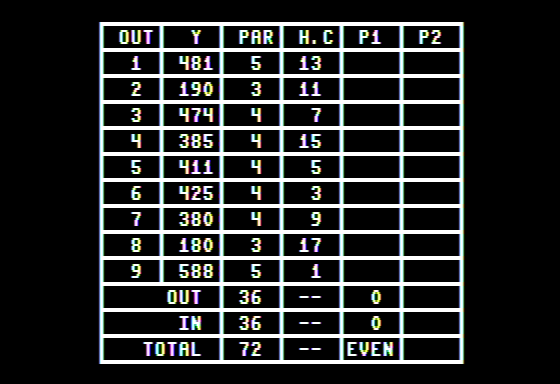
Lee Trevino’s Fighting Golf delivers a surprisingly deep golf experience despite its 1988 8-bit pedigree. Beginning with the basics, you tee off on either an American or Japanese 18-hole course, each offering a different layout and hazard placement. The intuitive swing meter requires three well-timed presses of the A button—one to start the backswing, one at the apex, and one at impact—creating a rhythm that rewards practice and precision.
(HEY YOU!! We hope you enjoy! We try not to run ads. So basically, this is a very expensive hobby running this site. Please consider joining us for updates, forums, and more. Network w/ us to make some cash or friends while retro gaming, and you can win some free retro games for posting. Okay, carry on 👍)
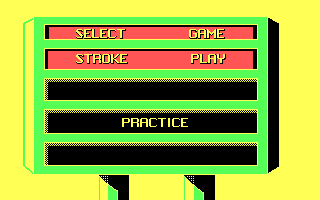
The game accommodates up to four players by having Players 1 and 3 share controller 1 and Players 2 and 4 share controller 2, making it an ideal choice for small gatherings or family fun. Multiplayer modes include traditional Stroke Play, where the lowest total strokes win, and the more strategic Nassau Game, which awards points per nine-hole segment and allows “presses” to double down on holes. A solo Practice mode also lets you hone your swing on any chosen hole, particularly useful if you want to master tricky sand traps or deep rough.
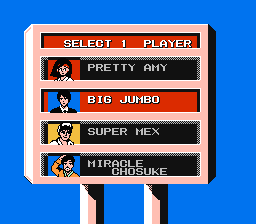
Character selection adds another layer of strategy. Whether you choose Pretty Amy’s pinpoint accuracy, Big Jumbo’s raw power, Super Mex’s all-around steadiness, or Miracle Chosuke’s putting prowess and reverse miracle putt, each golfer feels distinct. Club selection with B, trajectory adjustments with the D-pad, and spin control via an extra A-button press after impact give you surprising control over ball flight. Terrain types—from light and hard sand to multiple rough varieties and water hazards—further affect your choices and demand thoughtful club and shot selection.
Graphics
On the NES hardware, Lee Trevino’s Fighting Golf boasts colorful, well-defined sprites that convey each hole’s character despite limited resolution. Fairways are lush green, greens a slightly brighter shade, and hazards like water and sand pop out clearly, helping you plan shots at a glance. The contrast between the American and Japanese courses is subtle but noticeable, with different foliage, bunker shapes, and pond placements adding visual variety.
Character portraits and on-course avatars are simple yet charming. Each golfer has a distinctive silhouette and clothing palette—Pretty Amy in pink, Big Jumbo in bold hues, Super Mex in mid-tone garb, and Miracle Chosuke with his signature look. Animations for swing motions, ball flight, and putt roll are basic but effective, smoothly conveying the arc and spin of each shot. Backspin and slice effects are represented with small sprite trails, providing immediate feedback on shot type.
The user interface is clean and functional. Club information and wind speed/direction are displayed unobtrusively at the top of the screen, while the swing meter takes center stage during each shot. Though there’s no dramatic camera zoom or dynamic replays, the fixed overhead perspective remains clear, informative, and consistent throughout your round. For its era, the game strikes an excellent balance between visual clarity and thematic style.
Story
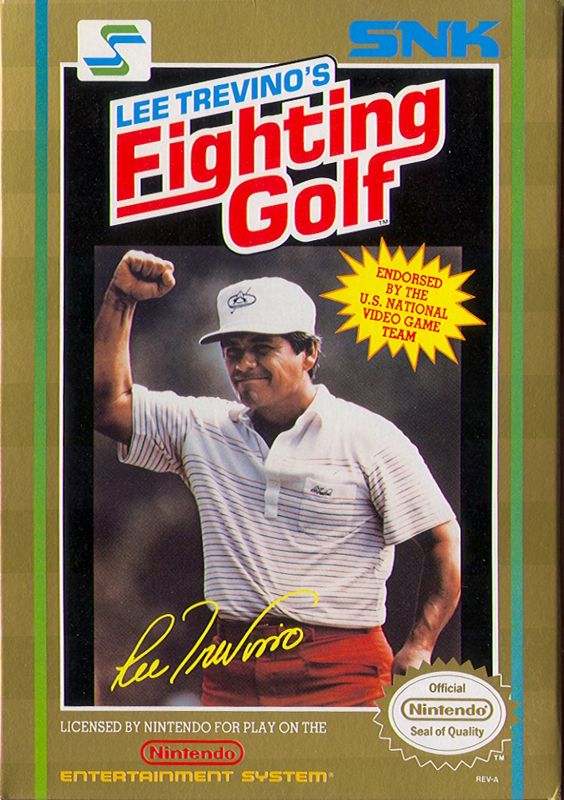
As a pure sports simulation, Lee Trevino’s Fighting Golf doesn’t offer a story campaign or narrative arcs. Instead, it leans on its endorsement by Major League Golf legend Lee Trevino and the high praise from the U.S. National Video Game Team, who dubbed it “by far the best video golf simulation available.” This legacy gives the game a subtle “pro tour” atmosphere, even in the absence of cutscenes or career progression.
What story there is unfolds in your imagination as you progress from hole to hole, overcoming bunkers, drafts, and water hazards to claim victory. The choice between two distinct courses provides a framework for friendly rivalries, and the Nassau Game’s point system can generate mini-dramas as players press for extra stakes. Though you won’t unlock new clubs or unlock courses through narrative, the challenge of consistently low scores becomes its own motivation.
Ultimately, the “story” here is one of personal improvement and competitive play. You build your own drama as you aim for birdies, avoid double bogeys, and watch your shot arc perfectly into the green. In an age before RPG-style progression in sports titles, this straightforward structure lets the mechanics speak for themselves, offering replay value in pursuit of lower scores and tighter games with friends.
Overall Experience
Lee Trevino’s Fighting Golf remains a robust example of early golf simulation on home consoles. Its approachable yet deep swing mechanics, character variety, and multiple game modes create an experience that can entertain both novices and seasoned virtual golfers. The option to practice individual holes ensures you can tackle any hot-dog sand trap or dogleg with confidence.
While modern golfers may miss dynamic weather or 3D course maps, the timeless core gameplay here shines through. The colorful graphics and clear interface hold up well for quick rounds, and the four-player support transforms a simple golf outing into a social event. Whether you’re trying to beat your friends in Nassau Game or shaving strokes off your own best score, the game rewards skill and patience.
Given the U.S. National Video Game Team’s accolade at its launch, Fighting Golf’s reputation is well earned. It doesn’t push technical boundaries by today’s standards, but its design philosophy—simplicity layered with strategic depth—still resonates. If you own an NES or are exploring classic golf titles, this one deserves a spot in your collection.
In the end, Lee Trevino’s Fighting Golf offers accessible, satisfying gameplay wrapped in charming 8-bit visuals. It may lack a traditional story, but it more than makes up for it in well-balanced mechanics and multiplayer fun. For retro sports enthusiasts and newcomers alike, it remains a noteworthy entry in the history of golf video games.


Reviews
There are no reviews yet.