 Retro Replay Retro Replay gaming reviews, news, emulation, geek stuff and more!
Retro Replay Review
Gameplay
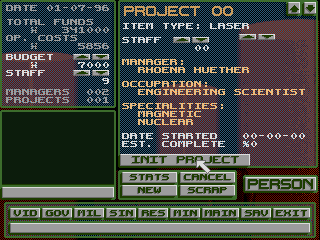
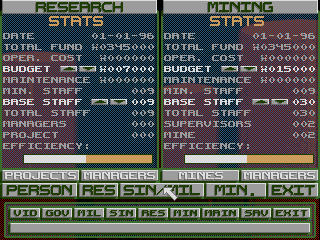
Maelstrom delivers a deep managerial experience that challenges players to juggle resource extraction, fleet deployment, and planetary development with careful precision. As the commander of Harmony, a massive Fitzholium miner, you must allocate your workforce across mining operations, research facilities, and shipyards. The intuitive yet detailed interface allows you to monitor your supply chains and production queues, making viable strategies clear even as the galaxy’s political landscape grows more complex.
(HEY YOU!! We hope you enjoy! We try not to run ads. So basically, this is a very expensive hobby running this site. Please consider joining us for updates, forums, and more. Network w/ us to make some cash or friends while retro gaming, and you can win some free retro games for posting. Okay, carry on 👍)
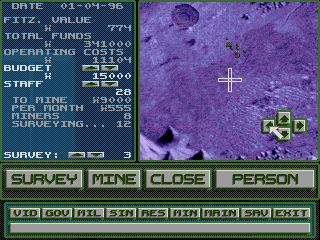
Resource management is at the very heart of the gameplay loop. You start with a handful of underdeveloped worlds and must expand your reach by mining Fitzholium, refining it into usable components, and investing in upgrades for your vessels and infrastructure. Each decision has consequences: overcommitting to fleet expansion can leave your homeworld vulnerable, while underinvesting in research may hamper your capabilities in later skirmishes. This push-and-pull keeps the tension high and ensures every resource counts.
Combat sequences blend real-time strategy with tactical pauses, allowing you to reposition fleets and issue new orders on the fly. Skirmishes against the Syndicate’s forces require thoughtful composition of frigates, cruisers, and battleships, weighing speed against firepower. Though battles can be swift, the strategic depth shines through as you adapt to enemy tactics, utilise specialized ship modules, and ensure your logistical lines remain intact under fire.
Graphics
Visually, Maelstrom embraces a clean, functional art style that prioritizes clarity over flash. Starfields and planetary backdrops are detailed without overwhelming the screen, ensuring that UI elements and fleet icons remain the focus during intense management sessions. This stripped-back approach helps players maintain situational awareness even when dozens of ships and resource nodes fill the display.
Ship models and station designs benefit from subtle detailing that gives each vessel class a distinct silhouette. Frigates are lithe and nimble, cruisers present bulkier armaments along their sides, and battleships loom large with heavy armor plating and battery turrets. During combat, weapon fire streaks across space with vibrant color coding, instantly communicating the nature of incoming attacks or the status of your own volley.
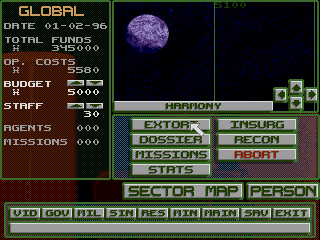
Even the planetary overview screens, where you allocate workers and build facilities, receive thoughtful polish. Resource icons glow with metallic textures, and progress bars shift responsively as you queue new upgrades. While the graphics won’t match action-driven space sims in cinematic flair, they serve Maelstrom’s strategic vision perfectly by highlighting critical information and minimizing visual noise.
Story
The narrative backdrop of Maelstrom unfolds in the aftermath of a devastating interstellar war. A once-overlooked planet, Zokbar J, rose from obscurity to form the Syndicate, an aggressive polity bent on seizing the shattered realms. Your defection from their ranks sets you on a path of resistance, commanding Harmony to liberate planets and rally displaced systems under your banner.
Story missions are woven into the strategic map, presenting objectives like rescuing besieged colonies, establishing forward outposts, or ambushing Syndicate supply convoys. Dialogue exchanges, delivered through briefings, convey the stakes without bogging down the pace. Characters remain enigmatic—occasionally sharing glimpses of personal motivations—so the focus stays on the broader struggle for galactic balance.
While the central conflict drives much of the action, emergent narratives arise from player choices. Deciding whether to rush a military build-up or foster alliances with neutral factions shapes unique alliances and rivalries. This dynamic storytelling ensures that no two campaigns unfold identically, as the interplay between your strategy and the Syndicate’s responses crafts unexpected twists.
Overall Experience
Maelstrom is a satisfying blend of strategic depth and accessible management mechanics. Its learning curve rewards patient players who enjoy planning logistics and refining economic engines over time. Early setbacks feel meaningful rather than punishing, encouraging you to adapt your approach until you find the optimal balance of resource gathering, research, and combat readiness.
Replayability soars thanks to procedurally generated star maps and variable Syndicate strongpoints, ensuring fresh challenges in each new campaign. The game’s pacing strikes a comfortable rhythm: calmer interludes of base-building and research shuttle seamlessly into intense showdowns where fleets clash for control of key systems. This ebb and flow keeps the experience feeling dynamic from start to finish.
For fans of space strategy and simulation, Maelstrom stands out as a meticulously crafted title that values player agency above all. It forgoes flashy cutscenes for a more interactive, sandbox-style narrative, placing you at the helm of a desperate fight against an ambitious foe. If orchestrating resource networks, commanding starfleets, and rewriting the fate of the galaxy appeal to you, Maelstrom offers hours of engrossing, thought-provoking gameplay that’s well worth the journey.


Reviews
There are no reviews yet.