 Retro Replay Retro Replay gaming reviews, news, emulation, geek stuff and more!




Retro Replay Review
Gameplay
Mario is Missing! turns the standard Mario formula on its head by casting Luigi in the starring role. Instead of jumping on Goombas and collecting coins, you navigate global cities through Bowser’s portals, track down misplaced artifacts, and answer geography questions to progress. The core loop centers on exploration and investigation, giving young players a gentle puzzle experience rather than a reflex-based platformer challenge.
(HEY YOU!! We hope you enjoy! We try not to run ads. So basically, this is a very expensive hobby running this site. Please consider joining us for updates, forums, and more. Network w/ us to make some cash or friends while retro gaming, and you can win some free retro games for posting. Okay, carry on 👍)
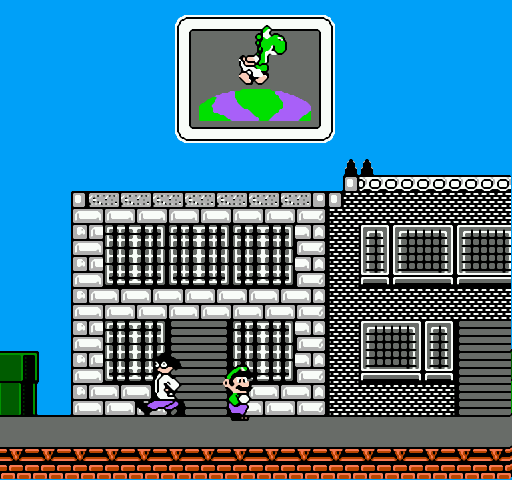
The game’s educational design shines through the “Globulator,” Luigi’s high-tech guiding device. As you enter each city, you consult the Globulator for clues, search the environment for landmarks, and interview locals to determine your exact location. Once you’ve solved the riddle of your whereabouts, you call Yoshi in on the Globulator to clear the path home by devouring the Pokey blocking the return portal.
Beyond the main 25 cities, an optional add-on disk introduces 10 more destinations, expanding both geography coverage and playtime. The pacing is deliberately unhurried, rewarding curious players who read signposts and examine buildings. While seasoned gamers may find the challenges mild, children and families will appreciate the sense of discovery and real-world learning embedded in the gameplay loop.
Graphics
Visually, Mario is Missing! carries the hallmarks of early ’90s SNES games: bright, chunky sprites and simple, colorful tile backgrounds. Each city level features a handful of recognizable landmarks—like the Eiffel Tower or the Great Wall—rendered in a cartoonish style that’s easy for young eyes to identify. Although the resolution is low by modern standards, the clear silhouettes help players learn geography without visual clutter.
Character animations remain basic but charming. Luigi’s walking cycle is bouncy and expressive, and Koopas patrol set routes that make spotting stolen artifacts straightforward. Special animations—such as Yoshi chomping down on a Pokey—add personality to key moments. Effects like swirling portal transitions and simple sound cues enhance the mood without overwhelming the educational focus.
On the downside, environments can feel repetitive once the novelty of each city wears off, since many structures share the same palette and tile sets. However, the distinct color schemes and landmark icons are sufficient to differentiate each locale. In the context of its release period and target audience, the graphics serve their purpose: to teach, not to dazzle with technical feats.
Story
At its heart, Mario is Missing! uses a straightforward rescue narrative: Bowser has kidnapped Mario and scattered world treasures across 25 major cities. Luigi must recover these artifacts and restore them to their rightful homes before he can close the portals and save his brother. The stakes are simple but immediate, providing enough motivation for young players to explore each map thoroughly.
The story leans heavily into educational dialogue rather than dramatic tension. NPCs offer hints about local customs, landmarks, and historical tidbits—information that reinforces geography lessons in context. While there’s no deep character arc for Luigi or Bowser, the episodic structure (city by city) keeps the plot moving, making it easy for players to pause and resume without losing track of objectives.
Though the narrative lacks the humor and high-octane action of a traditional Mario platformer, its strength lies in teaching through play. The simplicity of the storyline ensures that the educational elements remain front and center, making this an ideal choice for parents and teachers looking for an edutainment title with a recognizable Nintendo spin.
Overall Experience
Mario is Missing! offers a unique blend of entertainment and education that sets it apart from the standard Mario fare. For families, it presents a safe, nonviolent adventure where learning geography is seamlessly woven into gameplay. The game world is inviting and accessible, encouraging children to ask questions and absorb facts about real-world locations as they progress.
Replay value comes from completing the optional city add-on and mastering the Globulator’s quizzes. Collecting photographs of returned artifacts adds a light collectible element, motivating completionists to revisit cities and spot every landmark. Classroom settings can capitalize on the built-in geography lessons by pausing the game to discuss each city’s culture and history.
While hardcore gamers may miss the platforming thrills and boss battles of a typical Mario title, Luigi’s globe-trotting mission provides a charming, family-friendly experience. If you’re seeking a game that introduces young minds to world geography in a fun, Nintendo-branded package, Mario is Missing! remains a solid pick—even decades after its initial release.


Reviews
There are no reviews yet.