 Retro Replay Retro Replay gaming reviews, news, emulation, geek stuff and more!
Retro Replay Review
Gameplay
Maze Runner delivers a tense, puzzle-driven experience that feels both familiar yet refreshingly novel for fans of the classic Kroz series. From the moment you catch that initial glimpse of the entire Ezam dungeon, you know you’re in for a challenge: every twist and turn thereafter is shrouded in darkness until you collide with a wall. This “fog of war” approach to maze exploration keeps your senses on high alert, forcing you to remember previous layouts or risk getting hopelessly lost.
(HEY YOU!! We hope you enjoy! We try not to run ads. So basically, this is a very expensive hobby running this site. Please consider joining us for updates, forums, and more. Network w/ us to make some cash or friends while retro gaming, and you can win some free retro games for posting. Okay, carry on 👍)
The core mechanics—pick axes and teleport scrolls—offer a satisfying balance between strategy and spontaneity. Whenever a lost soul corners you or you hit a dead end, you must quickly decide whether to bash through a wall or gamble on a random teleport. Each tool has limited uses, so resource management becomes just as crucial as spatial awareness. The frantic pacing of enemies homing in on you adds a layer of urgency, transforming every decision into a life-or-death gamble.
Combat is abstract and swift: there’s no inventory menu or complex stats to track. Instead, each collision with a soul is a warning to slow down or push forward—your only defense is agility and the judicious use of your tools. This minimalistic approach keeps the momentum high, ensuring that even brief sessions feel like incisive tests of reflexes and memory.
One small downside is that the invisible mechanics can occasionally lead to unintentional backtracking, especially on repeated runs when you misremember a segment. However, this only adds to the addictive loop: each failure teaches you more about the dungeon’s hidden geometry and brings you one step closer to the Heart of Courage.
Graphics
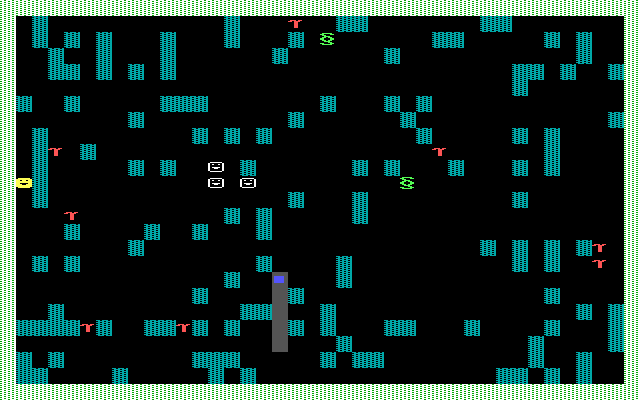
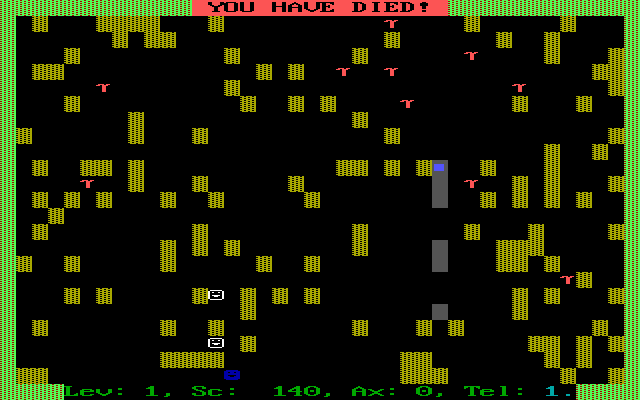
Visually, Maze Runner embraces a retro aesthetic that pays homage to early dungeon crawlers. The color palette is limited but purposeful, with muted earth tones for walls and eerie luminescent hues for lost souls. While the graphics may feel simple compared to modern standards, they serve the gameplay perfectly by ensuring clarity in the midst of chaos.
The animation of the lost souls is especially well done: subtle flickers and sudden lunges keep you on edge, even when you’re just waiting for your next move. Walls snap into view the instant you touch them, with a satisfying “clunk” sound effect that reinforces the tactile sensation of breaking new ground. Teleport scrolls are accompanied by a brief swirl of pixels that communicates their randomness without causing visual clutter.
One particularly clever touch is the initial full-map reveal. That momentary overview uses a more detailed tile set, giving a crystalline snapshot of the dungeon’s architecture. When the walls vanish again, the shift back to basic line graphics emphasizes the challenge: you’re alone with memory and wits, and any lingering sense of safety disappears.
While purists might lament the absence of 3D models or high-resolution textures, the streamlined look is a deliberate design choice. It enhances readability under pressure and evokes the spirit of 1980s shareware hits—complete with crisp, responsive feedback that never overstays its welcome.
Story
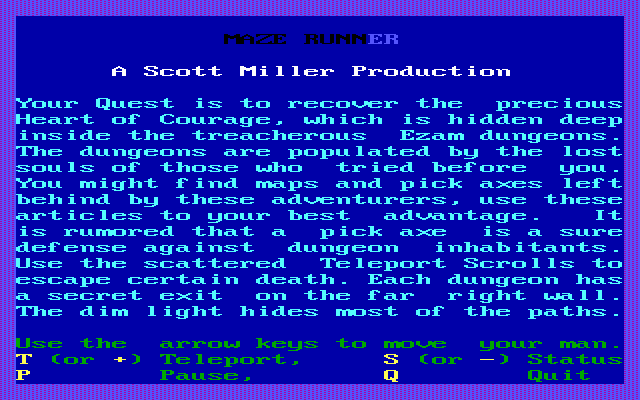
At its heart, Maze Runner revolves around the quest for the legendary Heart of Courage, hidden deep within the Ezam dungeons. The premise is simple but effective: you’re following in the footsteps of countless adventurers who’ve met tragic ends, and each misstep only deepens the mystery. Who were these lost souls? What drove them to such desperation? The sparse narrative leaves room for speculation and imagination.
Environmental storytelling plays a significant role. Scattered throughout the maze are broken pick axes, tattered scrolls, and the occasional cryptic inscription on a hidden wall. These artifacts hint at former explorers’ triumphs and failures without resorting to lengthy cutscenes or text logs, making every discovery feel organic and personal.
The gradual reveal of dungeon lore is paced perfectly. Early runs tease snippets of backstory—perhaps a half-erased mural depicting a great battle or a faintly glowing rune pulsed by ancient magic. As you delve deeper, the stakes become clearer: the Heart of Courage isn’t just a treasure, but a force with the power to alter fate itself.
While some players seeking a deep, character-driven plot may find the narrative light on dialogue, the minimalist approach aligns well with the game’s focus on atmosphere and tension. In Maze Runner, silence and uncertainty are just as potent as any scripted story beat.
Overall Experience
Maze Runner succeeds by marrying minimalist design with maximal tension. Every playthrough feels like a collision of strategy and improvisation, with the invisible maze mechanic setting it apart from countless other dungeon crawlers. Whether you’re scrabbling for walls in the dark or making a desperate teleport escape, the game keeps your heart pounding until the very end.
The replay value is high: the same dungeon may look familiar, but the invisible layout ensures that memory becomes your most valuable resource. Combined with randomized teleport destinations and the unpredictable behavior of lost souls, no two runs ever feel identical. Mastery comes through repetition, each failure bringing you closer to uncovering the entire maze’s secrets.
For fans of retro-style challenges, Maze Runner is an addictive gem. Its straightforward controls and intuitive mechanics mean you can jump in at any time, while its relentless pursuit dynamics guarantee that you remain engaged. Even brief sessions leave you eager to return, determined to navigate that final corridor and claim the Heart of Courage.
In the crowded landscape of indie dungeon crawlers, Maze Runner stands out for its inventive twist on maze exploration. It may not boast flashy visuals or an epic voiceover script, but its blend of memory-based puzzles, scarce resources, and unrelenting foes makes for an experience that’s both accessible and deeply rewarding. If you’re ready for a challenge that tests your wits as much as your reflexes, this is one maze you won’t want to miss.


Reviews
There are no reviews yet.