 Retro Replay Retro Gaming History, Reviews & Emulation
Retro Replay Review
Gameplay
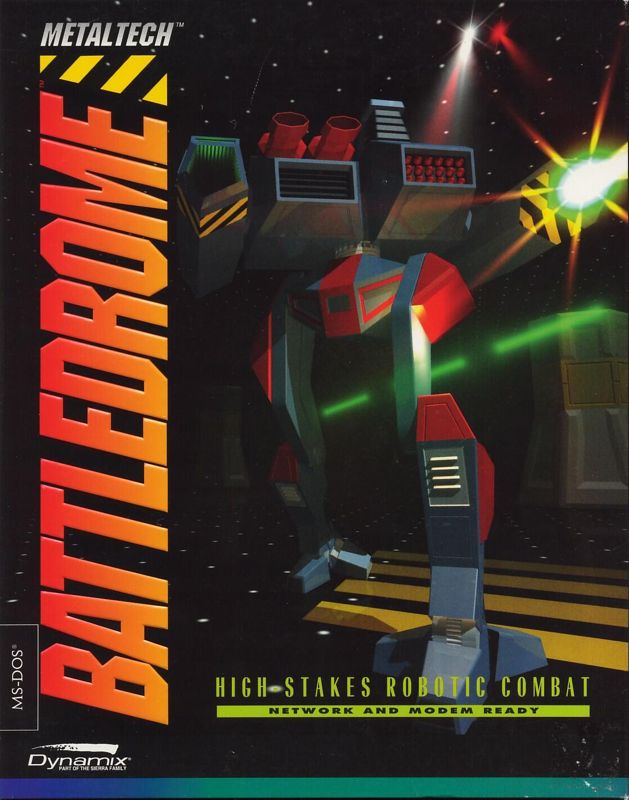
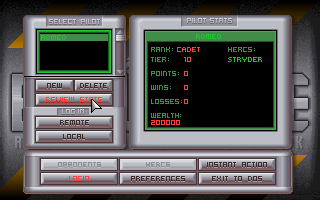
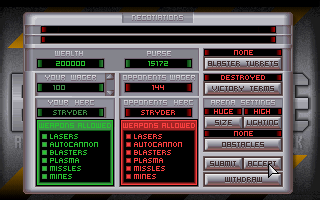
Metaltech: Battledrome centers on commanding massive HERCs—bipedal combat machines—against human or AI opponents in intense head-to-head matches. From the moment you power up your HERC, you’re tasked with balancing offense, defense and mobility as you pilot across varied arenas. Movement feels deliberate, emphasizing weight and momentum, so every step and turn carries a satisfying sense of impact. Weapon loadouts range from energy cannons to ballistic firearms, and customizing your HERC before battle adds a layer of tactical depth that keeps encounters fresh.
The true innovation of Battledrome lies in its networked play. Long before online multiplayer became commonplace, this title allowed two players to duke it out over modem or LAN. Matches are fluid, with minimal latency on a properly configured connection, and the 486-33–era performance is surprisingly smooth. Whether you’re lining up a long-range shot or closing in for point-blank combat, controls remain responsive, making skirmishes feel both strategic and adrenaline-charged.
That said, the single-player AI feels like an afterthought. While you can practice against computer opponents, they follow predictable patterns that seasoned players will quickly exploit. The challenge ramps up only slightly on higher difficulty levels, but the lack of a deeper campaign or progressive objectives means solo sessions can grow repetitive. Battledrome was clearly designed with human rivalry in mind, and that focus shines through in the quality of its multiplayer experience.
Graphics
Graphically, Metaltech: Battledrome showcases early 1990s PC capabilities with flat-shaded 3D models and simplistic textures. On a 486-33 system, environments load quickly and frame rates stay respectable during most clashes. While the arenas lack the visual detail of later titles, the broad, uncluttered landscapes serve the gameplay well, ensuring you can track enemy movements without screen clutter. The HERC models themselves boast distinct silhouettes, making it easy to identify friend from foe in the heat of battle.
Lighting and effects are rudimentary by modern standards, but the game’s clean visual presentation delivers clarity on older hardware. Dynamic explosions and muzzle flashes are represented with brief but effective animations, adding punch to each exchange of fire. Shadows are minimal or non-existent, yet the overall palette of muted grays and earth tones reinforces a gritty, industrial atmosphere that suits mech warfare.
Customization options for graphical settings, though limited, allow you to tweak resolution and detail levels to eke out maximum performance. If you’re playing on original hardware, expect some pixelation and aliasing; however, on a later DOSBox setup or a beefier vintage PC, the visuals appear smoother without compromising the game’s signature retro aesthetic.
Story
Metaltech: Battledrome offers a thin narrative framework that introduces the world of HERC combat but quickly lets you jump into the action. There’s no sprawling campaign or elaborate cut scenes—just a straightforward premise of two pilots facing off in lethal arenas. This lean approach may disappoint those seeking a rich sci-fi storyline, but it underscores the game’s core mission: pure, unadulterated mech dueling.
Between matches, brief text snippets outline your opponent’s background and competitive standings, hinting at corporate sponsorships and futuristic sports leagues. These vignettes add a dash of flavor, but they never develop into a cohesive plot. The emphasis remains squarely on refining your piloting skills and out-maneuvering a human rival rather than unraveling political intrigue or interstellar drama.
For fans of narrative-driven titles, Battledrome’s storytelling will feel skeletal. However, if you view these context blurbs as icing on the cake rather than the main course, you’ll appreciate the game’s willingness to strip away excess fluff. Every moment in Battledrome is calibrated for battle readiness, and the sparse narrative simply acts as a backdrop to your mech-versus-mech encounters.
Overall Experience
Metaltech: Battledrome remains a notable milestone in mech simulation history, primarily for pioneering head-to-head network play in an era when most PC games were single-player affairs. Jumping into a modem match with a friend—even by today’s standards—carries a sense of nostalgia and novelty. The visceral weight of mechs, combined with the strategic depth of loadouts and arena tactics, makes each duel memorable.
On the downside, the absence of a robust single-player campaign and the dated visuals may turn away some modern players. The AI isn’t particularly challenging, and those expecting a rich narrative or deep progression system might find themselves longing for more. Still, if you’re a retro gamer or a mech-warfare enthusiast, Battledrome’s strengths in multiplayer innovation and tight mech controls easily outweigh its shortcomings.
Ultimately, Metaltech: Battledrome offers a focused, battle-centric experience that holds up as a historical precursor to later mech sims like NetMech and MechWarrior. It’s a lean, adrenaline-fueled gem for those seeking competitive head-to-head action, and its performance on vintage hardware only adds to its period charm. If you can look past the minimal story and dated graphics, you’ll find a pioneering title that laid the groundwork for an entire genre.

Reviews
There are no reviews yet.