 Retro Replay Retro Replay gaming reviews, news, emulation, geek stuff and more!



Retro Replay Review
Gameplay
Millennium: Return to Earth offers a deep, multilayered management experience that unfolds over the course of several planetary campaigns. From the moment you establish your initial lunar outpost, the game thrusts you into the dual roles of engineer and strategist. You must allocate scarce resources—oxygen, water, food and building materials—while carefully expanding your base to accommodate a growing population of survivors. The balance between sustainable growth and overextension is central to the challenge, making every construction choice feel meaningful.
(HEY YOU!! We hope you enjoy! We try not to run ads. So basically, this is a very expensive hobby running this site. Please consider joining us for updates, forums, and more. Network w/ us to make some cash or friends while retro gaming, and you can win some free retro games for posting. Okay, carry on 👍)
Resource gathering and production form the backbone of your progress. You’ll mine lunar regolith for metals and use hydroponic farms to supplement dwindling food stocks. As you research new technologies, you unlock improved life‐support modules and more efficient mining rigs, creating a satisfying sense of technological progression. Juggling production chains—turning raw materials into advanced components—becomes an addictive logistical puzzle, especially when supply lines stretch between multiple colonies.
Defense against the hostile alien race adds a tense tactical layer to the otherwise methodical gameplay. Periodic raids force you to design effective perimeter defenses and deploy orbital interceptors at critical moments. Combat is not reflex‐based but strategic: you position turrets, manage power distribution to shield generators, and dispatch patrol vessels to fend off incursions. The ever‐present threat of annihilation keeps the stakes high, rewarding players who think ahead and adapt their strategies on the fly.
Finally, the game’s pacing ensures that no two playthroughs feel identical. Randomized resource deposits on each new world, varied survivor skill sets and unpredictable alien attack patterns combine to make each campaign a fresh test of your managerial acumen. Veteran players will appreciate the subtle difficulty curve that ramps up as you master early outpost operations, ensuring that Millennium remains engaging from lunar foothold to the farthest colony.
Graphics
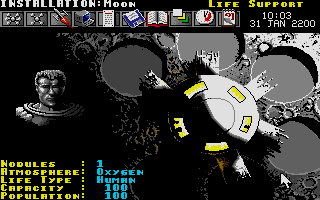
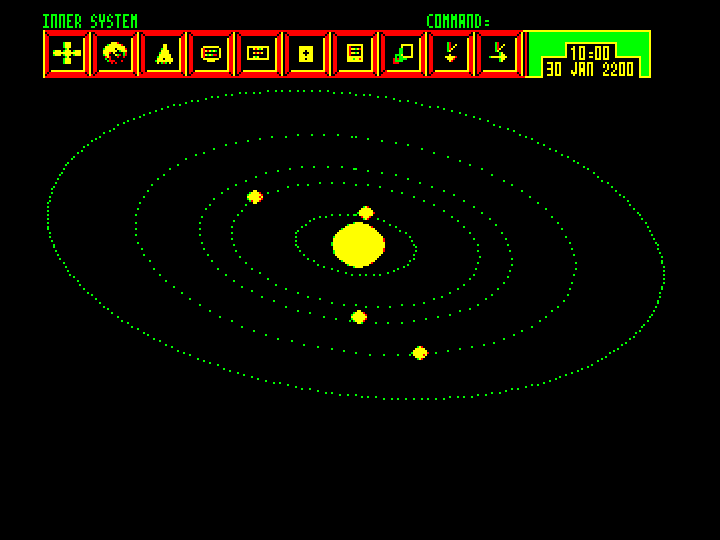
For a game rooted in early 1990s design sensibilities, Millennium: Return to Earth impresses with its clean, functional visuals. The isometric base-view presents structures and units with crisp pixel art, making it easy to distinguish between habitat modules, power plants, and defensive emplacements at a glance. While it lacks the high-resolution polish of modern titles, the game’s art direction communicates critical information clearly, preventing resource micromanagement from becoming a chore.
Environmental details—rocky lunar craters, distant starfields and the occasional meteor shower—add atmospheric depth to the otherwise muted color palette. Bright LED indicators, flashing hazard lights and animated conveyor belts imbue your outposts with a sense of kinetic energy. Subtle visual cues, like yellow dust plumes when excavation machines dig or red warning lights when oxygen levels drop, help you monitor crises without constantly opening status panels.
The alien vessels and structures stand out in stark contrast to human architecture. Sleek, organic silhouettes and pulsating energy fields convey an otherworldly menace, enhancing the tension whenever you encounter an alien scouting party. Though the animations are modest—rotating turrets, elevator hatches cycling open—the overall effect is evocative, especially during defense scenarios when flak bursts and laser beams crisscross the sky.
Cutscenes and mission briefings use still‐frame illustrations combined with text overlays. These static images may seem rudimentary today, but they effectively set the mood and provide narrative context without interrupting gameplay flow. The minimalistic approach to cinematic presentation keeps the focus squarely on strategy and management, which veteran sim fans will undoubtedly appreciate.
Story
Set against the grim backdrop of a post‐Earth civilization, Millennium: Return to Earth weaves a story of resilience and hope. The narrative begins in the aftermath of terrestrial ruin, as hundreds of survivors flee to the moon. Your role as colony governor carries a profound sense of responsibility: not just sustaining lives, but preserving the essence of humanity itself. This premise grounds the entire experience, giving weight to every decision you make.
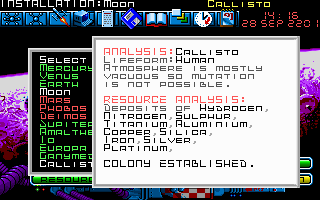
As you expand your network of colonies, text‐based mission briefings chronicle parallel efforts on Mars, asteroids and distant moons. These communications feature voices of scientists, military commanders and refugees, each with unique perspectives on the monumental task of rebuilding civilization. The interplay of these narratives fosters an emotional connection to your growing interplanetary federation, making each resource shortage or alien assault feel personally consequential.
While Millennium doesn’t feature fully voiced characters or branching dialogue, the minimalist storytelling is a strength rather than a limitation. Important plot beats—discovery of alien technology, breakthrough terraforming methods or diplomatic tensions between rival factions—are delivered concisely, ensuring that narrative momentum never slows the strategic gameplay. The result is a tight, focused storyline that complements rather than competes with the simulation mechanics.
Ultimately, the game’s overarching theme is one of pioneering spirit. From the humble lunar dome to sprawling ecosystems on newly terraformed worlds, Millennium: Return to Earth delivers a compelling arc of technological marvel and human tenacity. The sense of accomplishment when you finally establish a self‐sustaining network of colonies is matched only by the suspense of knowing aliens still lurk beyond the stars.
Overall Experience
Millennium: Return to Earth is a rewarding blend of deep strategy, resource management and high‐stakes defense. Its methodical pace will appeal to fans of classic sim titles and those who relish long‐term planning over twitch‐based combat. Despite its age, the game’s mechanics remain robust, offering hours of satisfying colony optimization and tactical decision‐making.
Newcomers may need time to absorb the user interface and grasp how various subsystems—power grids, oxygen loops, research labs—interact. The learning curve is steady but fair, with early missions serving as practical tutorials in disguise. Once you master the fundamental logistics, the game opens up, allowing you to experiment with complex supply networks and multi‐planet defense strategies.
While Millennium’s audiovisual presentation may feel dated compared to contemporary releases, its clean design and purposeful animations ensure clarity and immersion. The sparse storytelling, delivered through text and still imagery, dovetails perfectly with the simulation focus, keeping you engaged in the hunt for new resources and the defense against relentless alien threats.
In sum, Millennium: Return to Earth is a hidden gem for strategy enthusiasts seeking a cerebral challenge set in a richly conceived sci-fi universe. Its blend of colony management and tactical defense creates a distinct gameplay loop that remains compelling decades after its initial release. For anyone intrigued by the idea of rebuilding humanity among the stars, this game is a must‐explore step on the path to Deuteros and beyond.


Reviews
There are no reviews yet.