 Retro Replay Retro Gaming History, Reviews & Emulation
Retro Replay Review
Gameplay
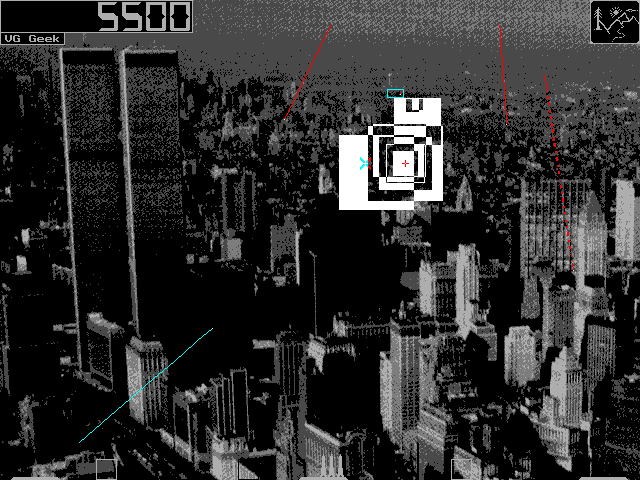
The first few minutes of Patriot Command are all about controlled panic. Warheads are coming down toward the cities at the bottom of the screen, and you do not simply shoot them one by one: you place a missile detonation near them and hope its blast radius catches the threat. That tiny delay between firing and explosion is where the game earns its tension. Lead too little and the warhead slips through; lead too far and you have spent ammunition on empty space.
Mouse control is a natural fit for this kind of defense game. Move the cursor to line up a target, then use the left and right mouse buttons to launch from the corresponding missile site. Having separate firing buttons gives you a quick, tactile sense of which side is responding, though the limited missile supply means frantic clicking is a losing habit. You need to watch the spread of threats and take shots that can cover the most danger.
The extra enemy types prevent the routine from becoming completely mechanical. Stealth warheads demand sharper attention because they are harder to see and harder to destroy, while aircraft crossing high above add another distraction to an already crowded defense. Successive waves and the score chase give failure a useful sting: you immediately want another run to see whether calmer aim can save one more city.
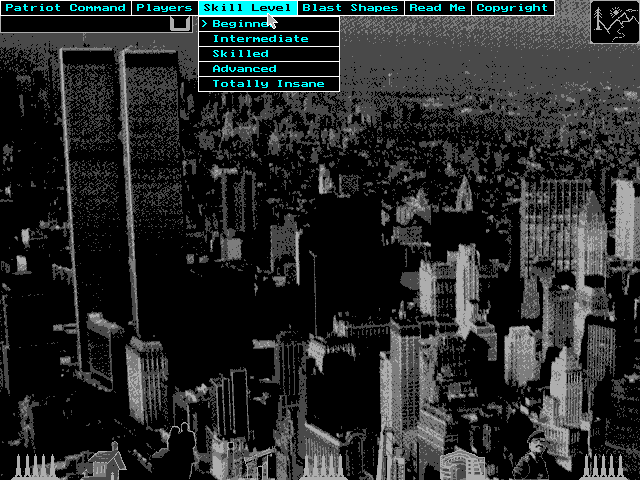
Five skill levels make the game more welcoming than a one-speed arcade clone, particularly if you want to learn the timing before the screen becomes overwhelming. It also offers square blast effects as a less computationally demanding alternative to round ones, a practical option for slower DOS machines. Hot-seat multiplayer, with commanders typically swapping after five minutes, is a pleasant competitive format, even if the core game remains brutally simple.
Graphics
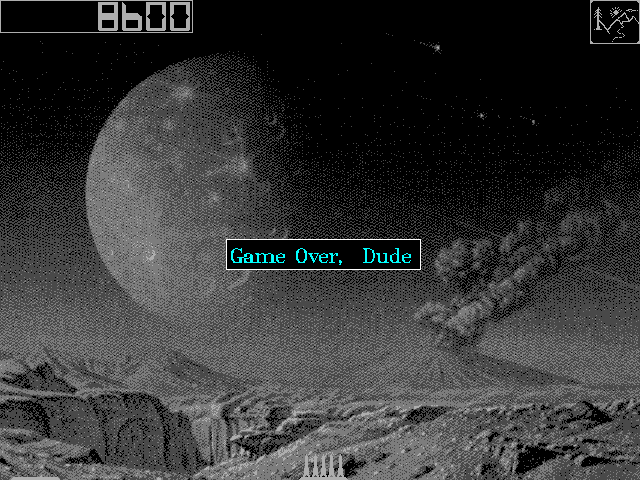
The action is laid out in the classic defense-game arrangement: cities and two missile sites line the bottom of the screen while incoming warheads descend from above. That clear fixed-screen view keeps your eye on trajectories and explosion ranges. Multiple backgrounds add some variety between sessions, but the important images are the moving threats and the blasts you are trying to place precisely.
Story
Patriot Command uses a direct futuristic siege setup rather than a developed story. Your role is plain: defend the cities from incoming warheads and survive for points until the cities are gone. For an arcade shooter, that is enough context to make every successful interception feel urgent.
The drama comes from the condition of the battlefield, not from characters or plot turns. Each lost city makes the defense feel more precarious, and the sight of several threats heading downward naturally creates a last-line-of-defense mood. It is simple framing, but it fits a game built around immediate reactions.
If you want a campaign with a narrative payoff, this is not where Patriot Command puts its energy. Its “story” is the one you make from a run: a clean opening, a wave that gets messy, and the moment your remaining defenses finally cannot hold. The score is the aftermath.
Overall Experience
Patriot Command is a modest but effective Missile Command-style score chaser. It understands the central pleasure of the formula: turning a screen full of descending threats into a chain of carefully timed explosions, then trying to stay composed as the next wave turns that plan into chaos. The stealth warheads and aircraft give the familiar setup enough variation to keep your aim from settling into autopilot.
Its limitations are also easy to feel. This is a focused fixed-screen arcade game, so the loop lives or dies on whether you enjoy repeating waves for a better score. The hot-seat option can make that repetition more lively with another person nearby, but solo play is still the heart of it. Treat it as a quick test of timing and target judgment, not a game that keeps unfolding into something larger.
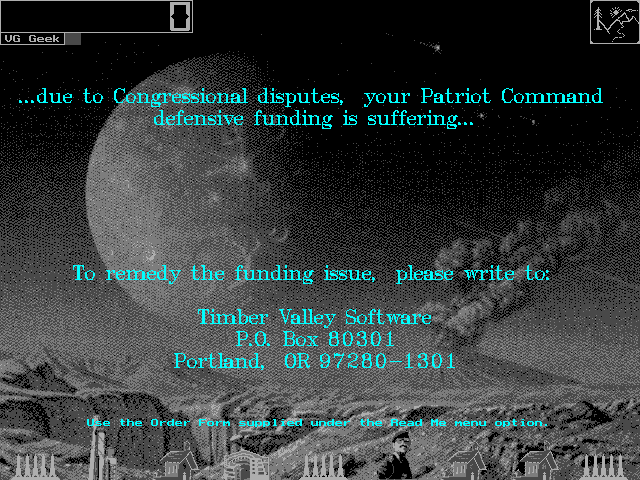
The biggest practical frustration is the shareware restriction: although the game is fully functional, it becomes nonfunctional after several minutes. That cuts against the natural rhythm of chasing a strong score and makes sessions feel abruptly interrupted. Still, if you enjoy old DOS arcade games and want a straightforward mouse-driven defense challenge, Patriot Command has enough immediate pressure and tactical aiming to justify a look. Just be ready for a short, sharp burst rather than a long evening.


Reviews
There are no reviews yet.