 Retro Replay Retro Replay gaming reviews, news, emulation, geek stuff and more!
Retro Replay Review
Gameplay
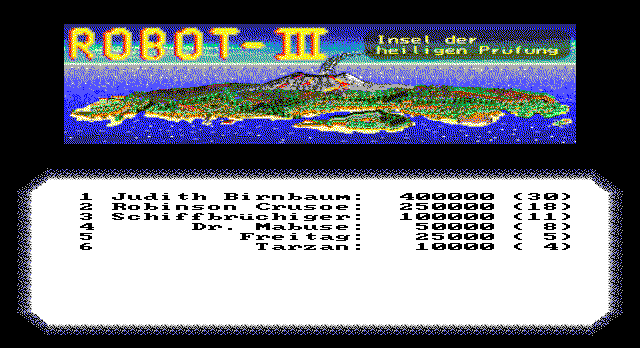
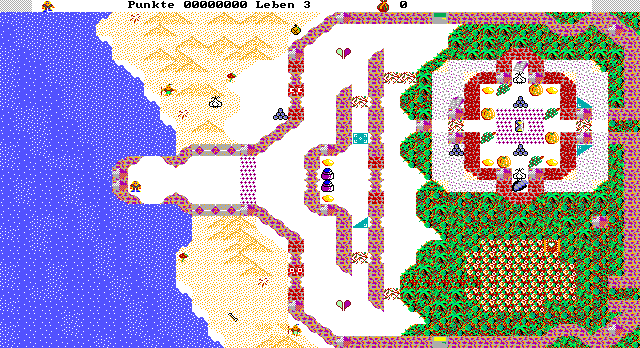
Robot III: Insel der heiligen Prüfung evolves the series’ core mechanics into a more narrative-driven adventure, placing a stronger emphasis on exploration and puzzle-solving than in prior installments. Players traverse the lush landscapes of Fana, interacting with artifacts, deciphering cryptic inscriptions, and gradually uncovering the island’s secrets. The pacing is deliberate, encouraging careful observation rather than button-mashing or frantic action sequences.
(HEY YOU!! We hope you enjoy! We try not to run ads. So basically, this is a very expensive hobby running this site. Please consider joining us for updates, forums, and more. Network w/ us to make some cash or friends while retro gaming, and you can win some free retro games for posting. Okay, carry on 👍)
The standout gameplay innovation is the Tamala language system. Early on, you’ll find menus and dialog entirely in Tamala script, forcing you to piece together vocabulary through context, repetition and in-game glossaries. This mechanic turns linguistic acquisition into an integral puzzle itself: learning new words unlocks NPC conversations, hidden paths and quest objectives. It’s a clever twist that adds depth and encourages replayability for those who enjoy language puzzles.
Puzzle design strikes a fine balance between challenge and accessibility. While some logic puzzles demand trial and error—especially those involving the newly learned language—hints are cleverly embedded in environmental cues and Tamala lore. You’ll often find murals or inscriptions that, once translated, provide subtle clues to the solution, making each breakthrough feel earned and satisfying.
Control responsiveness and interface are polished, with context-sensitive prompts that guide interactions without breaking immersion. Whether you’re scaling ancient ruins, conversing with Tamala elders, or tinkering with mechanical devices left behind by a lost civilization, Robot III maintains a solid, intuitive control scheme that newcomers and series veterans alike will appreciate.
Graphics
The visual presentation of Robot III is one of its strongest assets. Fana’s tropical flora bursts with vibrant colors, and the interplay of light and shadow within dense jungles and cliffside temples creates an authentic, immersive atmosphere. Textures are rich and detailed, especially on weathered stone structures, moss-covered statues, and the exotic fauna that occasionally crosses your path.
Character models, particularly those of the Tamala inhabitants, are rendered with care—distinctive tribal attire, intricate face paint and fluid animations bring the islanders to life. Facial expressions during key story beats feel surprisingly nuanced, lending emotional weight to pivotal dialogues and heightening player investment in the unfolding narrative.
Environmental effects such as dynamic weather, drifting fog in ancient halls and gently swaying plant life contribute to the sense of a living, breathing world. Performance remains stable even in the most densely populated scenes, and graphical options allow players to fine-tune settings for optimal frame rates without sacrificing visual fidelity.
Cutscenes seamlessly transition from in-engine gameplay, reinforcing the game’s cinematic ambitions. Subtle camera work accentuates dramatic moments—whether zooming in on a cryptic glyph revealing the next clue or panning across a breathtaking vista as you approach a hidden valley—underscoring the importance of visual storytelling.
Story
The narrative thrust of Robot III picks up immediately after the cliffhanger in the second episode, with the player rushing to answer a mysterious telegram from the remote island of Fana. The central quest—to locate a missing friend who sent out an SOS—provides both emotional urgency and the impetus to explore every corner of the island’s ancient ruins and modern settlements.
Fana is inhabited by the Tamala, a people with rich traditions and their own language. As the storyline unfolds, learning Tamala becomes more than a gameplay mechanic—it represents a bridge between cultures. The narrative gradually peels back layers of Tamala history, revealing a society shaped by mystical rites and a profound connection to the island’s spiritual heart.
Dialogues are well written, balancing exposition with moments of genuine warmth and humor. Elder Tamala share haunting folk tales, while children teach you playful phrases that add charm to otherwise serious proceedings. The sense of discovery grows organically as you decode messages carved on temple walls or translate a distressed plea for help penned by your missing companion.
Supplementary lore is delivered through collectible journals and environmental storytelling. Each artifact or graffiti scratch provides context—whether it’s a warning of ancient curses or an insight into Fana’s climate-stricken past. This layering of narrative elements ensures that even side paths contribute meaningfully to the overarching tale of friendship, trust and cultural understanding.
Overall Experience
Robot III: Insel der heiligen Prüfung marks a clear evolution for the series, shifting from action-oriented escapades to a puzzle-rich, story-centric exploration. The emphasis on language learning elevates the gameplay, making each puzzle feel unique and fostering a genuine sense of achievement as you master Tamala and unlock new paths.
The combination of top-tier visuals, immersive world-building and compelling narrative threads creates an experience that will appeal to both veteran adventure gamers and newcomers seeking a thoughtful, unhurried journey. While some may find the language puzzles demanding, they never feel gimmicky—rather, they reinforce the thematic core of cross-cultural communication and empathy.
Replay value is high for completionists eager to uncover every sacrificial shrine and hidden codex, and the branching dialog options based on your Tamala proficiency offer subtle variations in how NPCs respond. This encourages experimentation and multiple playthroughs to grasp all story nuances.
In sum, Robot III delivers a richly woven tapestry of gameplay, graphics and storytelling that lives up to its subtitle, “Insel der heiligen Prüfung.” It stands as both a worthy successor in the Game of Robot series and a standout adventure in its own right—one that challenges mind and heart in equal measure.



Reviews
There are no reviews yet.