 Retro Replay Retro Replay gaming reviews, news, emulation, geek stuff and more!

Retro Replay Review
Gameplay
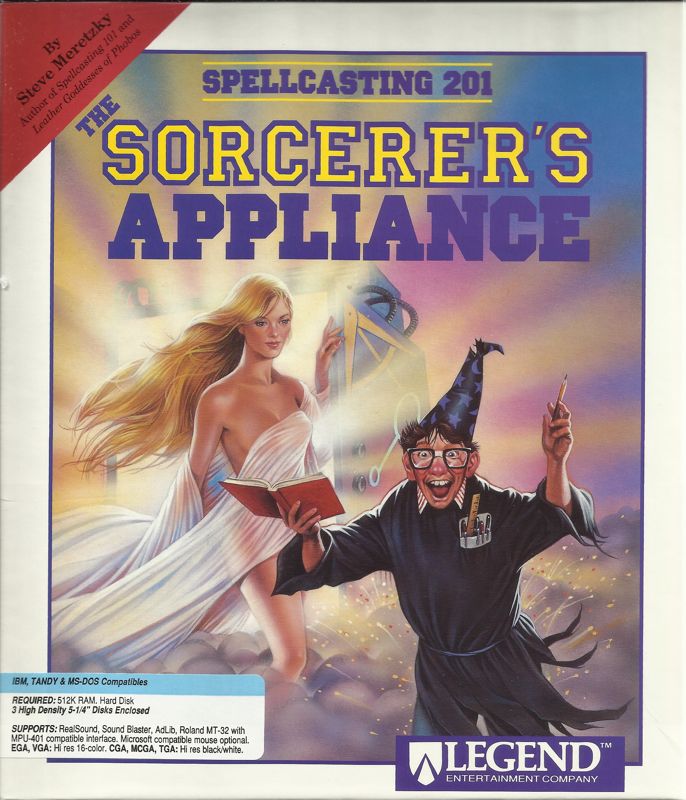
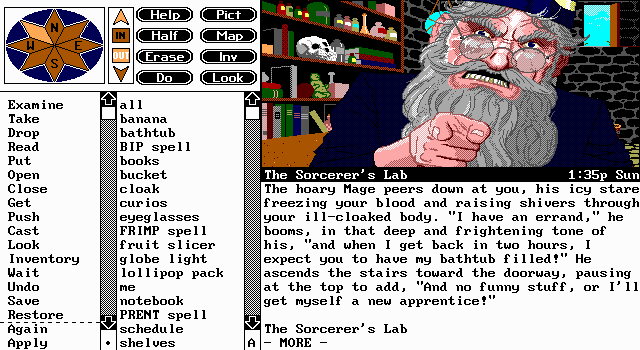
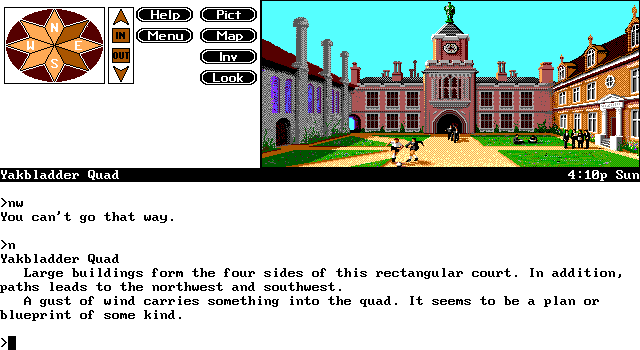
Spellcasting 201: The Sorcerer’s Appliance continues the series’ tradition of interactive fiction, turning text commands into a fully realized magical campus adventure. The left side of the screen displays your roster of spells and inventory items, allowing you to click on a spell or object and then click on the target in the main text window. Movement is handled via the eight compass directions, making navigation through Sorcerer University’s sprawling grounds intuitive once you get the hang of it.
(HEY YOU!! We hope you enjoy! We try not to run ads. So basically, this is a very expensive hobby running this site. Please consider joining us for updates, forums, and more. Network w/ us to make some cash or friends while retro gaming, and you can win some free retro games for posting. Okay, carry on 👍)
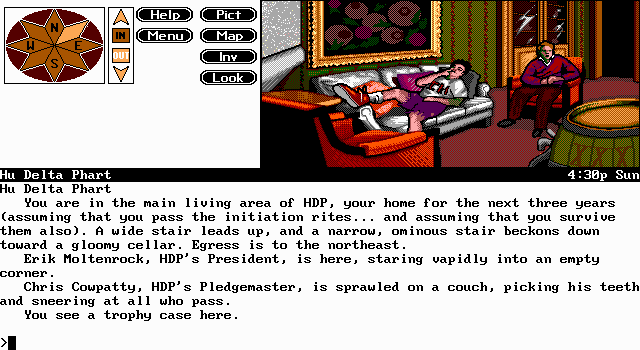
Early on, you join the fraternity Hu Delta Phart and endure a series of delightfully absurd hazing rituals set by Pledgemaster Chris Cowpatty. These tasks range from harmless pranks to elaborate fetch-quests that test your spellcasting prowess. Each challenge often hides a clever puzzle—for instance, transforming common campus clutter into a vital quest item or using the “Inviso-Vaporate” spell to bypass locked doors. The difficulty curve has been nudged upward compared to Spellcasting 101, thanks mainly to the open-world layout and more intricate multi-step puzzles.
A key feature is the Nice Mode versus Naughty Mode toggle. Nice Mode trims back the adult humor and risqué encounters, making the game more accessible to younger players or those who prefer milder content. Naughty Mode, by contrast, unleashes the full force of Christopher and Shanna’s witty innuendo, bawdy rhymes, and flirtatious banter. Both modes keep the core puzzles intact, so your choice only affects tone, not substance—a thoughtful touch that enhances replayability.
Graphics
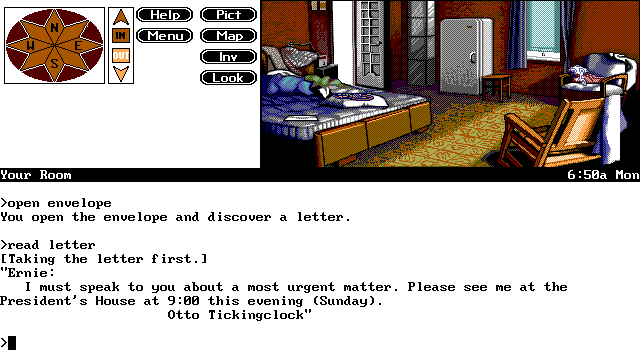
As a text-driven adventure, Spellcasting 201 relies primarily on descriptive prose rather than polygonal visuals or animated cutscenes. Yet, the game isn’t purely ASCII—occasionally you’ll encounter static line drawings illustrating key characters like Professor Otto Tickingclock or the ominous Sorcerer’s Appliance itself. These sketches are charmingly retro, evoking the era’s illustrated novellas more than modern graphical splendor.
The user interface strikes a clean, functional balance. A central text window narrates each scene, while a sidebar lists spells, objects, and actions. Color highlighting draws your eye to interactive elements, and a simple compass rose at the bottom helps you keep your bearings on campus. Though it may look dated by today’s standards, this streamlined layout keeps the focus squarely on story and puzzle-solving without visual clutter.
Loading screens and chapter interludes feature whimsical illustrations of campus life—bustling quads, creeping dungeons beneath the library, and the Appliance’s secret chamber. While these images are modest in resolution, they capture the game’s lighthearted tone and encourage your imagination to fill in the details. In an era before high-definition assets, Spellcasting 201 proves that inventive writing and minimal art can spark a strong sense of place.
Story
Picking up right after the events of Spellcasting 101, we find Ernie Eaglebeak returning for his sophomore year at Sorcerer University. He’s still in possession of the Sorcerer’s Appliance, an arcane device capable of reality-bending feats. Ernie’s new quest is twofold: survive the increasingly brutal hazing rituals of Hu Delta Phart and unravel the Appliance’s hidden secrets under the guidance of Professor Otto Tickingclock, now president of SU.
The narrative unfolds in episodic chapters, each tied to a hazing task or a clue about the Appliance’s true purpose. You’ll chat up college flirtations, dodge the Dean’s ire, and decode cryptic journal entries scattered across campus. Dialogue is peppered with tongue-in-cheek humor, campus satire, and occasional fourth-wall breaks that remind you the designers are as entertained by the chaos as you are.
Underlying the slapstick and wordplay is a genuine mystery: why does the Sorcerer’s Appliance resonate with ominous power, and what fate awaits the one who masters it? As you collect fragments of lore from dusty classrooms and midnight rendezvous in the Quad, the stakes feel increasingly high. The payoff is a finale that blends puzzle resolution with a healthy dose of comedic catharsis—true to the series’ knack for combining laughs with light moral lessons.
Overall Experience
Spellcasting 201: The Sorcerer’s Appliance stands out as a shining example of classic interactive fiction. It builds on the strengths of its predecessor by offering more exploration, tougher puzzles, and a richer campus environment. The game’s humor remains sharp, and the dual-mode system ensures both family-friendly and adult audiences can enjoy Ernie Eaglebeak’s misadventures.
Despite its text-centric presentation, the interface is accessible and well-organized, allowing players to focus on clever wordplay and inventory-based challenges. The open-world feel of the university grounds encourages experimentation—wandering off the beaten path often yields hidden puzzles, extra spells, or humorous Easter eggs that reward curious minds.
While modern gamers accustomed to high-fidelity graphics and voice acting might balk at the minimal visuals, fans of retro adventures and witty storytelling will find much to love here. With its engaging puzzles, memorable characters, and that hallmark mixture of whimsy and mild naughtiness, Spellcasting 201 offers a delightful afternoon (or several) of magical mayhem and cerebral fun. It’s a worthy sequel that both newcomers and series veterans will appreciate.


Reviews
There are no reviews yet.