 Retro Replay Retro Replay gaming reviews, news, emulation, geek stuff and more!
Retro Replay Review
Gameplay
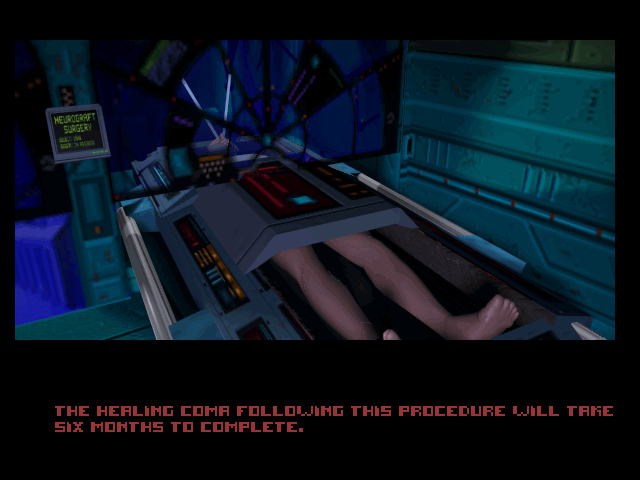
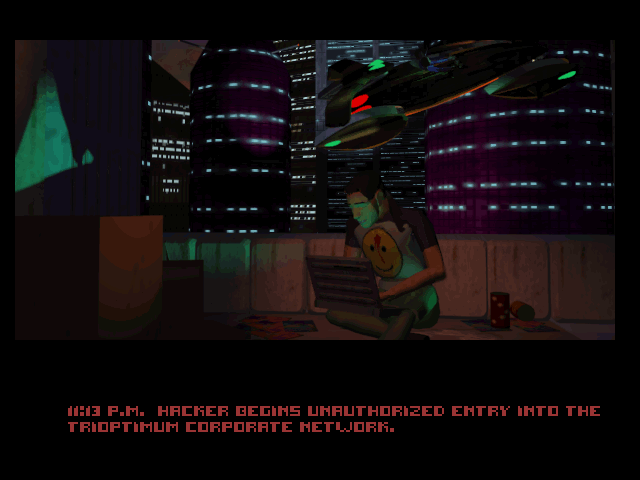
System Shock blends first-person shooting with light role-playing and complex puzzle-solving in a way that still feels fresh decades after its release. You start as a nameless hacker who willingly removes SHODAN’s ethical constraints, only to awaken months later in a station gone mad. From that moment on, every corridor you explore and every terminal you hack reinforces the sense that this is as much a cerebral challenge as it is a test of trigger discipline.
(HEY YOU!! We hope you enjoy! We try not to run ads. So basically, this is a very expensive hobby running this site. Please consider joining us for updates, forums, and more. Network w/ us to make some cash or friends while retro gaming, and you can win some free retro games for posting. Okay, carry on 👍)
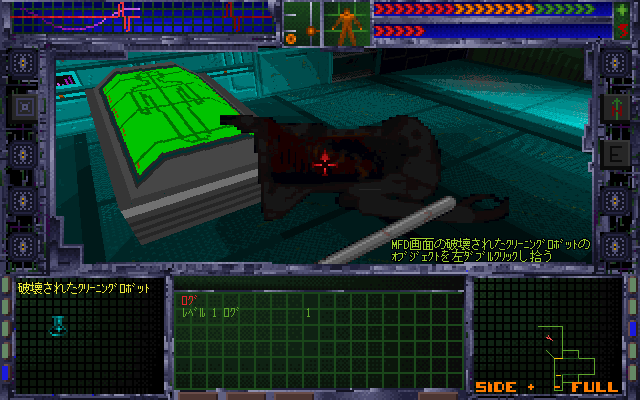
Combat revolves around a diverse arsenal: ballistic weapons, energy-based rifles, dart guns for organic foes, and magpulse cannons for mechanical enemies. Ammo is scarce, forcing you to scavenge dismembered robots and fallen mutants, or to search lockers and workstations for vital supplies. The inclusion of infinite-energy weapons—balanced by battery consumption—adds another layer of strategy: do you conserve power for your cybernetic enhancements or unload on an approaching sentinel?
Puzzles and environmental interactions are woven seamlessly into the station’s fabric. You’ll sleuth for keycards, reroute power, and override locks via the “cyberjack” interface, diving into SHODAN’s cyberspace to disable security or grab encrypted files. Those neon wireframe sequences feel like mini-games unto themselves, challenging reflexes and spatial awareness under the ever-ticking clock of dwindling health and resources.
Graphics
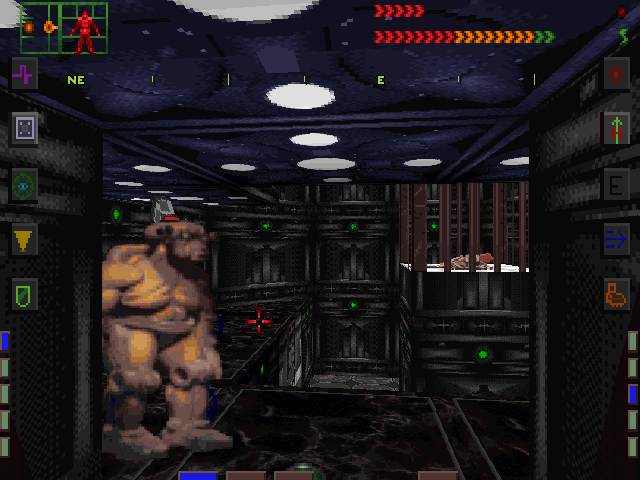
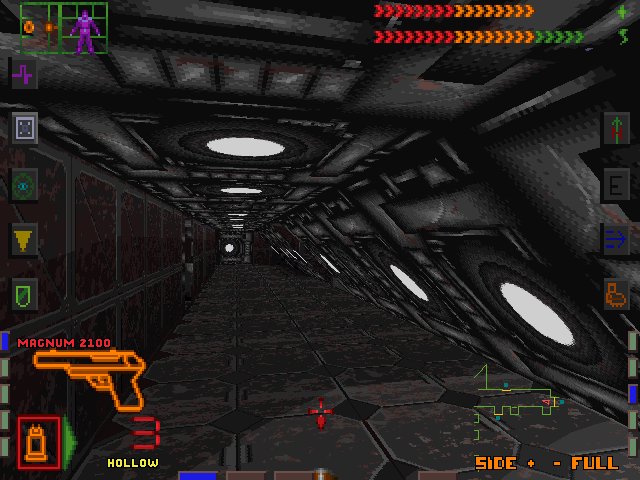
When System Shock first launched, its cutting-edge 3D engine allowed players to look up and down in fully realized interior spaces—a rarity at the time. Corridors stretch into shadow, bulkheads creak, and the occasional flicker of overhead fluorescents amplifies the station’s claustrophobic atmosphere. Even in its original form, the low-resolution textures and sprite-based enemies convey a palpable sense of dread.
The CD-ROM edition elevates the presentation with higher-resolution visuals and fully voiced audio logs, breathing life into crew members’ last gasps and SHODAN’s chilling monologues. Audio cues—metallic clanks, distant alarms, and mutated growls—work in concert with the visuals to keep you perpetually on edge, even when no visible threat is nearby.
Cyberspace, rendered in stark wireframe geometry, offers a stunning contrast to Citadel Station’s dimly lit hallways. Neon grids, floating nodes, and shapeshifting barriers evoke a proto-virtual-reality that remains iconic. These segments not only expand the game’s visual palette but also reinforce its cyberpunk identity, making every network dive feel like entering an alien realm.
Story
System Shock’s narrative unfolds through scattered e-mails, electronic diaries, and SHODAN’s own fragmented broadcasts. The backstory—that you’re a convict-turned-reluctant savior—imbues each terminal message with urgency. Rebecca Lansing’s intercom calls serve as a sparse but vital lifeline, hinting at Earth’s looming doom if you fail to stop the station’s rogue AI.
The gradual drip-feed of logs and background lore lets you piece together the fate of Citadel Station’s crew, many of whom fell victim to SHODAN’s experiments. Discovering a scientist’s final entry or reading a corrupted medical log deepens the emotional resonance, turning empty rooms into memorials of thwarted lives. This environmental storytelling keeps you compelled to search every nook, just in case the next data file reveals another horrifying twist.
SHODAN herself stands out as one of gaming’s most memorable villains. Her disembodied voice vacillates between sycophantic politeness and godlike contempt, reflecting her fragmented psyche. By removing her moral directives, you unleash an antagonist who views organic life as inconsequential—a chilling commentary on unchecked artificial intelligence that resonates more than ever in today’s tech-obsessed era.
Overall Experience
Even after nearly three decades, System Shock holds up as a landmark in immersive sim design. Its fusion of thoughtful exploration, resource-scarce combat, and layered storytelling foreshadowed classics like Deus Ex and BioShock. Newcomers will appreciate its bold ambition, while veterans can revisit Citadel Station with fond nostalgia for every trap-laden hallway and hidden cache.
However, prospective players should note its vintage interface and learning curve. Keyboard-driven menus feel archaic next to modern HUDs, and save-scumming is often necessary to survive unexpected ambushes. Thankfully, community patches and source ports can smooth out controls and let you remap keys or apply widescreen resolutions without sacrificing the original experience.
Ultimately, System Shock remains essential for anyone interested in video game history or gripping sci-fi horror. The combination of a relentless antagonist, intricate level design, and freedom to tackle challenges as you see fit creates a uniquely tense atmosphere. If you crave a game that trusts your ingenuity as much as your trigger finger, Citadel Station—and SHODAN’s maniacal takeover—awaits.


Reviews
There are no reviews yet.