 Retro Replay Retro Replay gaming reviews, news, emulation, geek stuff and more!
Retro Replay Review
Gameplay
The Wizard of Oz adopts the classic text-adventure format, enriched with simple but charming graphics. Players type in commands—such as “go north,” “take axe,” or “ask Scarecrow about bridge”—to navigate Dorothy through the fields of Munchkinland, the ominous forests, and ultimately to the grand gates of the Emerald City. The parser is forgiving for standard verbs and directions, making it accessible even for first-time interactive-fiction enthusiasts.
(HEY YOU!! We hope you enjoy! We try not to run ads. So basically, this is a very expensive hobby running this site. Please consider joining us for updates, forums, and more. Network w/ us to make some cash or friends while retro gaming, and you can win some free retro games for posting. Okay, carry on 👍)
Puzzles are woven seamlessly into the narrative, often requiring players to seek clues from Dorothy’s companions. For example, the Tin Woodman can offer insight into mechanical obstacles, while the Lion’s bravery might unlock hidden paths that appear impassable at first glance. Some of the more complex puzzles encourage exploration and backtracking, rewarding patience with delightful narrative touches—like overhearing munchkin chatter or discovering hidden poppy fields.
While the pace can feel deliberate by modern standards, there is an undeniable satisfaction in carefully constructing each command and watching Dorothy respond. The inclusion of Toto as a mobile “highlight” tool allows players to examine objects from different angles, adding depth to object interactions. Overall, the gameplay strikes a nostalgic chord, blending the intellect of text parsing with just enough visual flair to keep the journey lively.
Graphics
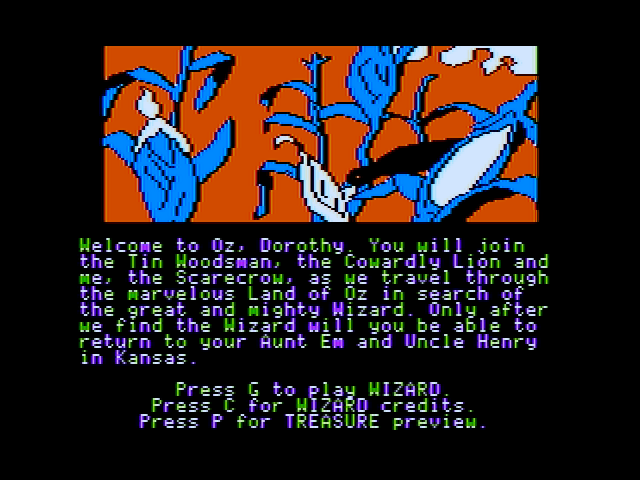
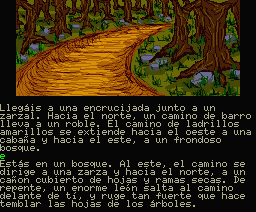
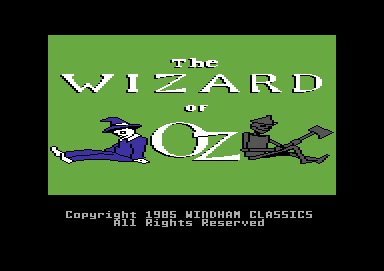
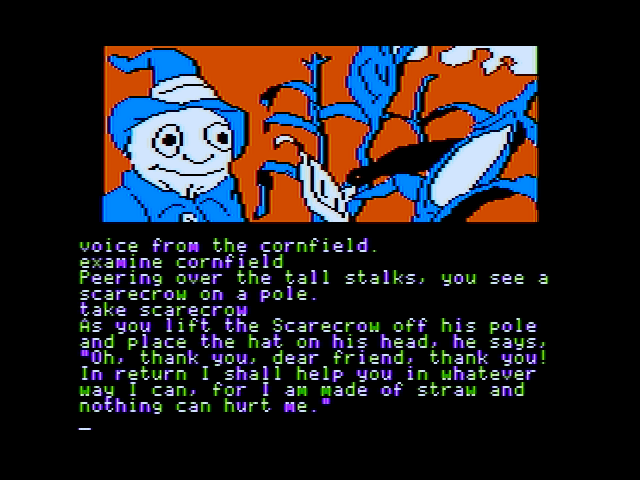
Graphics in The Wizard of Oz are rendered in blocky, pixelated detail, reminiscent of early home-computer adventures. Every key location—from the rainbow-lit entrance of Munchkinland to the dimly glowing corridors of the Emerald City—features a small illustration that captures the spirit of Baum’s setting. While limited to a handful of colors and low resolution, these images are carefully composed to convey atmosphere.
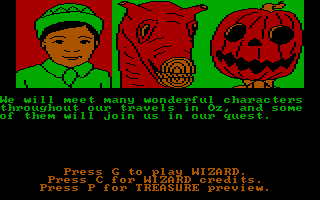
Character portraits appear at pivotal moments, such as when the Scarecrow offers advice or the Witch casts a menacing glance. These portraits may lack fine-detail, but their expressive silhouettes and color palettes effectively communicate emotion. Scene transitions are smooth, with brief loading flashes that harken back to the golden age of disk-based gaming.
Environmental effects—like the swirling cyclone that first sweeps Dorothy away—are animated via a rapid sequence of frames that convey urgency and drama. Though simple by today’s standards, the art style has a quaint, storybook quality. Fans of pixel art will appreciate the game’s minimal yet evocative visuals, which never overshadow the narrative but always complement the text-based descriptions.
Story
Drawing directly from L. Frank Baum’s beloved novel, The Wizard of Oz faithfully adapts Dorothy Gale’s journey from Kansas to the magical land of Oz. The game opens with the famous cyclone sequence, immersing players in the chaos before gently guiding them to Munchkinland. From there, each encounter with Toto, the Scarecrow, Tin Woodman, and Cowardly Lion feels true to the source material, blending whimsy with heartfelt moments.
Dialogue is peppered with Bailey-esque charm, giving each character a distinctive voice. The Scarecrow’s plaintive wit, the Tin Woodman’s longing for a heart, and the Lion’s comedic bravado are all captured in concise, engaging text. NPC interactions often echo key scenes from the novel, while allowing for additional side conversations that enrich the world—such as chatting with Munchkin townsfolk or negotiating with Winged Monkeys.
Though the core story is linear, the game allows for minor detours that shed new light on familiar moments. Seeking an alternative route through poppy fields or trading baubles with munchkins offers small rewards and narrative snippets that deepen the lore. This faithful yet slightly expanded retelling makes the experience rewarding both for longtime fans and newcomers eager to explore Oz.
Overall Experience
Playing The Wizard of Oz feels like stepping into an interactive storybook. The blend of text-driven gameplay and sparse but evocative graphics creates a cohesive atmosphere that’s both nostalgic and engaging. While modern gamers might find the text parser’s limitations challenging, those with a fondness for classic interactive fiction will appreciate its deliberate pacing and emphasis on exploration.
The game’s learning curve is gentle: an introductory tutorial sequence eases players into the command structure, and Dorothy’s companions often offer contextual hints. This balance of guidance and challenge encourages curiosity without fostering frustration. Even seasoned puzzle-solvers will find moments that require thoughtful observation and creative problem-solving.
Ultimately, The Wizard of Oz delivers a captivating blend of story, puzzles, and vintage charm. It’s a title best enjoyed with patience and a willingness to immerse oneself in early ’80s adventure design. For collectors, fans of L. Frank Baum’s novel, or anyone curious about the roots of modern narrative gaming, this is a must-experience journey down the Yellow Brick Road.


Reviews
There are no reviews yet.