 Retro Replay Retro Replay gaming reviews, news, emulation, geek stuff and more!


Retro Replay Review
Gameplay
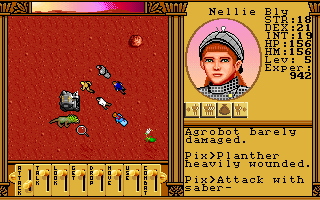
Ultima: Worlds of Adventure 2 – Martian Dreams builds on the solid foundations of its predecessor, offering a familiar yet refined top-down role-playing experience. Utilizing the Ultima VI engine, the game provides a seamless graphical environment where exploration and discovery go hand in hand. Players guide the Avatar and a party of companions through the alien landscapes of Mars, engaging in turn-based combat that requires tactical planning and thoughtful use of each character’s abilities.
(HEY YOU!! We hope you enjoy! We try not to run ads. So basically, this is a very expensive hobby running this site. Please consider joining us for updates, forums, and more. Network w/ us to make some cash or friends while retro gaming, and you can win some free retro games for posting. Okay, carry on 👍)
The party-management system encourages strategic customization: leveling up unlocks new spells and skills, while equipment can be upgraded by scavenging Martian ruins or trading with eccentric NPCs. Combat encounters strike a satisfying balance between challenge and accessibility—enough to keep veterans on their toes without overwhelming newcomers. Whether you prefer diplomatic resolution or a more direct approach, dialogue choices and character perks offer multiple paths through quests and skirmishes.
Exploration is a major highlight. From the dusty plains of ancient canal networks to the eerie halls of long-abandoned Martian citadels, every location teems with hidden puzzles and lore snippets. Key items—such as notes from historical figures like Nikola Tesla or Marie Curie—often require backtracking or clever inventory use, weaving gameplay mechanics into narrative progression. This design fosters a sense of accomplishment as mysteries unravel.
Graphics
The visuals in Martian Dreams retain the chunky pixel-art charm of Ultima VI, yet push the engine’s capabilities with richer color palettes and more varied environmental textures. Sand dunes and rock formations feel distinct, while interiors of Martian cities boast intricate tilework and ambient lighting effects that evoke a long-lost civilization. Though the resolution may feel dated by modern standards, the art direction shines through in every sprite and backdrop.
Animations are smooth during exploration and combat, with character sprites exhibiting gesture-based idles and attack frames that convey personality. NPC portraits during dialogue are expressive, capturing the likeness of real-world personalities like Sigmund Freud or Percival Lowell. These touches enhance immersion, making conversations with historical figures feel more vibrant and authentic.
Sound design complements the visuals with atmospheric ambient tracks and period-appropriate effects. Wind whistling across Martian dunes, the crackle of arcane machinery, and the echoing chimes of unexplained alien devices lend the world a haunting quality. While the MIDI-based soundtrack is modest compared to orchestral scores of later RPGs, it effectively underscores exploration and heightens emotional moments.
Story
Martian Dreams thrusts the Avatar into an imaginative fusion of science fiction and 19th-century history. After discovering a tome of time-travel lore alongside Dr. Spector, the heroes are whisked to the 1893 World’s Columbian Exposition in Chicago. There, in a plot reminiscent of Jules Verne’s visionary works, they witness the accidental launch of a colossal space cannon destined for Mars.
Stranded on the red planet, the Avatar and companions uncover a fractured society of Martian descendants—humans who arrived generations earlier and built a civilization atop the planet’s dying biosphere. The narrative weaves political intrigue, as rival factions vie for control of dwindling resources, and philosophical debate, as characters confront the ethics of colonization and survival. Moments of genuine emotional weight emerge when players encounter the descendants of historical figures transported by the cannon.
The writing balances earnest adventure with subtle humor. Exchanges with NPCs such as Marie Curie discussing radioactive experiments, or Tesla unveiling bizarre inventions, feel grounded yet whimsical. The overarching quest to find a way home never loses momentum, but side quests deepen the lore, revealing hidden truths about Martian technology and the fate of the original colonists. For fans of story-rich RPGs, Martian Dreams offers a compelling journey through time and space.
Overall Experience
Ultima: Worlds of Adventure 2 – Martian Dreams stands as a creative twist on the classic Ultima formula. It marries robust role-playing mechanics with a captivating “lost colony” sci-fi narrative—an unexpected but welcome departure from the medieval fantasy of previous entries. The blend of real-world historical figures and imaginative world-building results in an adventure that feels both familiar and refreshingly original.
While the game’s engine shows its age in resolution and user interface quirks, its strengths lie in depth of content and charm. Exploration never feels repetitive, thanks to varied locales, clever puzzles, and branching dialogue options. Combat is engaging without being punishing, and party customization offers ample room for different playstyles. The soundtrack and sound effects, though modest, effectively support the game’s atmosphere.
For RPG enthusiasts seeking a blend of classic mechanics, thoughtful storytelling, and a dash of historical sci-fi flair, Martian Dreams remains a hidden gem. Its ambitious setting and engaging gameplay loops reward players who appreciate exploration and narrative depth. Even decades after release, the adventure retains its power to transport you—not just to Mars, but to a bygone era of speculative wonder.


Reviews
There are no reviews yet.