 Retro Replay Retro Replay gaming reviews, news, emulation, geek stuff and more!


Retro Replay Review
Gameplay
Wizard’s Crown delivers a deeply strategic role-playing experience by placing you in control of a party of up to eight adventurers, each molded to your design. From the very start, you decide not only on the standard attributes—strength, agility, intelligence—but also on which classes and special abilities each character will learn. Rather than being locked into a pre-set class, you spend intelligence points to “purchase” the skills of Thieves, Rangers, Fighters, Priests, and Sorcerers, or even combine them into potent hybrid builds.
(HEY YOU!! We hope you enjoy! We try not to run ads. So basically, this is a very expensive hobby running this site. Please consider joining us for updates, forums, and more. Network w/ us to make some cash or friends while retro gaming, and you can win some free retro games for posting. Okay, carry on 👍)
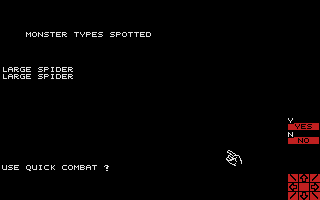
The heart of Wizard’s Crown lies in its turn-based tactical battles. Each encounter plays out on a grid-based battlefield where positioning is critical: spears allow you to threaten enemies two squares away, flails let you bypass shields entirely, and axes carry the risk—and reward—of shattering opponents’ defenses. Shields themselves add a layer of realism, protecting only from directions they face, while mounted combat and party formations can tilt the battle in your favor. If you’d rather focus on party development, an auto-resolve option handles skirmishes at a click, though you’ll miss out on the tactical nuance.
Experience and advancement feel earned and flexible. Victorious battles award experience points that you allocate toward life points, core attributes, or new skills—never do you feel railroaded into a single progression path. This system rewards experimentation: a character who starts as a pure fighter can later learn basic healing spells or ranged combat techniques. Whether you take on a pack of goblins with disciplined phalanxes or send a stealthy rogue to backstab wizards, the choices remain yours.
Beyond combat, mapping the wizard Tarmon’s sprawling laboratory is a quest in itself. Traps, secret doors, and environmental hazards force you to think like a true dungeon delver. Each new corridor and chamber reveals puzzles that test your party’s collective abilities, from lockpicking to magical detection. The result is a satisfying blend of tactical depth and classic dungeon exploration that will keep strategy enthusiasts engaged for dozens of hours.
Graphics
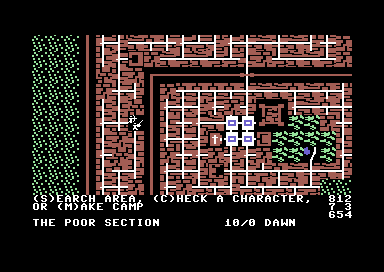
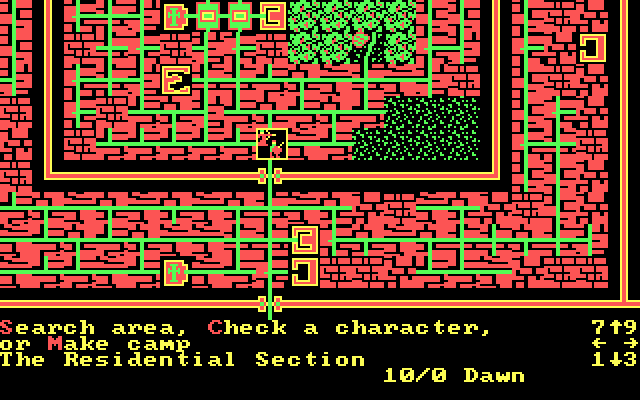
Given its vintage origins, Wizard’s Crown uses a straightforward top-down view with grid-based tiles that clearly delineate movement and attack ranges. The visuals may appear minimalist by today’s standards, but they serve the gameplay exceptionally well. Each unit is represented by a distinct sprite, and as you equip different weapons or shields, you can immediately see those changes reflected in the battlefield icons.
Environmental graphics strike a balance between functional and atmospheric. Stone walls, wooden doors, and forge fires are differentiated through simple yet evocative textures, making it easy to orient yourself in labyrinthine corridors. Ambient details—like flickering torchlight or ominous rune-carved stones—help build the tension as you delve deeper into Tarmon’s lair.
Spell effects and weapon animations are similarly concise but satisfying. Watching a blizzard spell spread ice across multiple squares or a lightning bolt arc through a room may not compete with modern particle systems, yet each effect is crisp and unmistakable in its purpose. The game’s UI menus, while text-heavy, are logically laid out and responsive, letting you manage equipment, skills, and inventory without confusion.
Though Wizard’s Crown lacks the lush, high-definition artwork of contemporary RPGs, its visual clarity and functional design make it easy to keep track of looming threats and tactical opportunities. For players who appreciate substance over flash, the graphics serve their role perfectly, keeping the focus on strategy rather than spectacle.
Story
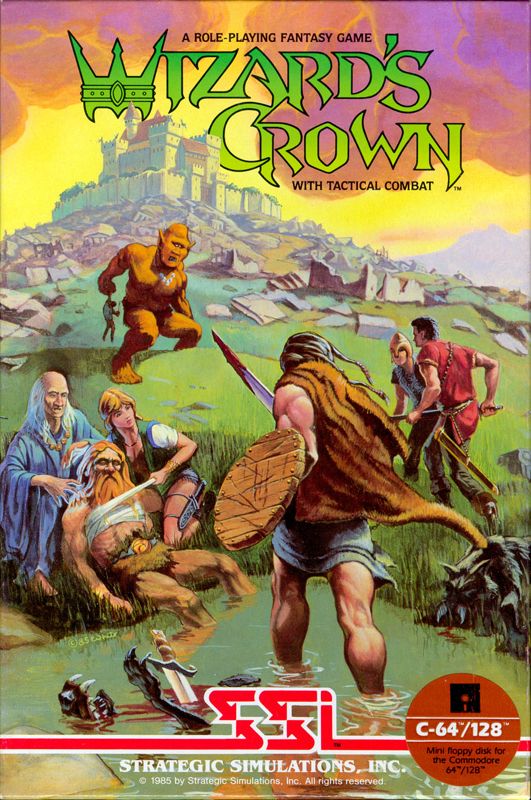
The narrative premise of Wizard’s Crown is elegantly simple: track down the legendary Crown that bestows godlike power, now sealed inside the chambers of the long-gone wizard Tarmon. Five centuries ago, Tarmon locked himself away, and rumors grew of the magical artifacts and terrors lurking within his private stronghold. Your party’s journey begins in a small tavern, fueled by rumors, gold, and the ambition to claim this crown and whatever power it commands.
While the storyline doesn’t delve into elaborate character backstories or branching moral dilemmas, it weaves just enough myth and intrigue to drive exploration. NPCs scattered through nearby villages and ruins share fragments of lore—warnings about undead guardians, tales of magical traps, and hints at hidden passageways. These snippets create an immersive backdrop that rewards careful notice and thorough investigation.
As you venture deeper, the setting itself conveys much of the narrative weight. Gnarled doors inscribed with arcane runes, bloodstains frozen on laboratory floors, and the hushed reverence of a wizard’s inner sanctum tell a wordless story of Tarmon’s descent into obsession. By the time you confront the wizard—or what remains of him—the combination of environmental storytelling and strategic threat has built genuine tension.
Ultimately, Wizard’s Crown offers a focused, goal-oriented tale rather than a sprawling epic. For players who value completing a challenging quest and savoring every tactical twist, the straightforward narrative framework is more than sufficient. The main quest’s tight design ensures that every battle, trap, and hidden treasure feels integral to the overarching goal of reclaiming the Crown.
Overall Experience
Playing Wizard’s Crown feels like stepping back into the golden age of tactical role-playing. It’s a game that rewards patience, meticulous planning, and a willingness to adapt. Whether you’re fine-tuning characters’ abilities, experimenting with formidable weapon combinations, or mastering the art of shield placement, the challenges are plentiful and sharply defined. There’s little hand-holding here—each victory is a testament to your strategic acumen.
Difficulty can be steep, especially if you delve into the more complex battle mechanics. However, the option to auto-resolve encounters provides a safety valve for players who prefer to focus on party development and the overarching exploration of Tarmon’s labyrinth. Between grueling boss fights and the labyrinth’s clever puzzles, the pacing strikes a good balance, never letting you coast for too long without meaningful decisions.
Despite its age, Wizard’s Crown stands the test of time for fans of hardcore tactical RPGs. Its depth of customization, nuanced combat system, and satisfying dungeon design create an experience that feels both classic and fresh. Occasional frustration over random hits or trap-laden rooms is more than offset by the thrill of outmaneuvering a superior enemy formation or discovering a hidden vault brimming with enchanted gear.
For anyone seeking a rewarding blend of strategy, party-building, and old-school dungeon crawling, Wizard’s Crown remains a gem. The graphics may be simple, the narrative concise, but the tactical richness and the sense of achievement with each conquest are timeless. If you’re prepared to invest the effort, the Crown—and the glory it brings—awaits.


Reviews
There are no reviews yet.