 Retro Replay Retro Replay gaming reviews, news, emulation, geek stuff and more!
Retro Replay Review
Gameplay
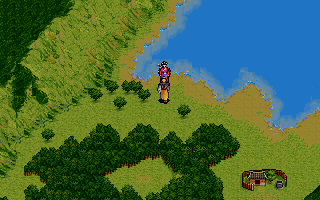
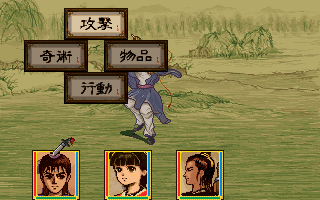
Xuan Yuan Sword 2 builds on the foundations of its predecessor with a refined turn-based combat system that balances strategic depth and accessibility. Travel across a top-down world map, delve into winding dungeons, and explore bustling villages, all presented with clear navigation markers and intuitive menu layouts. Random encounters are paced to keep you on your toes without overstaying their welcome, and major boss fights feel appropriately challenging—forcing you to make smart use of both magic points and the newly introduced stamina bar.
(HEY YOU!! We hope you enjoy! We try not to run ads. So basically, this is a very expensive hobby running this site. Please consider joining us for updates, forums, and more. Network w/ us to make some cash or friends while retro gaming, and you can win some free retro games for posting. Okay, carry on 👍)
The highlight of the gameplay is undoubtedly the “Spirit Pot” system. During battles, you can capture various spirit creatures, then fuse them with items or other spirits to create bespoke companions. These fused spirits act like consumable summons in combat, unleashing powerful skills to turn the tide of battle. Mastery of Spirit Pot combinations adds a layer of customization that encourages experimentation and rewards those who take the time to explore different fusion recipes.
In addition to Spirit Pot mechanics, the stamina bar next to your magic meter empowers martial-arts techniques and special moves. Timing these abilities correctly—especially during boss encounters—makes for exhilarating exchanges, as you juggle health, mana, and stamina resources. Side activities like training with masters, seeking hidden collectibles in remote mountain grottos, and taking on repeatable arena challenges bolster the game’s replay value and ensure that even veteran JRPG fans will find something new to master.
Graphics
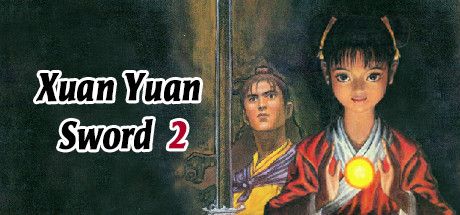
Departing from the more “Japanese” art style of the first Xuanyuan Jian, Xuan Yuan Sword 2 embraces a distinctly Chinese aesthetic. Hand-drawn backgrounds evoke ink-wash paintings, with misty mountain vistas, bamboo forests, and moonlit temples rendered in delicate brushstrokes. Character portraits and sprite animations mirror classical Chinese costumes and hairstyles, lending authenticity to the period setting and helping the game stand out among 1990s RPGs.
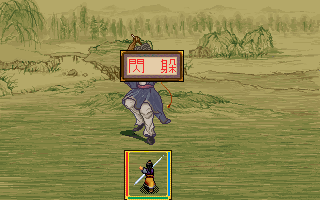
Battle sequences take place in first-person view, but unlike before, each encounter features a full backdrop that reflects your current location—whether it’s a windswept pass or a lantern-lit courtyard. Attack animations are lively, with your heroes performing sweeping sword arcs or fiery spell effects from an over-the-shoulder camera angle. These battle visuals, while limited by the hardware of the era, still manage to capture the kinetic thrill of martial arts clashes.
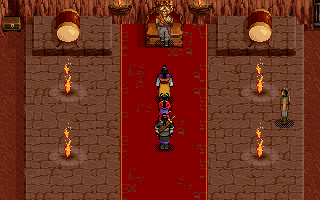
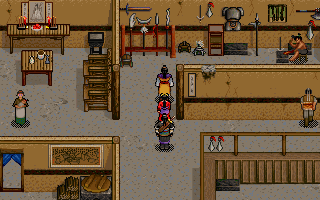
Exploration outside of combat also exhibits attention to detail. NPCs have unique idle poses—some carry buckets of water, others practice tai chi—and ambient animations like falling leaves or rippling water pools add to the world’s immersion. While character movement on the field can feel a touch gridy at times, the lush, hand-painted backdrops more than compensate by drawing you into the mythology of ancient China.
Story
The narrative picks up directly from Xuanyuan Jian’s cliffhanger ending, repositioning you in the role of He Ran, a young martial-arts disciple under the tutelage of a wise old master. Alongside the earnest Jiang Ruhong, He Ran’s journey begins when a desperate plea arrives from the Yexun mountain villages, plagued by ruthless bandit raids. What starts as a straightforward rescue mission soon unfolds into a sprawling epic of political intrigue, celestial mysteries, and the true legacy of the Xuanyuan Sword.
Dialogue is delivered through richly sketched character portraits, each framed against a minimalistic background to keep faces expressive and emotions clear. Conversation branches occasionally offer moral choices—rescue hostages, interrogate prisoners, or prioritize the safety of a nearby hamlet—which affect how NPCs perceive you. Although the story’s primary arc is linear, side quests flesh out secondary characters like the stern chief of Zhaolin Village or the mischievous spirit merchant hiding in the highlands.
Beyond rescue missions and skirmishes, Xuan Yuan Sword 2 weaves in mythic elements drawn from classical Chinese folklore. You’ll encounter reawakened demons, divine emissaries, and the lingering influence of an ancient kingdom. These narrative threads culminate in an emotionally resonant climax, rewarding players who invested time in uncovering hidden scrolls and completing character side-stories with deeper insight into the game’s mystical underpinnings.
Overall Experience
Xuan Yuan Sword 2 delivers a well-rounded package that blends traditional JRPG mechanics with a uniquely Chinese cultural flair. The marriage of layered combat systems—Spirit Pot fusions, stamina-driven techniques, and elemental magic—ensures each battle feels dynamic, while the exploration mechanics encourage you to uncover every secret path through rugged mountainsides and quiet temple ruins.
The game’s pacing is steady, alternating between story-driven set pieces and open exploration segments, which keeps long play sessions fresh. Despite occasional backtracking on the world map, the frequent introduction of new abilities—like spirit tracking or advanced martial forms—gives you reasons to revisit earlier areas in search of hidden treasures or alternate quest outcomes.
For fans of classic RPGs who crave an experience steeped in East Asian lore, Xuan Yuan Sword 2 remains a standout title. Its combination of evocative art, challenging turn-based combat, and a narrative that honors traditional myth makes it a rewarding journey. Whether you’re a newcomer intrigued by its Chinese setting or a returning fan eager to see the saga continued, this sequel is a compelling adventure well worth your time.


Reviews
There are no reviews yet.