 Retro Replay Retro Replay gaming reviews, news, emulation, geek stuff and more!

Retro Replay Review
Gameplay
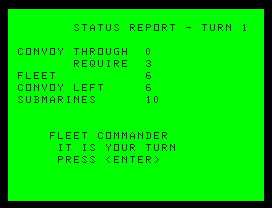
Up Periscope casts you in the role of a fleet commander tasked with shepherding a vital convoy across a U-boat–infested stretch of the Atlantic. The core objective—to escort at least half of your transports safely to the far edge of the map within a limited number of turns—creates constant tactical tension. Each turn you must judiciously allocate moves among your six destroyers, using sonar pings to pinpoint hidden threats and deploying depth charges or torpedoes to neutralize lurking submarines.
(HEY YOU!! We hope you enjoy! We try not to run ads. So basically, this is a very expensive hobby running this site. Please consider joining us for updates, forums, and more. Network w/ us to make some cash or friends while retro gaming, and you can win some free retro games for posting. Okay, carry on 👍)
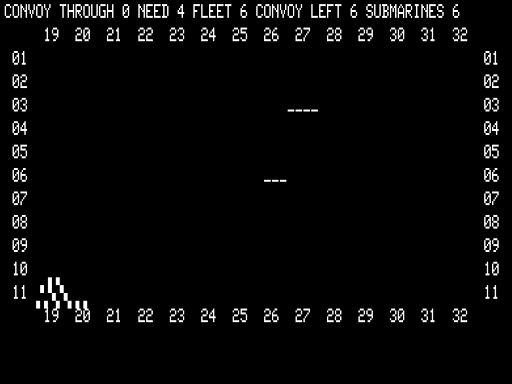
The game’s interface, inherited from Beyond’s earlier Kriegspiel design, revolves around a hexagon-based playfield that clearly delineates movement ranges, sonar arcs, and attack zones. This hex grid may feel abstract at first, but it delivers precision for complex maneuvers, depth-charge patterns, and ramming runs when subs surface. The turn-based pacing is brisk enough to keep the action engaging but deliberate enough to reward careful planning—every ping and every plotted course can mean the difference between victory and costly losses.
For those seeking a more adversarial challenge, Up Periscope includes a head-to-head mode where a second player commands the U-boats. Here, submariners can choose to lie on the seabed (invisible to sonar), raise their periscope to fire torpedoes, or break surface for a risky ramming duel. This asymmetrical setup intensifies the strategic cat-and-mouse dynamic, giving both sides their own tools and constraints: destroyers must track contacts and budget their munitions, while subs sneak into ambush positions and exploit gaps in convoy screening.
Graphics
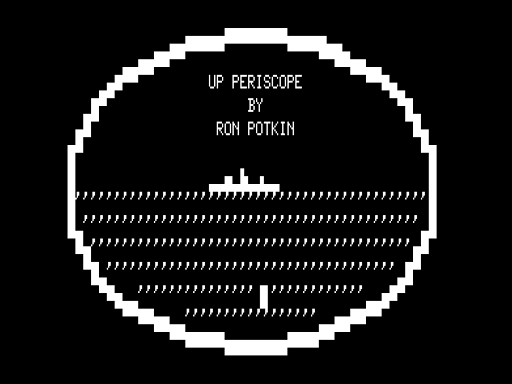
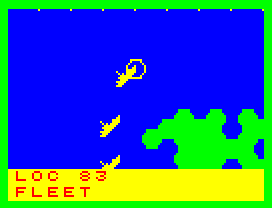
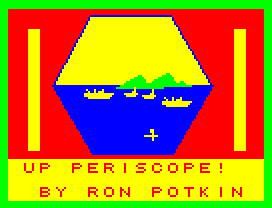
Released in an era when functional clarity took precedence over flashy visuals, Up Periscope embraces a minimalist, top-down aesthetic. The hexagonal grid, simple icons for ships and subs, and color-coded depth layers convey critical information at a glance. While modern gamers accustomed to photorealism may find the presentation modest, it remains remarkably effective—every element is designed to support quick recognition of sonar blips, vessel positions, and ammunition status.
The interface’s subdued color palette—deep blues for underwater zones, greys for surface tiles, and pops of red or green for contacts—reinforces the submarine warfare theme without overwhelming the senses. Animations are limited to basic movement and explosion effects, yet the rhythmic ping of sonar and the flurry of depth-charge patterns compensate for any graphical simplicity by heightening immersion through sound queues and rapid feedback.
On CRT or early LCD displays, the clarity of the hex grid and distinct ship counters ensures that extended play sessions remain comfortable on the eyes. Though Up Periscope can’t rival today’s HD simulations, its graphics excel in conveying the cold, methodical tension of anti-submarine operations. The game’s visual economy is an asset, focusing your attention on strategic depth rather than decorative flourishes.
Story
Unlike story-driven war simulations that weave intricate narratives around individual characters, Up Periscope offers a broader, mission-focused scenario: protect a crucial convoy from the relentless U-boat wolfpacks prowling the mid-Atlantic. The historical backdrop—set during the height of the Battle of the Atlantic—lends weight to each decision you make. Every turn feels like a chapter in an unseen chronicle of naval warfare, where your success or failure shapes the fate of merchant ships and their crews.
Ambient detail emerges through mission briefings and the ever-present risk of submarine torpedoes striking vulnerable transports. While there are no named officers or scripted cutscenes, the game’s tension-driven design creates its own emergent storytelling. When a destroyer races across the hex grid to intercept a lurking U-boat, or when a periscope appears just ahead of your convoy, you’re immersed in a narrative of suspense that provides its own emotional highs and lows.
For those who cherish the unsung heroism of naval escort duty, Up Periscope’s sparse but effective storytelling captures the essence of tactical command under pressure. The absence of a sprawling plot allows the gameplay itself to serve as the primary narrative engine—each sonar sweep, each depth-charge barrage, and each torpedo strike becomes a pivotal moment in your personal war diary.
Overall Experience
Up Periscope stands as a testament to strategic design over graphical flash, offering a rich, tension-filled simulation of convoy escort and anti-submarine warfare. Its turn-based hex interface demands careful resource management and situational awareness, rewarding those who learn to read sonar contacts and predict enemy movements. The optional two-player mode injects even more depth, pitting destroyer captains against cunning U-boat commanders in a battle of wits.
While the visuals may seem dated by today’s high-definition standards, the game’s functional clarity and atmospheric pacing remain compelling. The minimalist presentation ensures you focus squarely on strategic decision-making, and the learning curve—steep at first—yields satisfying mastery as you refine your convoy defense tactics. If you appreciate thoughtful, methodical war games that emphasize positional play and cat-and-mouse tension, Up Periscope is an engaging classic worth exploring.
Ultimately, Beyond’s Up Periscope offers a challenging, replayable experience that captures the stakes of Atlantic convoy duty during WWII. Whether you command the escort group or take the helm of a stealthy U-boat pack, the game delivers memorable encounters defined by suspense, strategy, and the ever-present threat beneath the waves. It’s a niche gem for strategy enthusiasts seeking authentic naval warfare in a clean, focused package.


Reviews
There are no reviews yet.