 Retro Replay Retro Gaming History, Reviews & Emulation
Retro Replay Review
Gameplay
D-Again pulls you in with a mission already in motion. Blon-Win is escorting agent Remi Binderk toward a United Nations conference when a TGV encounter opens the door to the Einheit threat and its G-R weapon. That is a much better launch point than an adventure that spends ages explaining itself: you are on a train, somebody from Blon-Win’s past has urgent information, and trouble is plainly coming.
The game retains the series’ simple turn-based combat, but its most memorable rule is also its oddest: Blon-Win can attack any character at any time. That kind of permission creates tension even in ordinary encounters, because you are not locked into waiting for a clearly labeled fight. It is a deliberately abrasive sort of freedom, more interesting as a source of possibility than as a deep combat system. Go in expecting straightforward battles, not tactical complexity.
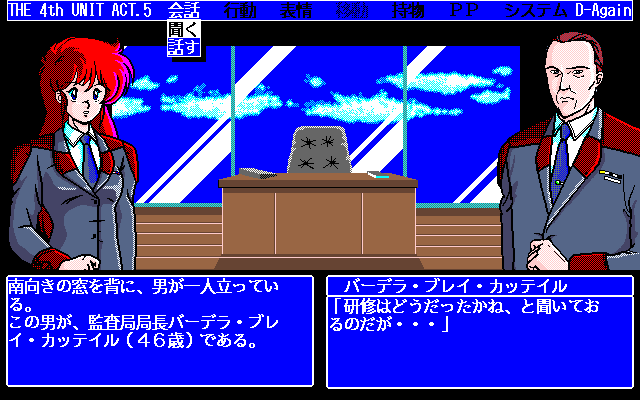
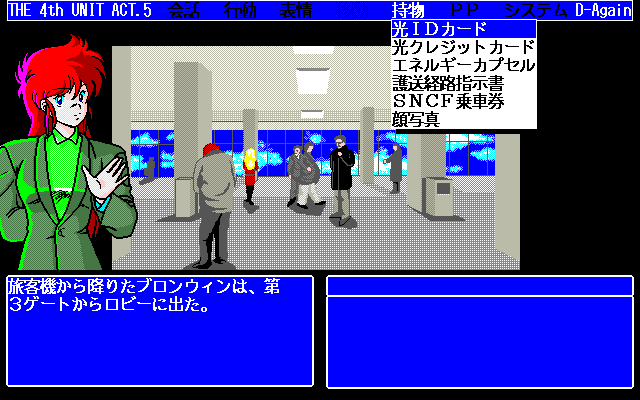
Outside combat, D-Again expands interaction with more context-specific commands and greater freedom of movement than Zerø. Small actions such as eating and drinking make the command set feel more lived-in, and the four emotional stances—nice, angry, sad, and surprised—give you some control over Blon-Win’s tone. The tradeoff is clear in dialogue: you cannot choose discussion topics. You can shape a reaction, but not steer a conversation with much precision. That limitation will frustrate anyone who wants detective-style questioning, though it also keeps the game moving rather than turning every exchange into a menu exercise.
Graphics
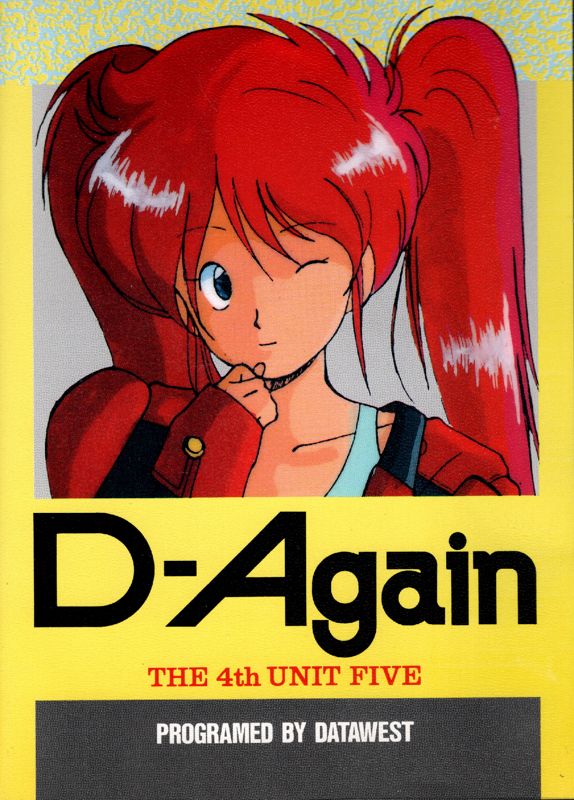
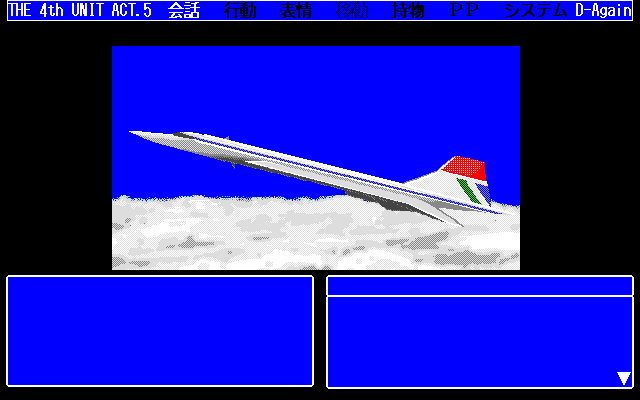
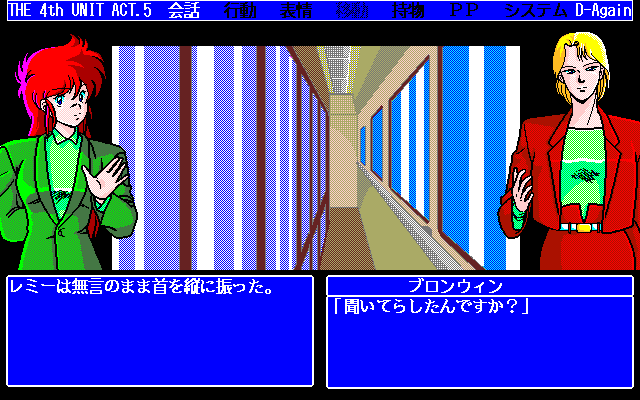
D-Again’s anime/manga and science-fiction framing puts a bionic heroine, a French TGV, and a dangerous-weapons conspiracy at the center of its imagery. The train setting is the strongest visual hook: it gives the opening conflict a confined, forward-moving backdrop rather than another anonymous futuristic headquarters.
Story
This is a sequel that does not waste its premise. The old criminal organization WWWF has been defeated, only for former members to reorganize as Einheit. Dalzy’s appearance turns the trip into more than routine protection work, and the revelation of G-R gives the plot a clean, ominous target.
Blon-Win is a useful lead for this kind of story because she is not merely a civilian caught in a conspiracy. She is a bionic soldier and high-ranked inspector, so the danger around her fits the assignment rather than feeling accidental. Her prior connection to Dalzy also gives the train encounter more weight than a random informant scene.
The story’s biggest strength is its economy. International espionage, a secret agent, a defeated syndicate returning under a new name, and a weapon project are all familiar material, but they are arranged into a direct genre hook. You should come for that brisk, melodramatic sci-fi-adventure energy, not for a tale built on player-led interrogation or broad branching conversation.
Overall Experience
D-Again feels like a late-series refinement rather than a reinvention. It keeps the established turn-based fights while adding more situational actions, freer movement, and emotional responses. That makes it an approachable point for someone already curious about The 4th Unit’s peculiar blend of adventure commands and combat, especially after Zerø.
Its friction is part of the package. The conversation system narrows your choices by removing topic selection, while the attack-anyone rule can feel more provocative than necessary. Yet that same rule is exactly the sort of offbeat design decision that gives an older adventure its personality. D-Again does not sound smooth or conventional; it sounds distinctly willing to let you make questionable decisions.
Give it a chance if a compact anime-flavored cybernetic thriller with experimental adventure interaction sounds more exciting than a perfectly streamlined game. The payoff is the unusual mix: a train-bound espionage setup, reactive emotional choices, mundane contextual actions, and the ever-present option to start a fight. If you need highly strategic combat or dialogue systems with detailed conversational control, that mix is likely to wear thin.


Reviews
There are no reviews yet.