 Retro Replay Retro Gaming History, Reviews & Emulation

Retro Replay Review
Gameplay
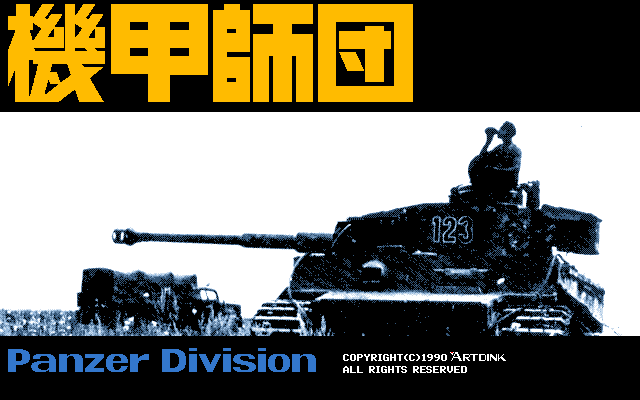
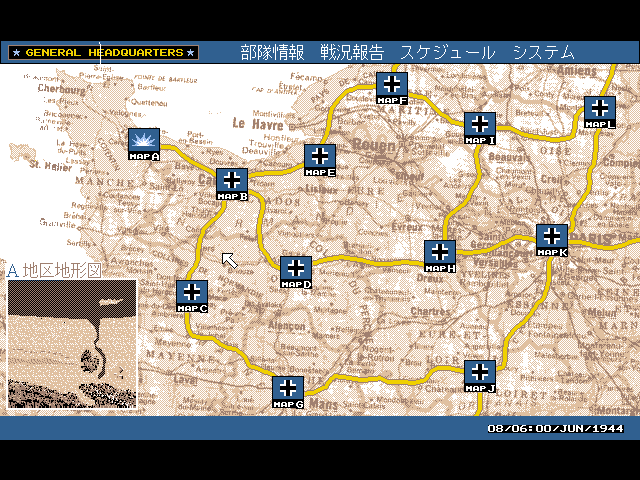
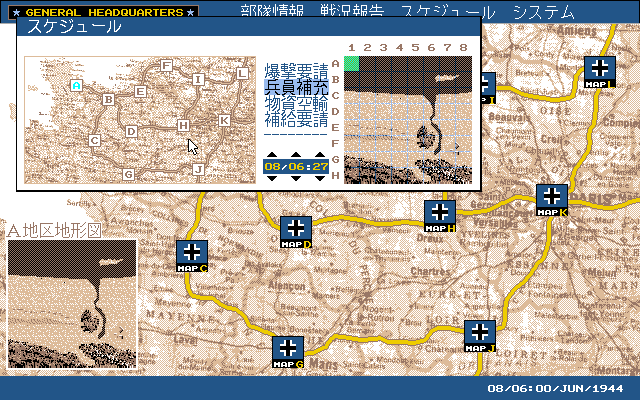
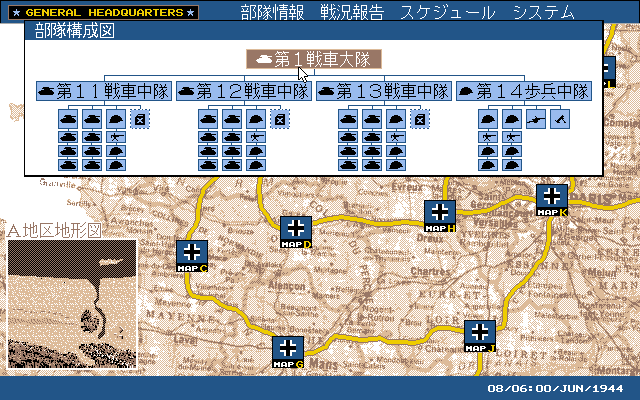
Kikō Shidan: Panzer Division pulls you in by making the tanks feel like forces you have to prepare for war rather than pieces handed to you at the start of a mission. Before a battle, you customize and organize them, then choose where to send them across a France divided into smaller areas on an overhead map. That gives the game a deliberate, command-table rhythm: decisions begin before the first shot is fired.
Once battle begins, the central choice is a good one. You can let tank commanders use their own judgment or give them precise movement instructions. Handing off responsibility can feel appropriately risky when you want to concentrate on broader decisions; taking direct control is for the moments when a position matters enough to micromanage. The game’s turn structure, with time passing each turn, prevents that control from becoming purely static.
Enemy tanks and planes can attack your forces as time moves on, so a plan cannot simply sit untouched. That uncertainty is where the strategy earns its tension. Still, the focus is narrow: this is about preparing and directing armored units in a sequence of battles, not about marching through a detailed historical campaign. If you like methodical WWII tank strategy and enjoy deciding how much authority to delegate, there is a solid tactical puzzle here. If you need famous scenarios or a fixed faction to root for, its more abstract setup may leave you cold.
Graphics
The game uses an overhead map of France broken into smaller area icons, fitting its campaign-level planning. Battles center on tanks facing enemy armor and aircraft, keeping the view focused on the military situation rather than on elaborate historical scenery.
Story
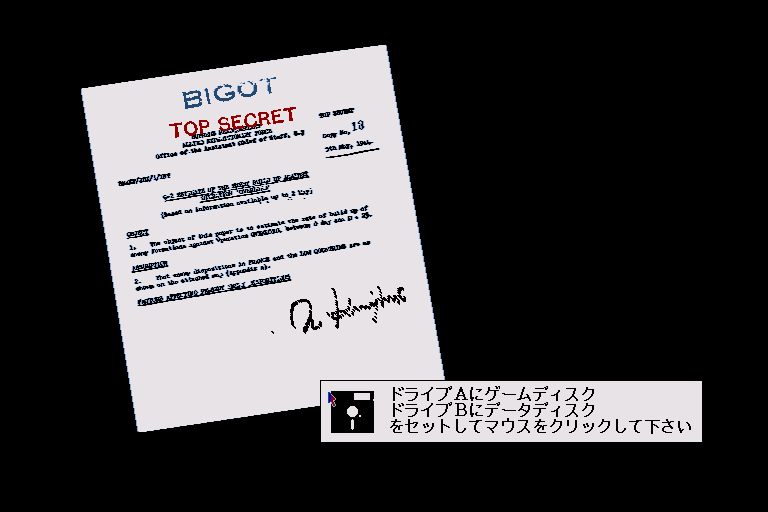
This is set in 1944 France, but it does not lean on concrete historical scenarios. That is an important distinction: you are not replaying a recognizable battle or being led through a tightly authored wartime narrative.
The lack of allegiance to one particular faction also changes the tone. Rather than asking you to inhabit a specific army’s campaign, it puts the emphasis on the decisions surrounding your armored force: where it goes, how it is arranged, and how its commanders operate.
For some, that will be refreshingly clean. The game uses World War II as a strategic frame instead of a source of named historical drama. You should come for the operational what-if of moving tanks through France, not for character-driven storytelling or a guided history lesson.
Overall Experience
Kikō Shidan: Panzer Division has a thoughtful core: preparation matters, command can be delegated or tightly controlled, and every turn lets the battlefield change around you. Its decisions connect naturally, from arranging tanks before deployment to reacting when enemy armor or planes threaten them.
The payoff comes from accepting its measured pace. You are asked to think like a commander who has to set up a force, trust subordinates when appropriate, and intervene when the situation demands it. That is more satisfying than a simple unit-by-unit exercise because your level of control is itself part of the strategy.
I would recommend it to patient strategy fans with an interest in armored warfare, especially if the idea of directing a force through 1944 France without being tied to a famous battle sounds freeing rather than thin. Its historical frame is broad, but its command decisions have real purpose. Give it a chance if you want WWII tactics that begin with organization and reward judgment over spectacle.


Reviews
There are no reviews yet.