 Retro Replay Retro Gaming History, Reviews & Emulation
Retro Replay Review
Gameplay
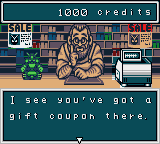
The first hour of Power Quest is easy to understand in the best possible way. School is out, model-robot fighting is the new obsession, and you head into town to find somebody to fight. Beat them, earn money, buy parts, then try to enter and survive tournaments. It is a compact loop, but it gives each encounter a purpose beyond merely clearing another opponent.
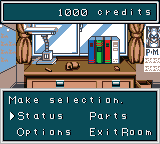
What starts to click is the connection between wandering and improvement. Town exploration is not there to pad out a grand adventure; it is how you track down opponents and build the funds needed to strengthen your model. That makes the role-playing side feel practical. When a tournament blocks your progress, the answer is naturally to go back out, win more fights, and upgrade rather than wait for an unrelated plot trigger.
The trade-off is that Power Quest is not positioned as a huge fighting game with a massive roster or elaborate competitive toolset. You choose from six models in its simpler fighting mode and face the others in sequence. That is a good fit for a quick portable session, but repetition can set in if the upgrade chase does not grab you. Go in for the campaign’s build-and-battle rhythm, not a bottomless arcade ladder.
The versus mode is a welcome extra for the right circumstances. Fighting a friend over the Game Boy’s infrared port gives those collected parts and tournament lessons a more personal proving ground. It is not the central reason to buy the game, but it makes Power Quest feel more complete than a strictly solo climb.
Graphics
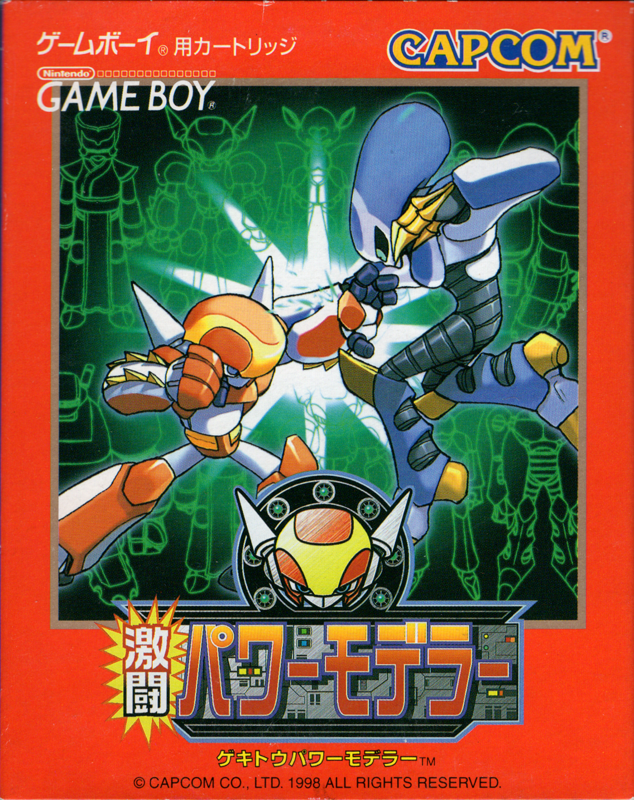
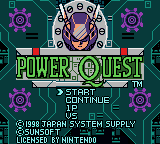
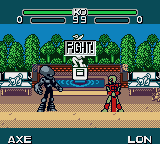
Power Quest puts its focus on model robots and the town you walk through between bouts. The most immediately distinct images are the six selectable fighting models, which give the game’s bouts a toy-robot flavor rather than the look of a conventional bare-knuckle fighter.
Story
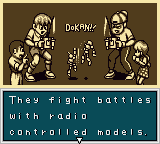
This is a light premise rather than a story-heavy RPG, and that is the right call. The school-break setup gets you into the action quickly: a new model-fighting craze has taken over, and you want to earn a place in the tournaments. It is a familiar childhood competition fantasy, but it is specific enough to make the money-and-parts loop feel grounded.
The town structure gives the premise a little more personality than a menu-only tournament game. You are not simply handed the next match; you walk around seeking opponents and turning victories into cash. That small sense of place helps you feel like a newcomer working up through a local craze.
Do not expect the narrative to carry the whole experience. The real momentum comes from your model improving and the next tournament becoming attainable. If you prefer RPGs driven by major characters and plot turns, Power Quest will feel thin; if you like a clean excuse to keep fighting and tinkering, it does its job.
Overall Experience
Power Quest is a likable hybrid that understands its own scale. It takes fighting-game matches, gives them a simple RPG reason to matter, and keeps sending you back into town for another opponent and another upgrade. That combination can be surprisingly moreish when you are in the mood for a portable game with a clear next goal.
Its limitations are equally clear. The six-model fighting option is a side dish, not a substitute for a deeper dedicated fighter, and the campaign relies heavily on you enjoying repeated battles as the route to stronger parts. The tournament structure gives that repetition direction, but it will not convert you if that kind of grind already leaves you cold.
At 6.9, Power Quest lands as a good-natured curiosity rather than an essential fighting game. Give it a chance if the idea of building up a small robot through local challenges and tournaments sounds more fun than a sprawling RPG campaign. You will get the most out of it by treating each fight as another step toward a better machine, then bringing that machine into a match against a friend if you have the infrared setup.


Reviews
There are no reviews yet.