 Retro Replay Retro Gaming History, Reviews & Emulation
Retro Replay Review
Gameplay
Buster Ball’s best idea arrives immediately: soccer is already tense when both sides are chasing one ball, so what happens when robot athletes are allowed to play far more brutally? From the top-down view, the basic aim is wonderfully clear—drive the ball into the opposing goal—but a match rarely stays clean for long. You are constantly dealing with bodies, rebounds, and an arena that seems eager to interfere.
The six play areas are what stop the game from being a plain futuristic soccer conversion. Bumpers can throw both the ball and athletes away, turning a promising run into a sudden reversal. Electric barriers restrict where you can move, forcing you to route attacks around dangerous space rather than simply charging straight at goal. When that chaos starts clicking, Buster Ball becomes a game about reacting quickly and taking the opportunities the arena accidentally hands you.
That same unpredictability can frustrate. A bumper does not care whether you had a clever plan, and cramped mobility around electric barriers can make possession feel short-lived. Still, the roughness is part of the point. If you want a disciplined sports simulation, this is too disorderly; if you enjoy turning a bad bounce into a desperate scoring chance, it has a lively edge.
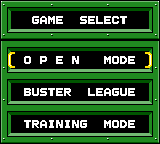
The league system gives the action more staying power than isolated matches alone. It encourages you to treat each game as part of a longer campaign rather than a disposable bout, which helps Buster Ball’s straightforward objective hold up. The moment-to-moment play is simple, but the changing hazards give you enough to adjust to.
Graphics
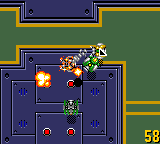
The Game Gear view is a top-down 2D scrolling field built around robot athletes, the ball, goals, and arena hazards. The practical advantage is that you can follow where the ball is going and see the bumpers or electric barriers that are about to disrupt a play.
The futuristic theme comes through most clearly in those robot teams and mechanical obstacles. It is a functional sports-game view rather than a detailed close-up spectacle, but it suits quick, collision-heavy matches.
Story
Buster Ball does not lean on a character-driven plot. Its hook is the sport itself: robot teams competing in a futuristic league where scoring goals matters, but the arenas are built to make every match more dangerous and unruly.
That light framing works because it puts the emphasis where it belongs—on the next possession. You are not waiting for a dramatic narrative turn; you are trying to survive an awkward rebound, get around a barrier, and force the ball over the line.
The league context supplies a modest sense of progression. It is enough to make the matches feel connected, even though the real stories are the ugly goals, accidental deflections, and last-second recoveries created on the field.
Overall Experience
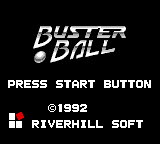
Buster Ball is an enjoyable oddball: a 1992 Game Gear sport-action game that takes soccer’s central idea and subjects it to robot violence and hostile arena design. Its strongest moments come when a match stops behaving sensibly and you have to improvise around a bumper launch or blocked route.
Its limits are equally clear. The core objective remains basic, and the same hazards that create excitement can also make a possession feel unfairly derailed. That makes it better in short, energetic sessions than as something to master for a pristine competitive sport experience.
Give it a chance if you like old-school action sports games with a mean streak and can laugh when the arena wrecks your plan. The league gives you a useful reason to return, while the six obstacle-filled fields keep the robot soccer from settling into routine. A 6.8 fits: Buster Ball is not elegant, but it is distinct, fast to understand, and often more fun when it gets a little messy.


Reviews
There are no reviews yet.