 Retro Replay Retro Gaming History, Reviews & Emulation
Retro Replay Review
Gameplay
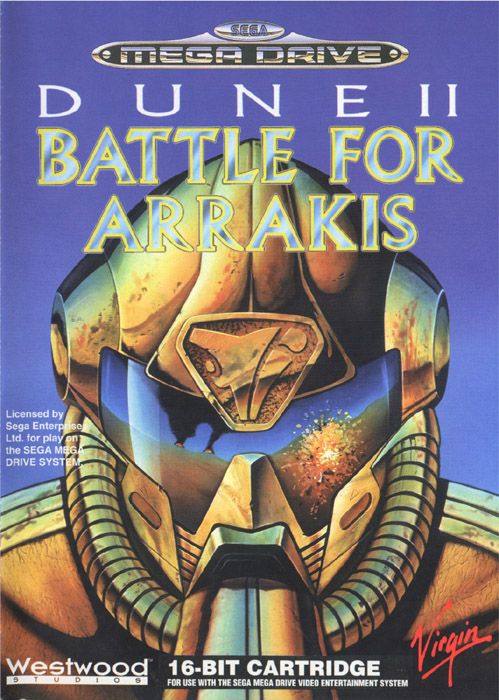
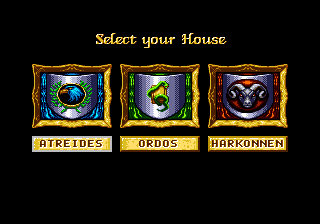
Dune: The Battle for Arrakis retains the core real-time strategy mechanics that made its PC predecessor, Dune II, a landmark title. Players choose one of three noble Houses—Atreides, Harkonnen, or Ordos—and guide their forces across the desert planet in a bid to control the valuable Spice Melange. Each mission follows a familiar loop: harvest spice, expand your base, research advanced units, and crush the enemy before they can do the same to you.
One of the most striking improvements in this Sega Genesis port is the context-sensitive cursor system. Gone are the cumbersome menu screens of the original: simply hover over an empty tile to construct a building, or over an enemy unit to issue an attack order. This streamlined control scheme keeps the action fluid, eliminating downtime between commands and making base management feel intuitive—even on a gamepad.
The tech tree has also been thoughtfully redesigned. While advanced weaponry and vehicles remain key to achieving victory, players no longer need to juggle multiple factory types or lay down large concrete slabs. The introduction of a single, versatile vehicle factory and uniform 2×2 foundation pads reduces micromanagement, letting you focus on tactics and positioning rather than construction logistics.
Addressing pacing, the mission progression is strictly linear: you move from one battle to the next without the branching campaign paths found in the original. This can feel restrictive to seasoned strategy veterans, but it also creates a clear, directed narrative flow that keeps newcomers engaged and prevents decision paralysis when choosing the next battlefield.
Graphics
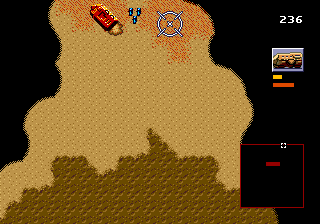
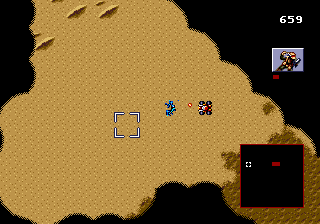
Dune: The Battle for Arrakis sports an all-new graphical presentation tailored to the Sega Genesis hardware. The vibrant color palette brings Arrakis’s ochre sands and deep-red rock formations to life, while each House’s units are distinctively color-coded, allowing for quick battlefield recognition even in the heat of combat.
Sprite animations are smooth and detailed for the platform. Harvesters trundle across dunes with realistic sway, infantry squads march in formation, and explosive pyrotechnics play out crisply whenever a structure is destroyed. These visual touches enhance immersion, making each skirmish feel dynamic despite the hardware’s limitations.
The user interface has been overhauled to match the console experience. Large, readable icons replace tiny PC-style buttons, and performance remains consistently smooth—even when dozens of units clash in the same area. Scrolling across the map feels effortless, with minimal slowdown or choppiness, showcasing Westwood Studios’ skill in squeezing every ounce of power from the Genesis.
Story
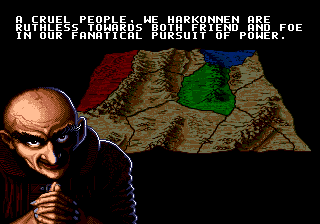
While Dune: The Battle for Arrakis emphasizes strategic combat over narrative depth, it still captures the essence of Frank Herbert’s universe. Briefings before each mission set the scene: the Emperor’s decree, political rivalries among the Houses, and the ever-present threat of sandworms lurking beneath the dunes. These text-based interludes provide enough context to keep players invested in their cause.
The absence of branching mission choices streamlines the story’s progression. Rather than debating which territory to conquer next, you follow a linear path that intensifies with each encounter. The escalating stakes—enemy fortresses grow more formidable, spice fields more fiercely contested—imbue the campaign with a steady sense of urgency.
Although there are no voiced cutscenes or in-engine cinematics, the game’s minimalist approach works in its favor. It keeps the focus squarely on strategy, letting your battlefield victories and defeats become the defining moments of your personal Dune saga.
Overall Experience
Dune: The Battle for Arrakis succeeds admirably as a console adaptation of a PC classic. Its refined controls, simplified tech tree, and linear mission flow make it an accessible entry point for newcomers while still delivering the satisfying RTS gameplay that veterans love. Whether you’re expanding your spice empire or defending against an onslaught of enemy tanks, the pacing never feels stale.
Fans of the original will appreciate the care taken to preserve Dune II’s strategic core, even as the developers introduced innovations that suit a gamepad-driven experience. The graphical enhancements and responsive UI breathe new life into the source material, ensuring each battle feels polished and engaging.
Though the simplified mechanics and linear progression may leave hardcore strategists craving more depth, the game strikes a solid balance between complexity and approachability. It stands as one of the best real-time strategy offerings on the Sega Genesis, delivering hours of tactical challenge set against the unforgiving backdrop of Arrakis.
For anyone looking to command spice harvesters on the desert sands, forge a path to victory with mighty armored divisions, or simply experience a classic franchise on console for the first time, Dune: The Battle for Arrakis remains a must-have title in any strategy enthusiast’s collection.


Reviews
There are no reviews yet.