 Retro Replay Retro Replay gaming reviews, news, emulation, geek stuff and more!
Retro Replay Review
Gameplay
Tenka Tōitsu offers a tightly focused strategic experience that feels more like a tactical board game than a sprawling grand strategy epic. You step into the sandals of a Sengoku-period daimyo in 1551, commanding a small but versatile force of roughly a dozen units on a hex-based map. Unlike other titles that swamp you with hundreds of regiments and micromanagement, this game challenges you to deploy each samurai, ashigaru, and arquebusier thoughtfully—advance, hold, flank or retreat with precision.
(HEY YOU!! We hope you enjoy! We try not to run ads. So basically, this is a very expensive hobby running this site. Please consider joining us for updates, forums, and more. Network w/ us to make some cash or friends while retro gaming, and you can win some free retro games for posting. Okay, carry on 👍)
The core loop revolves around planning several moves ahead, much like chess. You’ll study terrain elevations, choke points, and unit matchups before committing to an attack formation. Weather and morale play supporting roles, forcing you to adapt if rain dampens your arquebuses or if a bold cavalry charge breaks your opponent’s line. AI lords react dynamically, launching raids or reinforcing vulnerable castles, so no two campaigns unfold in exactly the same way.
Although scenarios start with Oda Nobunaga’s rise, you can choose any daimyo’s banner, each with distinct strengths and weaknesses. This unlocks replayability as you experiment with Takeda cavalry charges or Uesugi’s defensive tactics. The learning curve is moderate—first-time generals may lose a battle or two to overcommitment, but the concise unit roster makes recovery and adjustment swift and satisfying.
Graphics
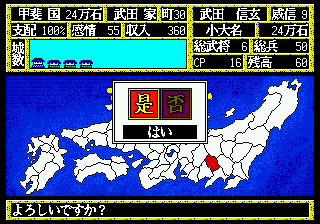
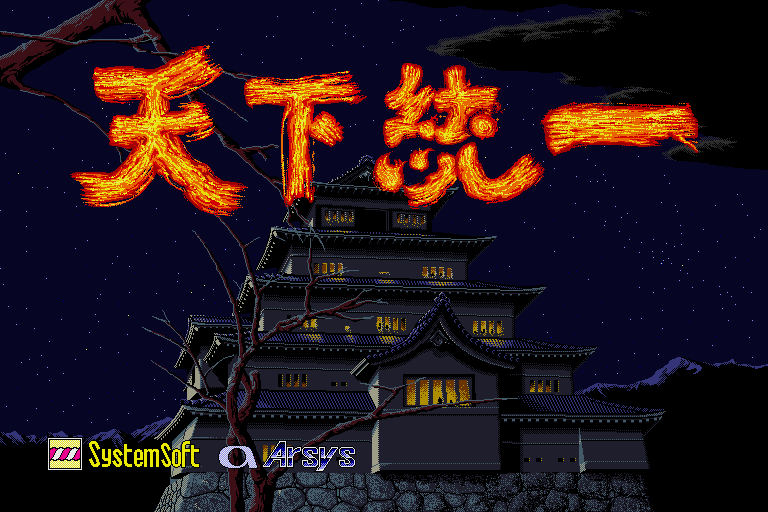
Visually, Tenka Tōitsu leans toward function over flair. The map is rendered in a clean, top-down perspective with color-coded hexes distinguishing forests, plains, rivers, and fortifications. Unit counters are simple icons—samurai on horseback, ashigaru spearmen, and so on—but each is easily identifiable at a glance, which is crucial when you’re juggling multiple frontlines.
Battle animations are minimal: units slide into hexes, swords clash in quick sprite-based flickers, and flags wave to signal victory or retreat. There are no cinematic camera pans or 3D models here—everything is presented in crisp 2D, reminiscent of classic board-game aesthetics. While this might feel dated to those expecting flashy graphics, it ensures that the interface remains uncluttered and responsive.
The UI elements—menus, status panels, and turn indicators—prioritize readability. Information such as unit strength, supply levels, and terrain modifiers appears in clear text boxes, making it easy to plan your next move without hunting through nested screens. Altogether, the graphics serve their purpose: they keep you focused on strategy rather than spectacle.
Story
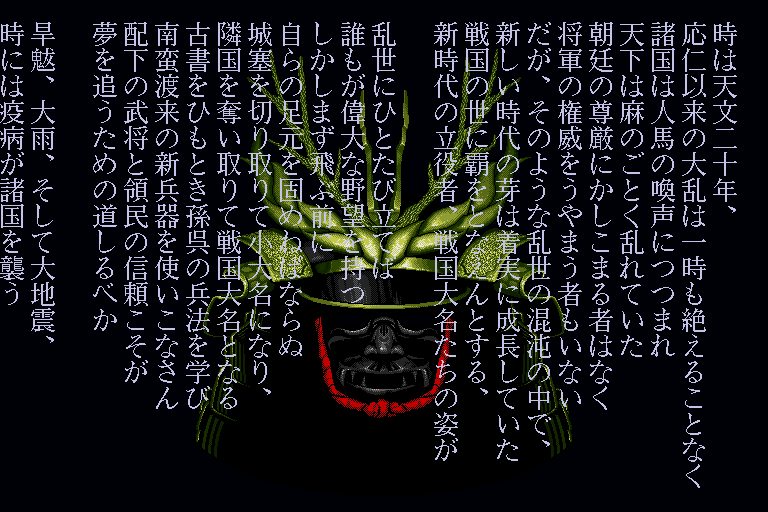
Rather than weaving an overarching narrative with cutscenes, Tenka Tōitsu immerses you in history through its scenario design and flavor text. The opening campaign drops you into 1551 as Oda Nobunaga consolidates power, and from there, you create your own path to national unification. The historical context—feuding clans, shifting alliances, and famous samurai lords—provides a rich backdrop for emergent stories born from your tactical choices.
Each encounter becomes a chapter in your personal saga. Do you force a decisive showdown at Nagashino, relying on arquebusiers to shatter cavalry, or do you outmaneuver the opposition in skirmishes across mountain passes? While the game doesn’t dramatize every duel, reading unit descriptions and event logs gives you a sense of character: the stoic general who refused to retreat or the betrayal that changed a campaign’s momentum.
The lack of voiced dialogue and elaborate cutscenes means you’ll need to supply much of the drama yourself, but fans of historical wargaming will appreciate the authenticity. Occasional flavor notes—reports of peasant revolts, seasonal festivals, or court intrigues—pepper the strategy, reminding you that you’re not just moving pieces on a board, but re-creating a pivotal era in Japanese history.
Overall Experience
Tenka Tōitsu stands out as a distilled strategy title that rewards patience, planning, and adaptability. Its modest production values are a conscious trade-off for clarity and depth: every hex moved and unit ordered feels meaningful. For players who relish outmaneuvering opponents in close-quarters clashes, it offers a level of tactical satisfaction rarely found in grander-scale strategy games.
Compared to contemporaries like Nobunaga’s Ambition, Tenka Tōitsu is far more streamlined. There’s no grand economy to manage or sprawling diplomacy systems to negotiate—just you, your troops, and the next mountain pass or castle wall. This focus makes it a great entry point for newcomers to historical wargames, while veterans will find enough nuance to keep campaigns engaging over multiple playthroughs.
Ultimately, Tenka Tōitsu delivers a compelling slice of Sengoku warfare. If you’re drawn to chess-like tactics, enjoy historical settings, and don’t mind a more utilitarian presentation, this game will reward countless hours of strategic decision-making. It may not dazzle with cutting-edge graphics or cinematic storytelling, but its core mechanics are honed to near perfection for fans of feudal Japanese warfare.


Reviews
There are no reviews yet.