 Retro Replay Retro Gaming History, Reviews & Emulation
Retro Replay Review
Gameplay
The first case makes Misty Vol.6 feel less like an adventure full of clever contraptions and more like a desk-bound investigation. You choose one of five unrelated mysteries from the main menu, then start building a case through a text list of city locations. Searching areas, questioning suspects, and returning to old stops form the bulk of the work. It is a stripped-down loop, but it has a satisfying rhythm when a repeated visit or a newly chosen line of questioning finally pushes the case forward.
Freedom is both the strength and the trap. You can tackle the cases in any order and can accuse somebody or submit a solution whenever you feel ready. That gives you genuine agency: the game lets you test your own deductions instead of holding your hand until the last moment. But it also expects restraint. Make the call without enough evidence and the investigation fails, so the sensible way to play is to gather more than you think you need before committing.
Efficiency and speed are scored, which adds a pleasing bit of pressure for anyone who wants to replay a solved case more cleanly. On a first run, though, chasing a high score can work against the game’s methodical nature. Expect to revisit locations and probe people repeatedly. If you enjoy taking notes, keeping a mental suspect list, and patiently eliminating possibilities, that repetition feels like detective work. If you need frequent mechanical variety or clear directional hints, it can turn into stubborn menu cycling.
The automatic saving is convenient right up until it is not. You cannot simply reload a prior moment after a bad accusation or an unwise attempt at a solution; restarting means deleting the save file. That is a harsh limitation for a mystery game built around trial, error, and incomplete information. Treat every accusation as a final answer, and Misty Vol.6 becomes much less frustrating.
Graphics
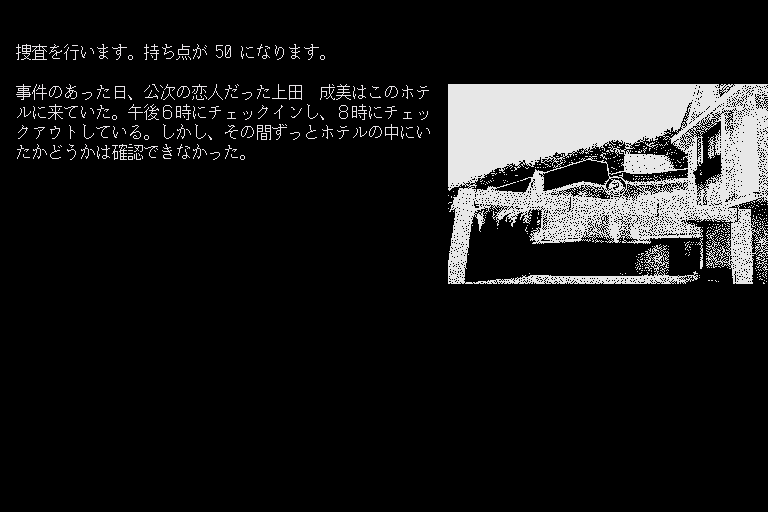
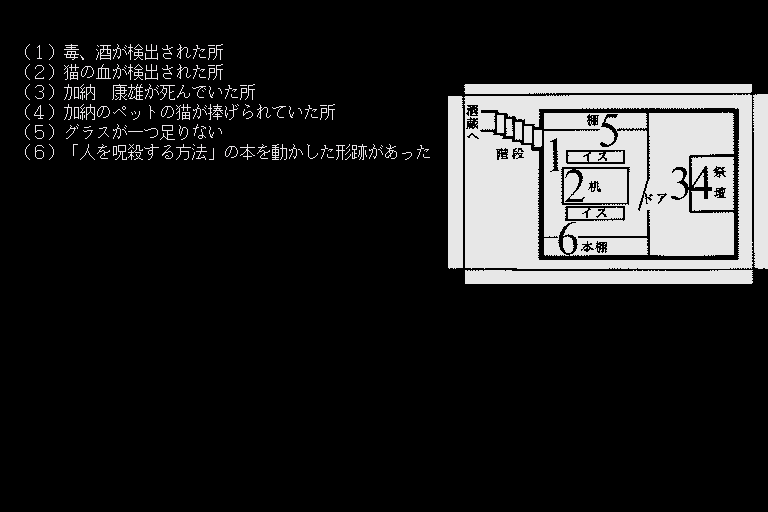
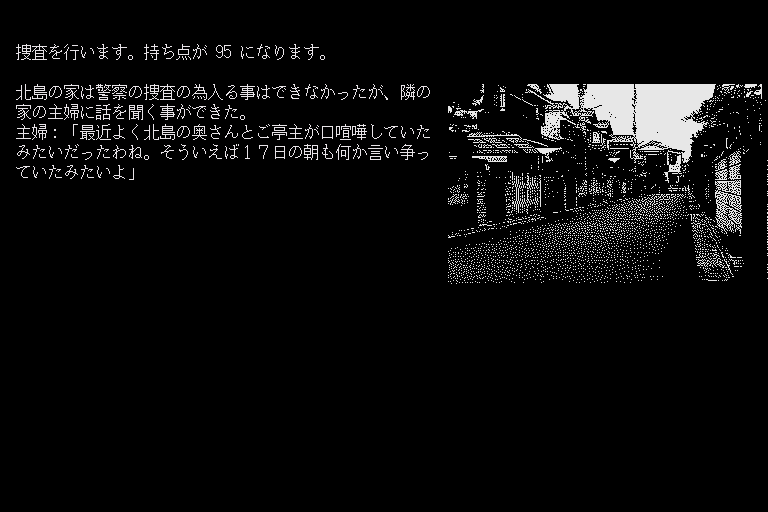
Most of the game is text, with sparse black-and-white digitized photos accompanying some locations and scenes. The images give an occasional concrete glimpse of the modern Japanese setting, but this is primarily a game you read and imagine rather than one you visually explore.
Story
The five-case format is the right fit for Misty Vol.6. Rather than stretching one plot across the whole game, it lets Ryū Kamishiro move between distinct assignments with different stakes: mundane requests can sit beside thefts, disappearances, and murder investigations. That variety helps the collection avoid feeling like the same procedural repeated five times.
Because the cases are unrelated and selectable in any order, the pull comes from each mystery’s central question rather than from a larger ongoing plot. You are not being carried by a serialized cliffhanger; you are choosing the sort of case you want to untangle next. That makes it easy to sample, pause, and return, though it also means the stories need to win you over one investigation at a time.
Ryū’s role as a young private investigator gives the cases a practical perspective. You are following leads, checking places, and deciding when the evidence justifies a conclusion. The stronger moments are likely to be the ones where the game makes you earn that certainty instead of merely selecting the answer it has been steering you toward.
Overall Experience
Misty Vol.6 is a niche but honest detective adventure: text-heavy, deliberate, and willing to punish a hasty conclusion. Its best quality is that it trusts you to investigate. You are allowed to pursue cases in your own order, visit the places that seem relevant, and risk an accusation when you think you have cracked it. When your reasoning lines up with the answer, that directness can be very rewarding.
It also asks for patience that not every mystery fan will have. Repeatedly consulting the same location list and revisiting places is the core of the experience, not a brief obstacle before more elaborate adventure-game sequences. The score system invites efficiency, while the inability to restart without deleting a save makes experimentation needlessly punishing. Those rough edges are easier to forgive if you approach each case carefully and keep track of what every suspect has told you.
Give it a chance if you like old Japanese detective games that make reading, interrogation, and deduction carry the weight. Skip it if you want animated scenes, a forgiving retry structure, or constant new interactions. For the right mood, its five self-contained investigations offer a stern little test of whether you can resist guessing and actually build a case.



Reviews
There are no reviews yet.