 Retro Replay Retro Replay gaming reviews, news, emulation, geek stuff and more!
Retro Replay Review
Gameplay
The first hour is largely about settling into Hiryū Densetsu’s rhythm: visit a place, inspect it, speak with everyone available, try the relevant character portraits in conversation, then move on and repeat. It is less about solving a mystery through deduction than making sure you have drained each scene of every possible response. That can be oddly relaxing if you enjoy methodical adventure games, but it also means progress often feels administrative rather than clever.
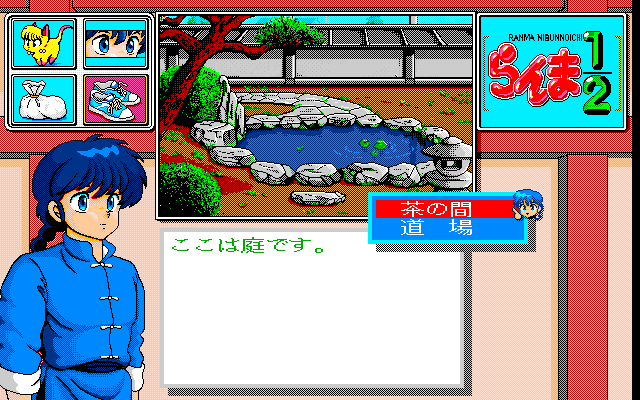
The icon-based commands keep the basics understandable. Looking, talking, moving, and using items are all clearly separated, while the character portraits make sense for a Ranma game built around chatting with a large, familiar cast. Still, the structure asks you to be thorough rather than inventive. There are no puzzles to break up the routine, so your willingness to revisit locations and test remaining options determines whether the game feels pleasantly deliberate or simply stalled.
A few turn-based battles introduce a rock-scissors-paper setup. They offer a change from conversation menus, though the underlying system is simple enough that they do not transform the adventure into a combat-focused game. Think of them as brief interruptions to the dialogue and location hopping, not the main reason to play.
If you are coming in for deep adventure-game problem solving, this is a frustrating fit. If you want a guided tour through a Ranma side-story and can tolerate the genre’s most exhaustive habits, its straightforwardness becomes easier to accept.
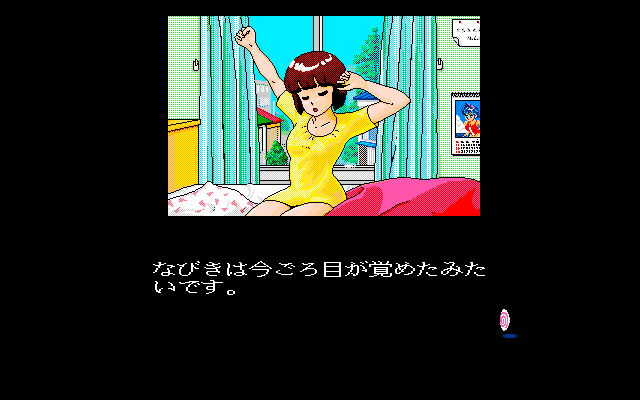
Graphics
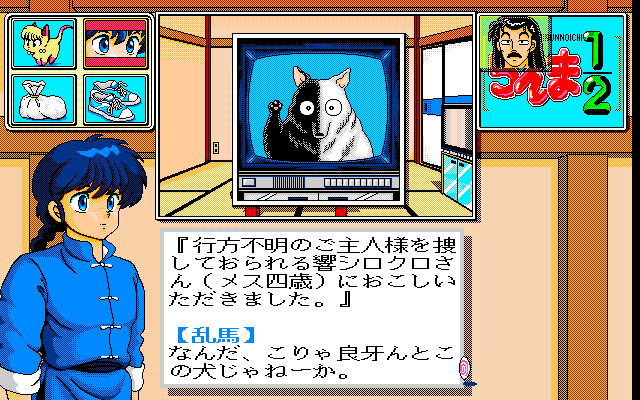
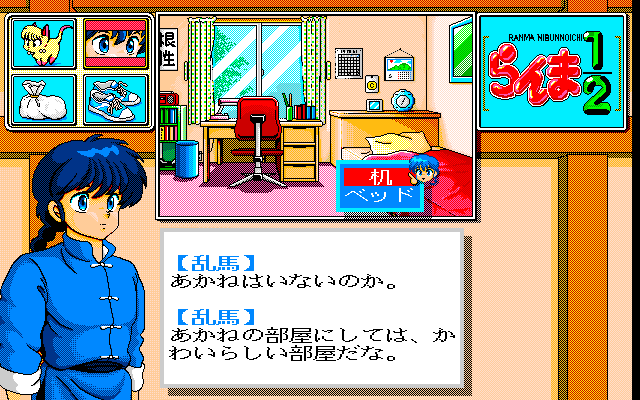
Hiryū Densetsu uses a first-person adventure view, with command icons and character portraits doing much of the visual work during interactions. The portraits are particularly useful when several conversation choices are available, putting recognizable character-focused communication ahead of elaborate on-screen action.

Story
The strongest reason to care is the license itself. Ranma’s curse—cold water changing the young martial artist into a girl—remains the immediate hook, and the premise is naturally suited to the series’ relationship comedy. The game assumes you already understand that world rather than pausing to introduce it.
That assumption is a double-edged sword. Fans can enjoy seeing Ranma and the supporting cast take center stage in a side-story built around their connections, including the sort of bizarre curse-related baggage associated with figures such as Ranma’s panda-transforming father. Newcomers, meanwhile, are asked to supply a lot of context themselves.
Because the story is carried chiefly through conversations, the writing’s character familiarity matters more than dramatic plotting. You are here to spend time with this cast, follow their interactions, and enjoy the extended-series flavor. It is a much less inviting proposition if the names and relationships mean nothing to you.
Overall Experience
Ranma 1/2: Hiryū Densetsu is a specialized piece of fan service wrapped in a very traditional adventure-game structure. Its side-story approach and conversation-heavy format give committed Ranma followers something worthwhile to poke through, especially if the prospect of spending time with the cast is enough of a reward.
Its biggest weakness is that advancement lacks momentum. With no puzzles and a design that leans on exhausting location and dialogue options, you can spend long stretches doing the right kind of busywork without feeling particularly smart for doing it. The occasional rock-scissors-paper battle helps vary the pace, but not enough to erase that limitation.
Give it a chance if you are already invested in Ranma 1/2 and have a soft spot for early Japanese menu adventures. Everyone else will likely find the game too dependent on prior affection for its characters and too rigid in how it asks you to move the story forward.


Reviews
There are no reviews yet.