 Retro Replay Retro Replay gaming reviews, news, emulation, geek stuff and more!
Retro Replay Review
Gameplay
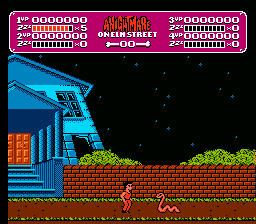
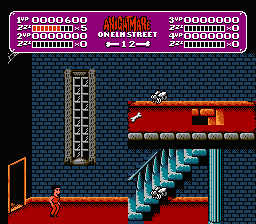
A Nightmare on Elm Street for the NES delivers a surprisingly deep platforming experience wrapped in classic horror tropes. You begin by exploring the red-tinted “real world,” leaping across rooftops and rummaging through Elm Street houses to gather Freddy Krueger’s scattered bones. Each house presents a series of platform challenges—moving platforms, crumbling floors, and low-flying bats—that keep the action brisk and demand precision timing.
(HEY YOU!! We hope you enjoy! We try not to run ads. So basically, this is a very expensive hobby running this site. Please consider joining us for updates, forums, and more. Network w/ us to make some cash or friends while retro gaming, and you can win some free retro games for posting. Okay, carry on 👍)
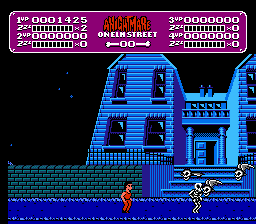
As you take hits from snakes, spiders, and the occasional possessed teenager, your sleep meter ticks down. When it empties, you’re plunged into the eerie blue-tinted “dream world,” where enemies morph into skeletons, ghosts, and other nightmarish creatures. An unseen countdown draws closer to Freddy’s arrival, and when the clock strikes zero, you face a sudden boss encounter that tests your mastery of the level’s hazards.
The dream world also grants access to three collectible icons that transform you into one of the game’s “Dream Warriors.” These power-ups bestow unique projectile attacks—ranging from spectral fireballs to freezing blasts—that make it easier to fend off Freddy’s minions and survive the imminent boss fight. Clearing all the bones in each stage sends you into a final showdown, often against grotesque amalgams of Freddy’s razor glove and warped visage.
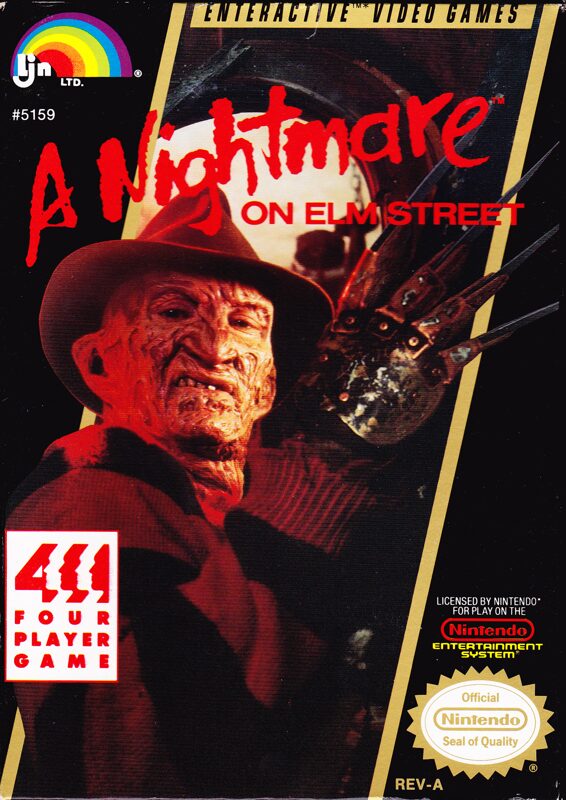
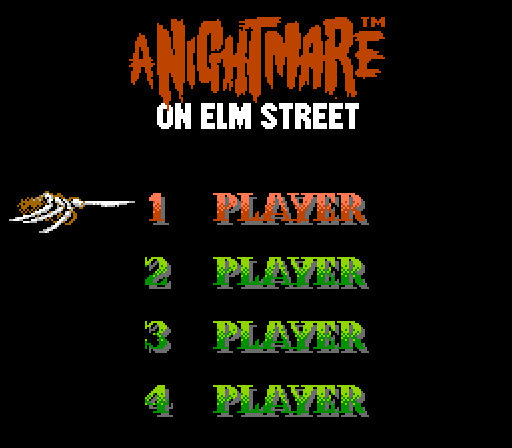
For those seeking a shared scare, the game supports the NES Four Score accessory, enabling up to four players to dive into Elm Street’s nightmares together. While coordinating with friends ramps up the chaos—dodging enemies and vying for power-ups on the same screen—it also amplifies the fun, turning each stage into a frantic scramble for survival.
Graphics
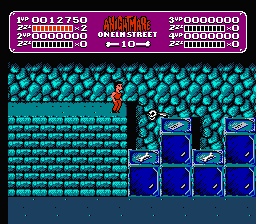
Visually, A Nightmare on Elm Street embraces its horror roots with a distinctive two-tone palette. The real world’s deep reds and muted browns evoke a sense of unease as you stalk through suburban homes at dusk. In dream sequences, the palette shifts to icy blues and purples, and the pixelated backgrounds blur into haunted corridors and fog-shrouded streets.
The character sprites are surprisingly detailed for an LJN title. Freddy’s glove-bearing hands—even when relegated to tiny boss portraits—feature sharp claws that stand out on the NES’s limited color range. Your playable teen avatar is easily distinguishable from enemies, and the dream-world ghouls sport skeletal frames and glowing eyes that flicker convincingly as they move.
Backgrounds layer multiple scrolling planes to simulate depth: distant houses drift behind tree-lined streets, while closer platforms slide smoothly beneath your feet. There are occasional sprite flickers when too many enemies converge, but the overall presentation feels stable. The seamless red-to-blue transitions also enhance the sense of slipping between reality and nightmare without disrupting the action.
Story
Based loosely on A Nightmare on Elm Street 3: Dream Warriors, the game casts you as one of Freddy’s teenage prey, tasked with hunting down his dismembered bones and consigning them to the high school furnace. Though the dialogue is sparse—limited to title screens and brief on-screen prompts—the premise is clear: find every bone fragment, avoid Freddy’s waking nightmares, and end his reign of terror.
Each unlocked house on Elm Street reveals a new piece of the puzzle, from dusty bedrooms to creepy boiler rooms. The narrative unfolds through environment rather than cutscenes, inviting you to imagine the horrors lurking behind locked doors. As the stage count climbs, the atmosphere grows more oppressive, hinting at the twisted influence Freddy exerts over both worlds.
Though it doesn’t boast elaborate storytelling, the game’s cyclical push between the real and dream worlds reinforces the evergreen Elm Street theme: Freddy is never truly defeated, and every step forward could be your last. Collecting bones and powering up as a Dream Warrior supplies just enough motivation to press deeper into the nightmare and uncover the final confrontation.
Overall Experience
A Nightmare on Elm Street for the NES stands out among its LJN peers by delivering tense platforming, inventive world-hopping mechanics, and a genuine sense of dread. Its blend of real-world platform challenges and frantic dream-world boss rushes ensures that no two levels feel alike, while the Dream Warrior power-ups add a layer of strategic depth.
Players looking for a straightforward horror-themed platformer will appreciate the game’s pacing and variety, though newcomers should brace for steep difficulty spikes—especially when battling Freddy himself. The Four Score multiplayer option is a delightful surprise, turning solo tension into four-way pandemonium and extending the game’s replay value.
With its atmospheric graphics, tight controls, and faithful nods to the Nightmare franchise, this NES adaptation remains a memorable—and at times maddening—entry in the horror platformer genre. Whether you’re a die-hard Elm Street fan or just in the mood for a challenging retro experience, A Nightmare on Elm Street delivers plenty of scares and surprises.

Reviews
There are no reviews yet.