 Retro Replay Retro Replay gaming reviews, news, emulation, geek stuff and more!

Retro Replay Review
Gameplay
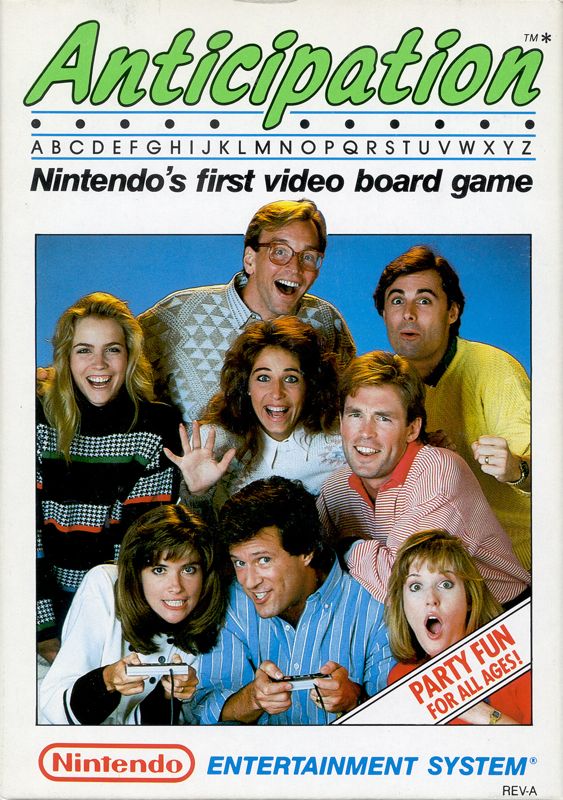
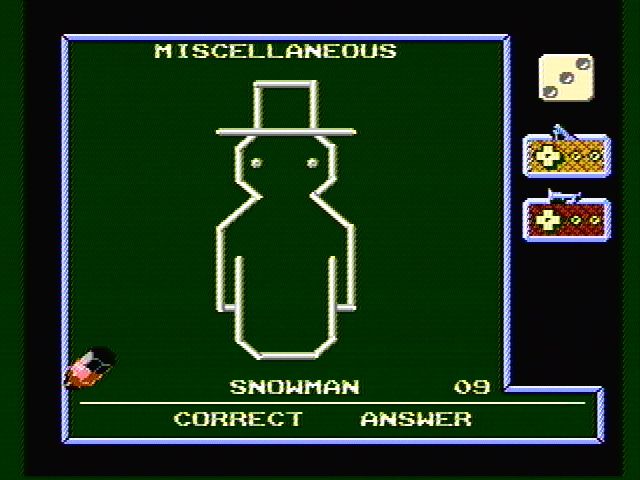
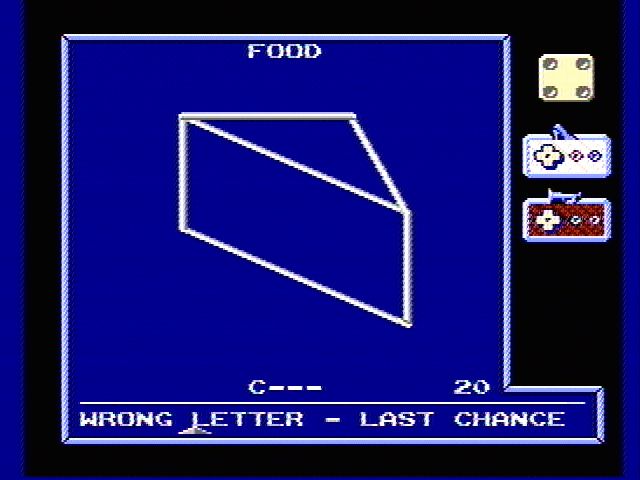
Anticipation delivers a unique blend of board game strategy and quick-drawing puzzle action. Players vie to identify line-drawn pictures as they are revealed in real time, racing against both each other and an on-screen countdown die. Correctly naming the image earns you a colored card, and the die’s final value determines how many spaces your token moves around the board. Landing on a new color sets the category for the next drawing, creating a satisfying loop of deduction and progression.
(HEY YOU!! We hope you enjoy! We try not to run ads. So basically, this is a very expensive hobby running this site. Please consider joining us for updates, forums, and more. Network w/ us to make some cash or friends while retro gaming, and you can win some free retro games for posting. Okay, carry on 👍)
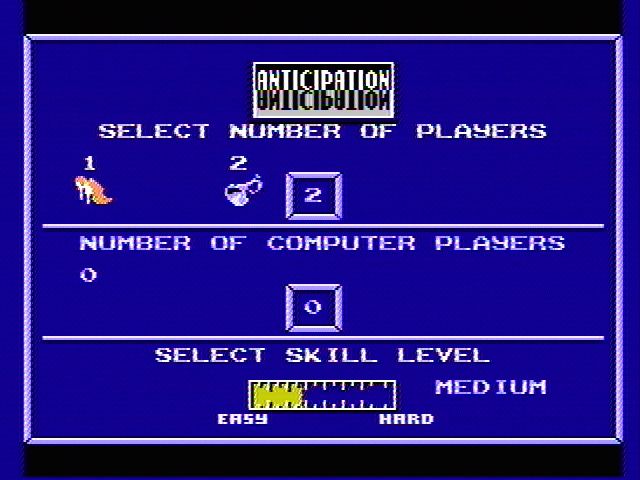
The depth of gameplay comes from the variety of categories and adjustable difficulty levels. From simple everyday objects to more abstract or partially obscured figures, each round can feel fresh. As you master the easy settings, you can opt to remove some or all of the initial guide dots, forcing you to rely on pattern recognition and anticipation—hence the game’s name.
Multiplayer is where Anticipation truly shines. Up to four competitors can join in, though without NES Satellite support, two players must share a single controller when four people play. This passing-around mechanic introduces chaotic fun and a dash of friendly rivalry. Single-player mode offers a respectable challenge against the computer, making it a versatile choice whether you’re solo or with friends.
Graphics
Graphically, Anticipation adheres to the NES’s modest palette but makes smart use of color and clean lines. The board itself is bright and easy to read, with each space clearly representing one of four colors. Tokens move smoothly, and the die animation offers a playful countdown that heightens the suspense before each turn.
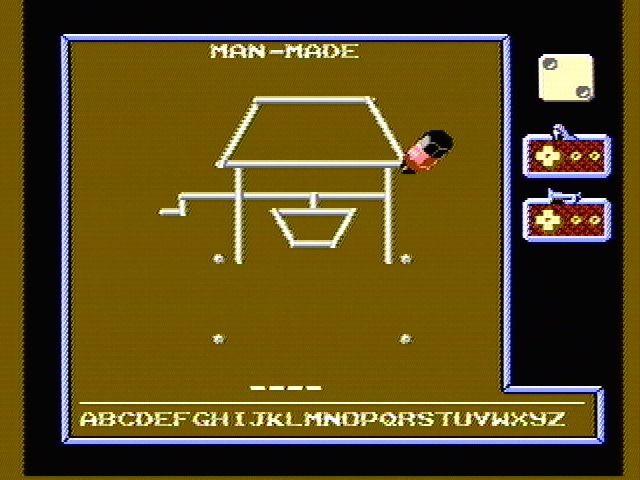
The core visual appeal lies in the dot-to-dot drawings. As the pencil connects the dots, simple shapes emerge into recognizable objects. While pixel resolution limits the detail, the minimalist style keeps the focus on guessing rather than admiring artwork. The initial dot patterns give just enough clue to spark recognition without making the puzzle too trivial.
Transitions between board view, drawing sequence, and answer screens are snappy and free of lag. The UI remains uncluttered throughout, with category prompts and card tallies always visible. Overall, Anticipation delivers a clean, functional look that puts the spotlight on gameplay rather than flashy effects.
Story
Anticipation does not weave an elaborate narrative; its “story” is the unfolding competition among players for colored cards. Each category—from food and clothing to travel and music—offers tiny vignette-like moments as you guess what’s emerging on-screen. In this way, the game crafts a loose thematic tapestry built purely from player interactions and category choices.
Rather than following characters or plotlines, the fun arises from personal triumphs and near-misses: the excitement of identifying a tricky shape before your opponents, or the tension as the die ticks down. The absence of a conventional story keeps the focus squarely on the central mechanic of puzzle recognition, making every round feel dynamic and unpredictable.
For players seeking story-driven adventures, Anticipation may feel bare-bones. However, those who appreciate the social narrative of friendly competition and shared “aha!” moments will find its minimalist approach refreshing. The emergent story is one you and your playmates create together, round by round.
Overall Experience
Anticipation offers a compelling family-friendly experience that balances brain-teasing puzzles with lighthearted board game strategy. Its simple controls and straightforward rules make it instantly accessible, while multiple difficulty settings ensure that newcomers and veterans alike can find the right challenge level. Switching between single-player and multiplayer modes is seamless, allowing for both solo practice and lively group sessions.
The game’s pacing keeps everyone engaged: drawing sequences are quick, turns rotate briskly, and the board’s random category assignments prevent any two games from feeling identical. Social interaction is baked in, thanks to the need to pass controllers and race to buzz in answers, fostering laughter and healthy competition.
Though limited by NES-era graphics and lacking a traditional storyline, Anticipation’s strength lies in its core mechanics and replayability. For anyone seeking a party game on the NES that combines wordplay, deduction, and the tactile thrill of a virtual board, Anticipation stands out as an underappreciated gem that continues to entertain decades after its release.


Reviews
There are no reviews yet.