 Retro Replay Retro Replay gaming reviews, news, emulation, geek stuff and more!

Retro Replay Review
Gameplay
Trauma Center: Under the Knife places you squarely in the operating theater, relying almost entirely on the Nintendo DS stylus for every precise incision, suture and injection. From drawing incisions with the scalpel to stitching wounds with the suturing tool, you interact directly with the patient’s anatomy, creating a tactile surgical experience that few handheld games can match. The learning curve is steep at first, but once you master the stylus controls, each successful procedure brings immense satisfaction.
(HEY YOU!! We hope you enjoy! We try not to run ads. So basically, this is a very expensive hobby running this site. Please consider joining us for updates, forums, and more. Network w/ us to make some cash or friends while retro gaming, and you can win some free retro games for posting. Okay, carry on 👍)
The game’s signature mechanic, the “Healing Touch,” lets Dr. Derek Stiles slow down time for a limited window, buying you precious seconds to stabilize patients during life-or-death moments. Timing and resource management are crucial: overuse of the Healing Touch drains a separate meter, and you’ll need to balance speed with precision. Unexpected complications—like erratic heartbeats or hidden foreign objects—can arise at any moment, demanding quick reflexes and adaptability.
Difficulty ramps up in later chapters, invoking a level of challenge reminiscent of classic Super NES era titles. Multi-step operations require seamless tool switching under pressure, and one misstep can spell failure. Fans of puzzle-style gameplay will relish this surgical “rush,” while newcomers may find the high stakes and rapid pace both exhilarating and intimidating.
Graphics
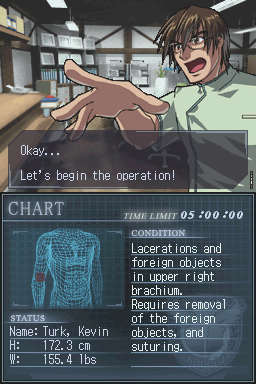
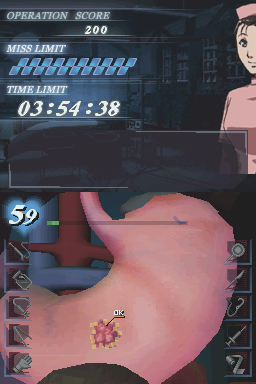
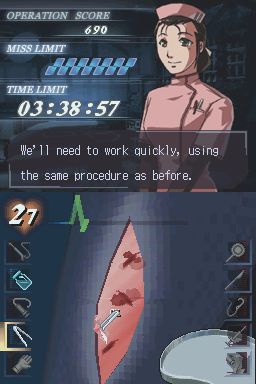
On the Nintendo DS’s dual screens, Trauma Center’s art style strikes a balance between stylized presentation and functional clarity. The top screen displays vital patient stats—heart rate, blood pressure and Healing Touch gauge—while the touch screen illustrates the surgical field in crisp detail. Organs, blood vessels and medical tools are color-coded for quick identification, ensuring you can perform procedures without squinting at tiny sprites.
While the DS hardware limitations mean no photo-realistic models, the game’s clean lines and bold color palette effectively convey the seriousness of each operation without veering into gratuitous gore. Animations—such as the pulse of a beating heart or the subtle shake of a panic-stricken patient—add immersion, and visual cues like blinking lights or sudden color shifts warn you of impending complications.
Performance remains smooth throughout most operations, with little input lag even during frantic sequences. Dramatic slow-motion flourishes when activating the Healing Touch look sharp, and the minimal loading times between chapters keep the flow steady. Overall, the graphics serve the gameplay superbly, delivering both readability and enough visual flair to sustain the surgical drama.
Story
You step into the shoes of Dr. Derek Stiles, a fresh face at Hope Hospital whose enigmatic “Healing Touch” sets him apart from his peers. Early cases are routine—appendicitis removals and benign cyst extractions—but a mysterious epidemic soon sweeps through the city, challenging Stiles to apply his gift under extreme pressure. This narrative arc drives each operation, transforming the game from a series of isolated puzzles into a cohesive medical thriller.
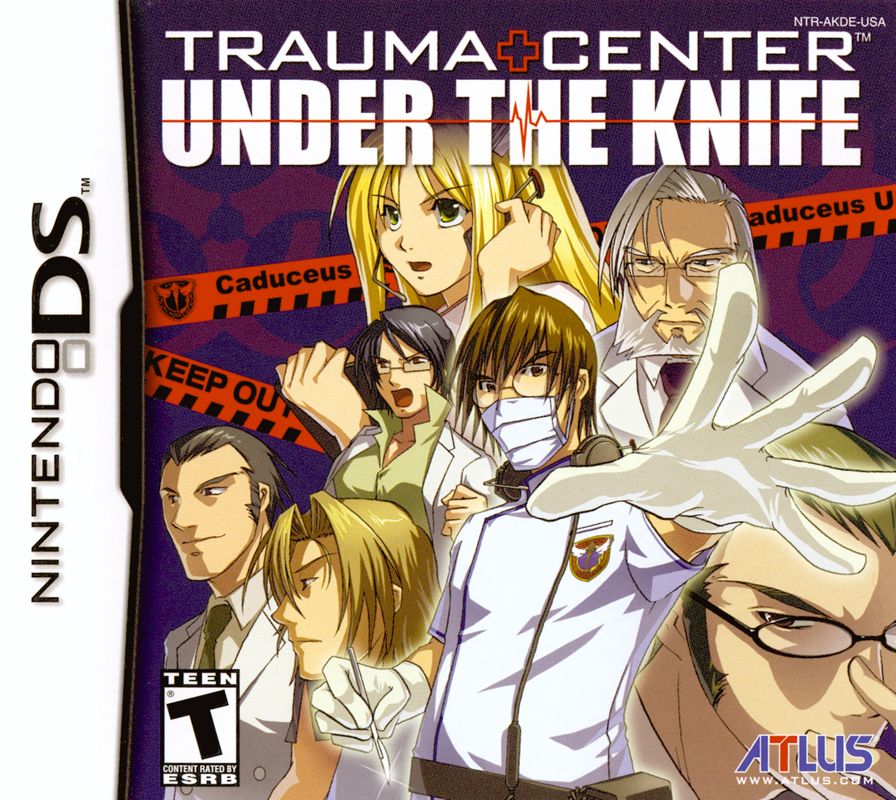
Cutscenes and dialogue introduce a small but memorable cast: the seasoned Dr. Naomi Kimishima, fellow surgeons with their own motivations, and the shadowy Caduceus organization investigating the outbreak. While the writing sometimes dips into melodrama, it effectively raises the stakes by focusing on individual patient stories—parents, children and elders whose lives hang in the balance of your steady hand.
Pacing is deliberate, alternating between the clinical calm of tutorial cases and pulse-pounding sequences as the epidemic intensifies. Moments of relief—brief character interactions and hospital downtime—allow you to catch your breath before the next high-pressure operation. This ebb and flow keeps engagement high, ensuring you remain invested in both the patients’ fates and Dr. Stiles’s personal journey.
Overall Experience
Trauma Center: Under the Knife delivers a uniquely visceral gameplay loop that leverages the DS’s touch capabilities to full effect. The combination of precise stylus controls, time-bending Healing Touch mechanics and unpredictable complications results in some of the most intense handheld gaming moments available. Each successful surgery feels like a genuine achievement, rewarding quick thinking and steady nerves.
On the downside, the difficulty curve may frustrate casual players who prefer more forgiving experiences, and the somewhat repetitive soundtrack can blend into the background over extended sessions. However, these minor drawbacks are outweighed by the game’s innovation and the high replay value of mastering each case under tighter time constraints or with limited Healing Touch usage.
For those seeking a medical drama with a challenging twist, Trauma Center: Under the Knife remains a standout title in the DS library. Its blend of tactile engagement, narrative tension and old-school challenge makes it a must-play for strategy and simulation enthusiasts alike—and an unforgettable journey for anyone willing to face the scalpel.



Reviews
There are no reviews yet.