 Retro Replay Retro Gaming History, Reviews & Emulation
Retro Replay Review
Gameplay
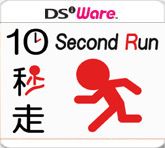
10 Second Run grabs you by the collar immediately. Every level asks you to cross the finish line in ten seconds or less, so there is no room to wander, hesitate, or recover from a sloppy opening. You start reading the level in a hurry: where to jump, what obstacle will stop you, and whether you can keep enough momentum to make the goal.
That strict timer gives the game its bite. Falling off-screen, touching fire, or colliding with a floating spike ball ends the attempt just as surely as running out of time. The result is a compact loop of quick observation, a fast run, failure, and another go with a slightly better idea of what the stage demands. When a route finally clicks, the satisfaction comes from knowing you earned those seconds rather than merely stumbling into the exit.
The training mode is a smart counterweight to the pressure. With no time limit, you can learn a stage’s hazards and get comfortable with its route before asking yourself to execute it at speed. Use it if a level feels impossible on first contact; it turns the game from a blunt reflex test into a challenge of practice and precision.
Fifty levels is enough to make the central idea feel properly explored without changing what you are signing up for. This is focused, demanding platforming built around short attempts. If you like replaying a small stage until your hands understand it, the timer creates a strong pull. If you want leisurely exploration or a game that gives you time to improvise, its core rule will feel restrictive rather than exciting.
Graphics
The action is shown from a side view, keeping the immediate route and its threats in front of you. Fire, floating spike balls, and the edge of the screen matter because they are instant-fail hazards, so the clear, direct framing suits a game where every second counts.
Story
There is no story to carry you from level to level. The hook is purely the next run: see the course, survive its hazards, and beat the clock.
That stripped-down approach works because each attempt is so short. You are not waiting for narrative context before getting back to the part that matters; the stage itself supplies the tension.
It also means the game lives or dies on your enjoyment of repetition and self-improvement. There is no plot-based reward waiting to soften a difficult stretch, only the pleasure of mastering another tightly timed course.
Overall Experience
10 Second Run is a small, sharp test of platforming nerve. Its best moments arrive when an intimidating ten-second course becomes familiar: you stop reacting late, commit to the right jumps, and reach the end with almost no time to spare.
Frustration is part of the bargain. A mistake can erase an attempt immediately, and the constant timer leaves little space to breathe. Still, the short stages keep failure from becoming too costly, while training mode gives you a practical way to improve instead of simply bashing your head against a deadline.
At 7.1, this is an easy recommendation for anyone who enjoys brisk score-chasing energy and precision platforming in bite-size form. Give it a chance if you want a concentrated challenge you can pick up for a few tense minutes at a time. Skip it if you need your platformers to slow down and let you explore.



Reviews
There are no reviews yet.