Retro Replay Retro Gaming History, Reviews & Emulation
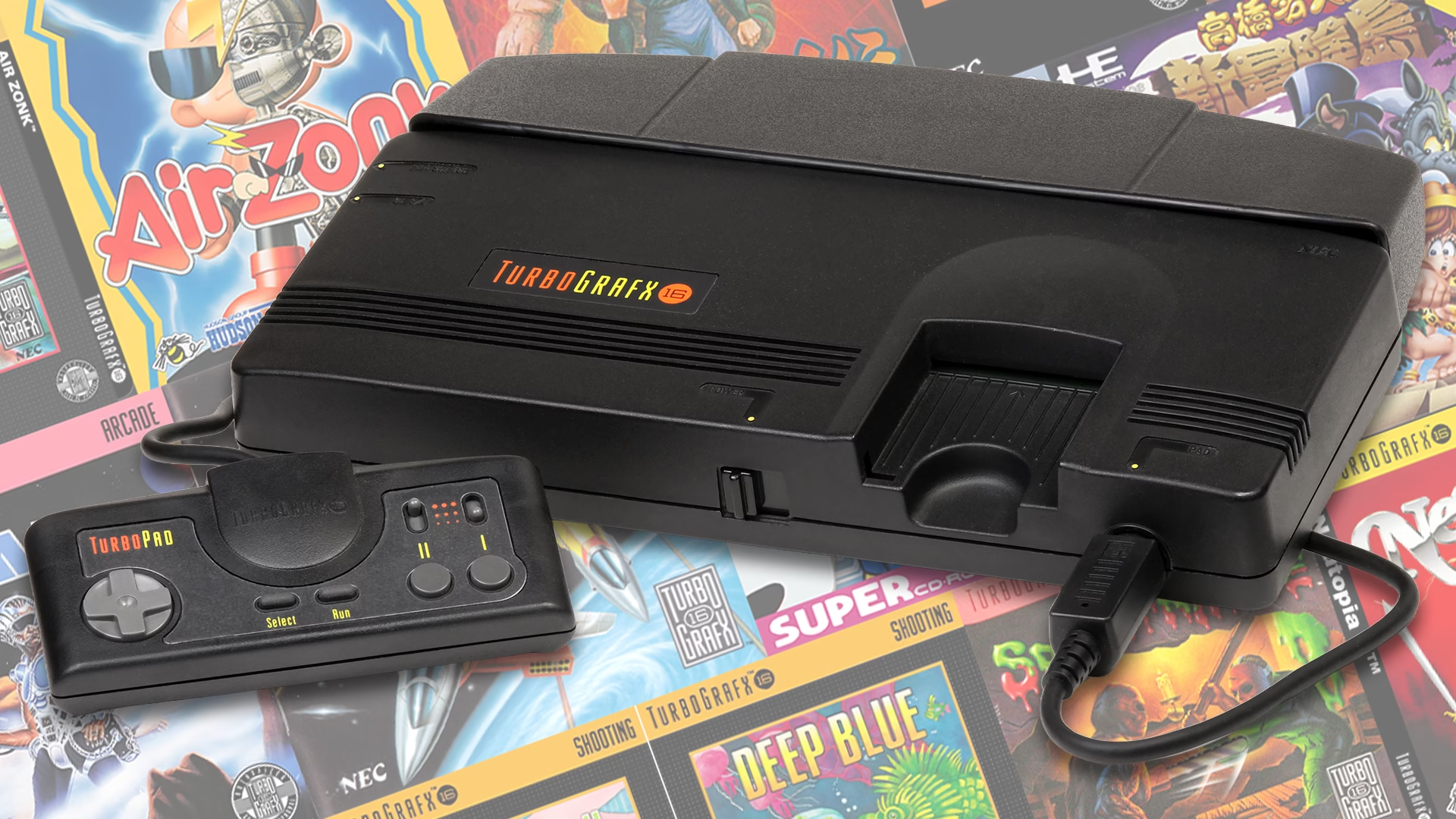
While it’s not as well known in the West as its fans would like, the TurboGrafx-16 (TG16) was one of the best home consoles of the late ’80s and early 1990s. NEC initially released it in Japan in 1987 as the PC-Engine (PCE), part of the 4th generation of video game consoles. Thanks to a muddy marketing campaign and the overbearing weight of the Sega Genesis and Super Nintendo, the TG16 became a niche console when it launched in the West in 1989.
For those who owned it, it was top-tier entertainment, and like its competition, the TG16 offered more than just the console. NEC later released the TurboGrafx-CD add-on to employ the emerging CD-ROM technology. It later received a LaserActive attachment for LaserDiscs, so the system was robust. In total, the TG16 saw around 121 official TG16 games and 44 CD games released in North America. The PCE had over 550 games across both formats, as it was more successful in Japan.
Some Japanese titles made it to the West, while others arrived later through fan translations, and the TG16 remains popular among retro enthusiasts. To determine the system’s 10 best games, I reviewed over 100 of the most popular titles and ranked them based on the average of their aggregate scores from contemporary reviews. Because ranking can be subjective, this approach offered a more objective view of which games received the best reviews at release. While there was some juggling of the order, the top ten TG16, TurboGrafx-CD, and PCE games are as follows:
10) Military Madness

“Military Madness” is a turn-based strategy game released on the TG16 in 1989, and it’s the first title in the “Nectaris” series. Set in 2089, players take control of the Allied-Union forces as they wage war against the Axis-Xenon Empire on the Moon. The goal is to defeat the baddies before they can launch their Supreme Atomic Missile at Earth and destroy it. Gameplay centers on positioning units to confront enemies in turn-based encounters.
The game launched on the TG16, then ported to other platforms, gaining more players through an MS-DOS port and later, the Sony PlayStation. Upon release, “Military Madness” pleased critics and players who appreciated its mechanics. It also helped shape Westwood Studios’ “Dune II: The Building of a Dynasty” for PC, the first real-time strategy game to use what is now considered the full range of mechanics fundamental to the genre.
9) Bonk’s Revenge

While the TG16 had multiple options for a system mascot, Bonk ultimately took on the role as the franchise launched. The series launched with “Bonk’s Adventure” in 1989, which introduced the titular head-bashing caveman. It’s a traditional 2D platformer that features cozy, casual music, cartoonish graphics, and head-banging violence. “Bonk’s Revenge” is the franchise’s second entry, released in 1991 in both Japan and North America.
Like many sequels, “Bonk’s Revenge” kept what worked in its predecessor and improved in other areas, delivering a better overall gameplay experience. It was a huge seller at launch and kept the franchise going. “Bonk’s Revenge” was followed by another excellent title, “Bonk 3: Bonk’s Big Adventure,” then “Super Bonk,” and “Super Genjin 2,” which wasn’t released in North America. The series’ success spawned a spinoff, “Air Zonk,” which evolved the concept into a scrolling shooter.
8) Splatterhouse

Horror-themed games are everywhere these days, thanks to early hits like “Alone in the Dark,” “Resident Evil,” and many others. Back in 1988, the genre wasn’t nearly as established, but one title for the TG16 elevated the console to new heights. “Splatterhouse” first debuted in arcades in 1988, but made its way to the TG16 with edits to run on the comparatively weaker hardware. Despite this, “Splatterhouse” became an instant hit on the console.
The side-scrolling beat-’em-up features bloody violence, plenty of horror-themed elements, and grotesque monsters, long before Midway got in hot water with the U.S. Congress over the violence in “Mortal Kombat.” Gameplay centers on Rick Taylor and Jennifer Wills, who escape a storm in a mansion locals call “Splatterhouse.” As you might imagine, things get weird; Jennifer is taken, and Rick dons a “Terror Mask” to go after the bad guys with a variety of weapons. Two sequels followed, and a 2010 remake wasn’t as well received as the OG.
7) Super Star Soldier

The TG16 features plenty of excellent shooters, and “Super Star Soldier” is a 1990 scrolling shooter. It’s the sequel to 1986’s Star Soldier, which was a vertically scrolling shooter released on the Nintendo Entertainment System (NES). “Super Star Soldier” features numerous weapons, including heat-seeking missiles, flamethrowers, and many other ways to destroy the nasties ahead as you constantly make your way to the top of the screen.
Set four years after its predecessor, the game continues the story. It was incredibly popular in Japan and North America at release, adding a welcome entry to the growing franchise. Since the TG16 was surpassed by other systems, “Super Star Soldier” has found new life on the PlayStation Store and Nintendo’s Virtual Console, letting a new generation of gamers discover and enjoy the scrolling shooter.
6) The Legendary Axe

A franchise that lived and died on the TG16 is “The Legendary Axe,” which spawned only one sequel and then quietly vanished. The game was one of the system’s North American launch titles, and it quickly became one of the console’s best early entries. The player controls a barbarian named Gogan on a mission to rescue his girlfriend, Flare, from the Cult of Jagu. The platformer includes six levels that Gogan must navigate with his trusty legendary axe, Sting.
When it was released, “The Legendary Axe” earned widespread acclaim from critics and players alike. Since then, it’s been cited as one of the system’s best games, which is why it’s listed here. A sequel followed in 1990 with similar gameplay, though it removed the strength meter. It’s a darker take on the story that’s almost identical to the arcade game “Rastan,” which came out in 1987 and likely inspired the first game. Unfortunately, no sequels followed, so “The Legendary Axe” could use a remaster, re-release, or new sequel today.
5) R-Type

“R-Type” first appeared in arcades in 1987, and it quickly found its way onto a variety of consoles. Most ports were good, and the TG16 port, which was one of the system’s launch titles, is arguably the best. It was made specifically to see how well an arcade game could be ported to the system, and while it’s not a 100% faithful reproduction, it’s close. The horizontally scrolling shooter is one of the TG16’s best entries in the genre, and it was incredibly successful. That’s unsurprising, since the arcade game was popular and spawned spin-offs and sequels.
The player controls the R-9 Arrowhead starship on a mission to destroy an alien race known as the Bydo. It shares some serious “Alien” similarities, and the gameplay is what you’d expect from an excellent shmup (shoot-’em-up). The TG16 had its fair share of shmups throughout the console’s life, and “R-Type” tops many players’ lists. It’s since been re-released and was an early Nintendo Virtual Console entry, using the TG16 version instead of the original arcade ROM.
4) Blazing Lazers

Speaking of great shmups on the TG16, “Blazing Lazers” is another vertical-scrolling shooter that dominated the system after its 1989 release. The game centers on the Gunhead Advanced Star Fighter, which must fight the villainous Dark Squadron to save the galaxy from its Superweapons. You know, that old chestnut. The gameplay is fast-paced, with plenty of bullet hell filling the screen from one level to the next.
While it wasn’t a launch title, “Blazing Lazers” was one of TG16’s best early games and quickly earned praise from critics and players alike. Unfortunately, despite its excellent level design, enemies, and gameplay mechanics, “Blazing Lazers” didn’t spawn a franchise, so it’s a one-and-done game on the TG16. Fortunately for those who no longer own a TG16, it’s been ported several times to modern systems, including Nintendo’s Virtual Console and the PlayStation Network.
3) Lords of Thunder

You might notice a theme here: the TG16 featured a ton of great shmups, including the 1993 release “Lords of Thunder.” The game is a horizontally scrolling shooter released on the TurboGrafx-CD, the system’s CD-ROM attachment, and it’s the follow-up to “Gate of Thunder,” released the previous year. The game centers on Landis, a knight who dons his ancestor’s armor to fight Zaggart, the evil Ruler of the Garuda Empire.
They’re in a disagreement over the resurrection of the evil god Deoric and his dark generals in the land of Mistral, setting up the story. The game offers excellent gameplay mechanics, sharp, stylish visuals, complex boss battles, and frantic pacing that keeps you on the edge of your seat through every level. It also features a great soundtrack that keeps the blood pumping, and it all comes together into one of the TG16’s greatest shmups. “Lords of Thunder” has been re-released several times, including on Nintendo Virtual Console.
2) Ys: Book I & II

While it didn’t receive much attention in the West, the TG16 features many exceptional role-playing games; chief among them was “Ys: Book I & II.” It was released as a compilation of remakes of the original “Ys” games, which were released only in Japan on the PC-8801. It came to North America as a TurboGrafx-CD title in 1989 and quickly became the system’s most beloved RPG. It didn’t hurt that it was also a pack-in title for the TurboGrafx-CD, so many North American players got to enjoy it. The compilation significantly enhanced the two games, adding animated cutscenes, improved graphics and sound, and excellent English voice acting.
It also boasts an outstanding score and offers a highly enjoyable overall gaming experience. The first game follows swordsman Adol Cristin, who must find the six Books of Ys to uncover the history of the lost land of Ys. The second game takes place in that floating civilization, where a quest to destroy an evil presence commences. It’s a fantastic game and easily one of the system’s best, but players without a TurboGrafx-CD likely never enjoyed it. Fortunately, it’s since been ported to other systems.
1) Castlevania: Rondo of Blood

While Nintendo launched the “Castlevania” franchise in 1986 on the NES, it expanded to other systems, including the PCE Super CD-ROM, meaning only players in Japan got their hands on “Castlevania: Rondo of Blood” when it was released in 1993. The platformer follows Richter Belmont as he quests to find his kidnapped lover, Annette, whom Dracula absconded with for nefarious purposes. It’s the prequel to the highly acclaimed game “Castlevania: Symphony of the Night,” so it fits within the franchise’s canon.
Although it never received a North American release on the TurboGrafx-CD, “Rondo of Blood” was ported to other systems, including the Super Nintendo, PlayStation Portable, and several digital platforms. It was also playable on the 2020 TurboGrafx-16 Mini. More recently, “Rondo of Blood” served as the basis for Netflix’s “Castlevania: Nocturne,” a sequel to 2017’s “Castlevania” series. Needless to say, “Rondo of Blood” is an important title in the franchise.
It’s also one of the best, if not the very best, games on the TG16, which Western players found in the early ‘90s via bootlegs and crummy fan translations. Despite this, it remained incredibly popular, shaping the franchise’s canon for decades after its initial release in Japan. For those lucky enough to enjoy it on legit TurboGrafx hardware, “Rondo of Blood” is easily the system’s best game.
I would be remiss not to mention several games I wanted to include, but because they didn’t rank high enough, I had to cut them. It wasn’t easy, but sticking to only 10 titles for a system with hundreds is always challenging. For me, the system’s best titles include “Devil’s Crush,” “Bloody Wolf,” “Street Fighter II: Champion Edition,” “Bonk III: Bonk’s Big Adventure,” “Alien Crush,” “Bomberman ’94,” and “Cadash,” which tops my list. “Cadash” was an excellent arcade game, and the TG16 port handled it perfectly, losing very little while killing the annoying time limit.
What do you think of our ranking? Sound off in the comments with your favorite TG16 games!